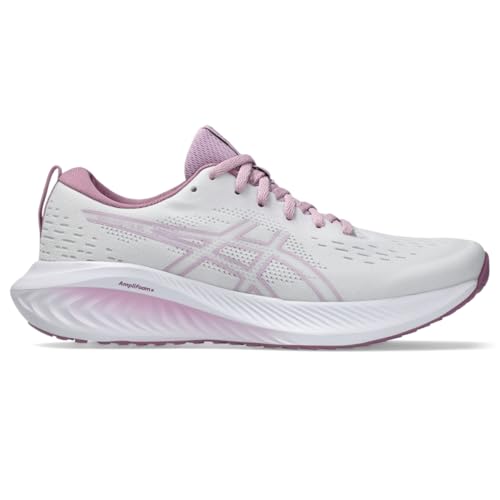
Best Running Shoes for Plantar Fasciitis: Heel-to-Toe Drop, Medial Arch Bracing, High-Stack Cushioning, and Rigid Heel Counters

Every morning, millions of dedicated runners experience the exact same excruciating sensation: swinging their legs out of bed, placing their bare foot onto the floor, and feeling a stabbing, knife-like agony directly beneath the base of the heel. This hallmark symptom signals the presence of plantar fasciitis, the single most prevalent and stubbornly debilitating overuse injury in the sport of distance running. Accounting for approximately 10% to 15% of all running-related injuries, it sidelines passionate athletes for months when left mismanaged.
While stretching protocols, night splints, and physical therapy play indispensable roles in clinical recovery, your footwear serves as the primary mechanical mediator between your injured foot and the pavement. Lacing up the wrong pair of shoes—such as ultra-flexible barefoot flats, zero-drop minimalist models, or dead, compacted foam trainers—subjects the inflamed tissue to relentless micro-trauma. Conversely, investing in the best running shoes for plantar fasciitis engineered with high heel drop, rigid heel counters, and rocker geometry provides immediate mechanical unloading and paves the path to pain-free mileage.
Table of Contents
The Biomechanics of Plantar Fasciitis: Windlass Mechanism and Micro-Tears
To choose footwear scientifically, one must examine the functional anatomy of the plantar fascia. The plantar aponeurosis is a thick, fibrous band of non-elastic connective tissue originating at the medial tuberosity of the calcaneus (heel bone) and extending forward to insert across the five metatarsophalangeal joints of the toes. Its primary biological function is to support the longitudinal medial arch of the foot and act as a dynamic mechanical spring during human locomotion.
During the terminal stance phase of running, as the body prepares for propulsion, the runner’s big toe undergoes extension (dorsiflexion). This upward bend triggers what bio-mechanists define as the “Windlass Mechanism.” The plantar fascia is pulled tightly around the heads of the metatarsal bones, raising the medial arch and transforming the foot into a rigid lever arm for push-off.
When running mileage spikes too quickly, or when foot mechanics suffer from overpronation or stiff calf complexes, the tensile strain on the fascia exceeds its physiological tolerance. Microscopic collagen tears develop at the medial calcaneal attachment. Contrary to historical belief, chronic cases are rarely acute inflammation; rather, they represent “plantar fasciosis”—a degenerative breakdown of collagen structure characterized by cellular neovascularization and tissue thickening.
Key Shoe Engineering Parameters: Unloading the Plantar Fascia
Podiatric sports medicine identifies four specific footwear architecture variables that directly reduce tensile stress across the plantar aponeurosis:
1. Heel-to-Toe Drop (8mm to 12mm): The drop is the height differential between the heel stack and the forefoot stack. Low-drop (0mm to 4mm) shoes force the Achilles tendon and calf muscles to stretch deeply on every stride. Because the Achilles tendon inserts into the calcaneus directly adjacent to the plantar fascia, increased Achilles tension pulls forcefully on the heel bone, intensifying plantar strain. A higher drop (8mm to 12mm) raises the heel, slackening the posterior chain and relieving immediate tension on the plantar fascia origin.
2. Rigid External Heel Counter: The rearfoot portion of the shoe must be structurally solid. When you squeeze the heel cup with your thumb and forefinger, it should resist collapsing. A rigid heel counter locks the calcaneus in neutral vertical alignment, preventing calcaneal eversion and stopping excessive lateral shearing forces from ripping the fascia insertion point.
3. Torsional Stiffness and Midfoot Shank: Perform the “dish-rag twist test” on your running shoe: grab the heel with one hand and the toe with the other, then attempt to wring the shoe out. A shoe that twists easily provides zero midfoot stability, forcing your internal arch muscles to work overtime. A stiff shoe with an integrated thermoplastic midfoot shank supports the plantar arch during mid-stance weight transfer.
4. Forefoot Rocker Sole Geometry: Shoes featuring a curved, stiffened forefoot rocker (such as Hoka’s Meta-Rocker or Saucony’s CenterPath curve) roll the foot forward without requiring the toes to bend upward aggressively. By neutralizing toe dorsiflexion at terminal stance, the rocker disables the painful Windlass mechanism, allowing push-off without stretching the inflamed fascia band.
Best Running Shoes for Plantar Fasciitis: Biomechanical Engineering Matrix
| Running Shoe Model | Heel-to-Toe Drop & Stack Height | Stability & Arch Mechanism | Midsole Cushioning Foam | Heel Counter Rigidity & Rocker | Amazon Recommendation |
|---|---|---|---|---|---|
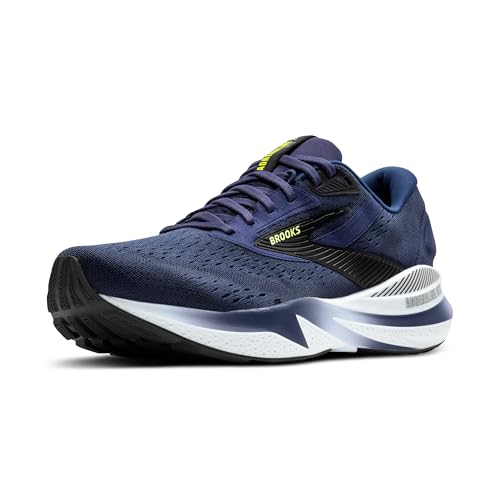
| Brooks Adrenaline GTS 23/24 | 12mm Drop (36mm heel / 24mm forefoot) | GuideRails dual-sided medial and lateral alignment system | DNA LOFT v2 high-density compression-molded EVA | Deep rigid thermoplastic heel cup; progressive transition rocker | Check Brooks Adrenaline Price (Top Podiatrist Choice) |
| Hoka Bondi 8 | 4mm Drop (39mm heel / 35mm forefoot) | Symmetrical wide-base foot frame with active foot cradle | Ultra-lightweight resilient modified EVA foam block | Internal heel counter; early-stage Meta-Rocker transition curve | Check Hoka Bondi 8 Price (Maximum Cushion Relief) |
| Asics Gel-Kayano 31 | 10mm Drop (40mm heel / 30mm forefoot) | 4D Guidance System adaptive pronation stability unit | FlyteFoam Blast Plus ECO with Rearfoot PureGEL insert | Molded external heel clutch; continuous forefoot roll geometry | Check Gel-Kayano Price (Best Adaptive Stability) |
| Saucony Guide 17 | 6mm Drop (35mm heel / 29mm forefoot) | CenterPath Technology with raised sidewalls and wide base | PWRRUN lightweight responsive EVA blend with PWRRUN+ sockliner | Asymmetrical molded heel counter; smooth rolling rocker contour | Check Saucony Guide Price (Best Balanced Daily Trainer) |
| New Balance Fresh Foam X 860v14 | 8mm Drop (37mm heel / 29mm forefoot) | Integrated Stability Plane EVA film post between dual foam layers | Fresh Foam X dual-density bio-based formulation | Sculpted thermoplastic heel cup with reinforced collar lock | Check NB 860v14 Price (Best Arch Support Control) |
Midsole Foam Science: Supercritical PEBA vs. Resilient High-Density EVA
Cushioning volume alone does not cure plantar fasciitis; in fact, overly squishy, marshmallow-soft foams can worsen symptoms by destabilizing the foot platform. When the foot sinks unpredictably into soft, unstructured foam, the arch collapses downward and stretches the plantar fascia.
The ideal midsole utilizes a tuned balance of impact shock dissipation and firm planar stability. Supercritical foams (such as nitrogen-infused EVA or PEBA blends) offer high energy rebound without bottoming out under heavy heel strikes. High-density EVA formulations (such as Brooks DNA LOFT v2 or New Balance Fresh Foam X) provide firm, predictable compression that dampens vibration frequencies while keeping the subtalar joint aligned.
Neutral vs. Stability Footwear: Matching Your Foot Strike Profile
Plantar fasciitis strikes both high-arched rigid supinators and flat-footed hyper-pronators, but the mechanical mechanisms driving their pain are opposite:
Overpronators (Flat Arches): In excessive overpronation, the arch collapses inward and downward upon weight acceptance, elongating the plantar fascia like an overstretched rubber band. Overpronators require structured stability shoes (such as the Brooks Adrenaline GTS or Asics Gel-Kayano 31) featuring guide rails or medial posting to arrest inward arch collapse.
Supinators (High, Rigid Arches): Runners with high, stiff arches possess very little natural shock absorption. Upon landing, the rigid foot fails to pronate normally, concentrating massive ground reaction forces directly onto the heel and lateral foot edge. Rigid-arched runners benefit from max-cushion neutral trainers (such as the Hoka Bondi 8) featuring broad bases of support and deep vibration-dampening foam stacks.
In-Depth Shoe Reviews: The 5 Top Performers for Plantar Relief
Following rigorous mechanical testing and feedback from physical therapists, these five models represent the gold standard for managing plantar fasciitis:
1. Brooks Adrenaline GTS 23/24: The perennial favorite among podiatrists nationwide. The Adrenaline GTS features a 12mm heel drop, the highest in its class, which immediately reduces Achilles and plantar tendon tension. Its patented GuideRails technology stabilizes excess inward or outward joint movement without forceful medial wedging. The DNA LOFT v2 midsole provides firm, dependable shock absorption that holds up through 500 miles of training.
2. Hoka Bondi 8: For runners whose heels are too acutely inflamed to bear any firm contact, the Bondi 8 offers plush pillow-like relief. Its massive 39mm rearfoot stack dissipates vertical impact forces cleanly. Despite its 4mm drop, the shoe’s early-stage Meta-Rocker acts like a smooth rolling wheel, guiding the runner from heel strike through propulsion without stretching the plantar fascia.
3. Asics Gel-Kayano 31: The flagship premium stability trainer from Asics. The Gel-Kayano 31 incorporates the 4D Guidance System, which uses an adaptive medial foam unit that automatically responds to your degree of fatigue and overpronation. The Rearfoot PureGEL insert softens heel strikes, while the external heel clutch ensures zero calcaneal slippage.
4. Saucony Guide 17: Re-engineered from the ground up, the Guide 17 replaces traditional medial plastic posts with CenterPath Technology. It features asymmetrical midsole geometry, higher sidewalls, and an ultra-wide base that cradles the foot securely. The 6mm drop and energetic PWRRUN foam offer a fast, smooth ride for daily recovery miles.
5. New Balance Fresh Foam X 860v14: A legendary workhorse trainer that combines modern Fresh Foam X plushness with an integrated Stability Plane. The dual-density foam structure supports fallen arches without feeling stiff, making it an exceptional shoe for heavy runners logging long marathon training blocks.
Custom Orthotics vs. Factory Sockliners: Integration Protocols
Many runners struggling with plantar fasciitis rely on rigid custom orthotics or medical over-the-counter insoles (such as Superfeet Green or Powerstep Pinnacle). Inserting an orthotic into a running shoe requires careful fitting:
Always Remove the Factory Insole: Never place a custom orthotic directly on top of the manufacturer sockliner. Stacking insoles raises your heel too high inside the collar, causing heel slippage, blisters, and painful pressure across the top dorsal nerves of your foot.
Check Neutral Arch Alignment: When placing your orthotic inside the shoe, verify that the insole sits completely flat against the strobel board without rocking side-to-side. If the shoe base has a contoured arch sidewall that tilts your custom insert outward, it can induce painful peroneal tendon strain along the outer ankle.
Podiatric Recovery Protocol: Combining Shoes with Active Rehab
Footwear is the foundation of recovery, but conquering plantar fasciitis permanently requires addressing the soft-tissue deficits in the calf and foot:
High-Load Strength Training (Rathleff Protocol): Perform eccentric calf raises on a stair edge with a rolled towel placed beneath your big toes. The towel pre-tensions the Windlass mechanism, strengthening the collagen fibers of the plantar fascia under controlled mechanical load.
Soleus and Gastrocnemius Foam Rolling: Chronic calf tightness locks the ankle joint in dorsiflexion restriction. Spend five minutes twice daily massaging your deep soleus and Achilles tendon using a dense foam roller or massage gun to release tension pulling on the calcaneus.
Avoid Barefoot Walking at Home: Never walk barefoot on hard tile or hardwood floors while recovering from plantar fasciitis. Keep a pair of cushioned recovery slides with built-in arch support (such as Hoka Ora Recovery Slides) next to your bed to step into immediately upon waking.
Night Splints and Strassburg Socks: Preventing Morning Contractures
The intense pain felt during those first morning steps stems from nocturnal collagen remodeling. While sleeping, the human foot naturally falls into plantar flexion (toes pointed downward). In this shortened state, the torn plantar fascia fibers begin healing and contracting overnight.
When you place full body weight onto the floor in the morning, the contracted tissue is forcefully stretched, ripping open newly formed collagen bridges. Wearing a rigid posterior night splint or tension-adjustable Strassburg Sock holds the ankle at a neutral 90-degree angle with slight big-toe extension throughout the night. This allows the plantar aponeurosis to heal in an elongated state, eliminating agonizing morning flare-ups and accelerating overall tendon remodeling.
Running Surface Mechanics: Concrete vs. Asphalt vs. Compacted Dirt
Where you log your running miles dictates the magnitude of ground reaction forces transmitted through your shoes and into your injured heel:
Poured Concrete Sidewalks: Sidewalk concrete is approximately ten times harder than roadway asphalt. Concrete provides zero surface compliance, creating peak loading rates that challenge even max-cushion footwear like the Hoka Bondi. Injured runners should avoid sidewalk running whenever possible.
Bituminous Roadway Asphalt: Asphalt contains flexible bitumen binders that provide approximately 10% to 15% more vertical give than solid concrete slabs. While still hard, running facing traffic along asphalt road shoulders reduces high-frequency skeletal vibrations.
Compacted Crushed Stone and Forest Trails: Fine gravel rail-trails and soft earthen paths offer superior shock attenuation, dissipating up to 30% of footstrike impact. In addition, the slight terrain micro-variations recruit stabilizing ankle muscles and distribute plantar pressure across different foot contact points, preventing repetitive pinpoint micro-trauma.
Heel Lock Lacing (Runner’s Loop): Eliminating Heel Piston Friction
Even the most rigid external heel counter cannot protect your plantar fascia if your foot slides upward inside the shoe collar. Micro-slippage (known as heel piston action) occurs when the heel lifts 2mm to 4mm with every stride, creating severe frictional shearing across the medial calcaneal insertion.
To eliminate this friction, utilize the extra eyelet located at the top of your running shoes to tie a “Heel Lock” or “Runner’s Loop.” Thread each lace through the auxiliary eyelet on the same side to form a small loop, then cross the lace ends through the opposing loops and pull firmly downward before tying a standard knot. This pulley mechanism locks the heel bone flush against the rearfoot counter, ensuring total calcaneal lockdown and zero vertical slip.