
What Actually Counts as Real Clothes for Gymnastics Practice


Real clothes for gymnastics aren’t one interchangeable outfit. Practice wear, competition wear, and boys’ training wear are three genuinely different categories, and here’s what actually separates them.
🤸 Gymnastics Hub: Explore all 26 skill tutorials, home equipment reviews, and scoring guides in our Complete Gymnastics Resource Hub.
Real clothes for gymnastics fall into a few distinct categories, not one interchangeable outfit. Girls generally train in a practice leotard, moisture-wicking, 4-way stretch, built for daily washing, and compete in a separate, more structured competition leotard reserved for meets. Boys and men train in fitted shorts paired with a tank or T-shirt rather than a leotard at all. Loose clothing, zippers, jewelry, and cotton fabric are the things to avoid regardless of which category applies.
Search “clothes for gymnastics” and the results blur leotards, loungewear, and costume-grade sparkle outfits into one undifferentiated list. A gym bag that actually works separates those categories on purpose. What a gymnast wears to a Tuesday practice, what a gymnast wears to a Saturday meet, and what a boy in the same gym wears to the same practice are three different answers, and treating them as one leads to buying the wrong thing.
- →Practice leotards and competition leotards are built for different jobs, not the same item in different colors
- →Moisture-wicking 4-way stretch fabric matters more for daily practice wear than for a competition leotard worn briefly
- →Boys and men typically train in fitted shorts with a tank or T-shirt, a real category distinct from a leotard
- →Loose clothing, zippers, buttons, and jewelry are avoided across every category for the same reason: they catch on equipment
- →Cotton holds sweat and loses shape fast; synthetic blends are the practical choice for anything worn to train in regularly
Table of Contents
Practice leotard versus competition leotard: a real distinction
A practice leotard is built to survive daily use: repeated stretching, sweat, and washing, at a price point that makes replacing it every season or two reasonable. Fabric blends built for this job prioritize moisture-wicking performance and stretch recovery, meaning the fabric returns to shape rather than sagging after a season of splits and backbends, over how the leotard looks under stage lighting.
A competition leotard is built for a different, narrower job: looking sharp for a few minutes on a competition floor a handful of times a season. That is why competition leotards lean on metallic fabric, rhinestones, and structured seaming that a daily practice leotard skips entirely, and why competition leotards often carry hand-wash-only care instructions that would be impractical for something worn five days a week.
Four real pieces, and what each one is actually for
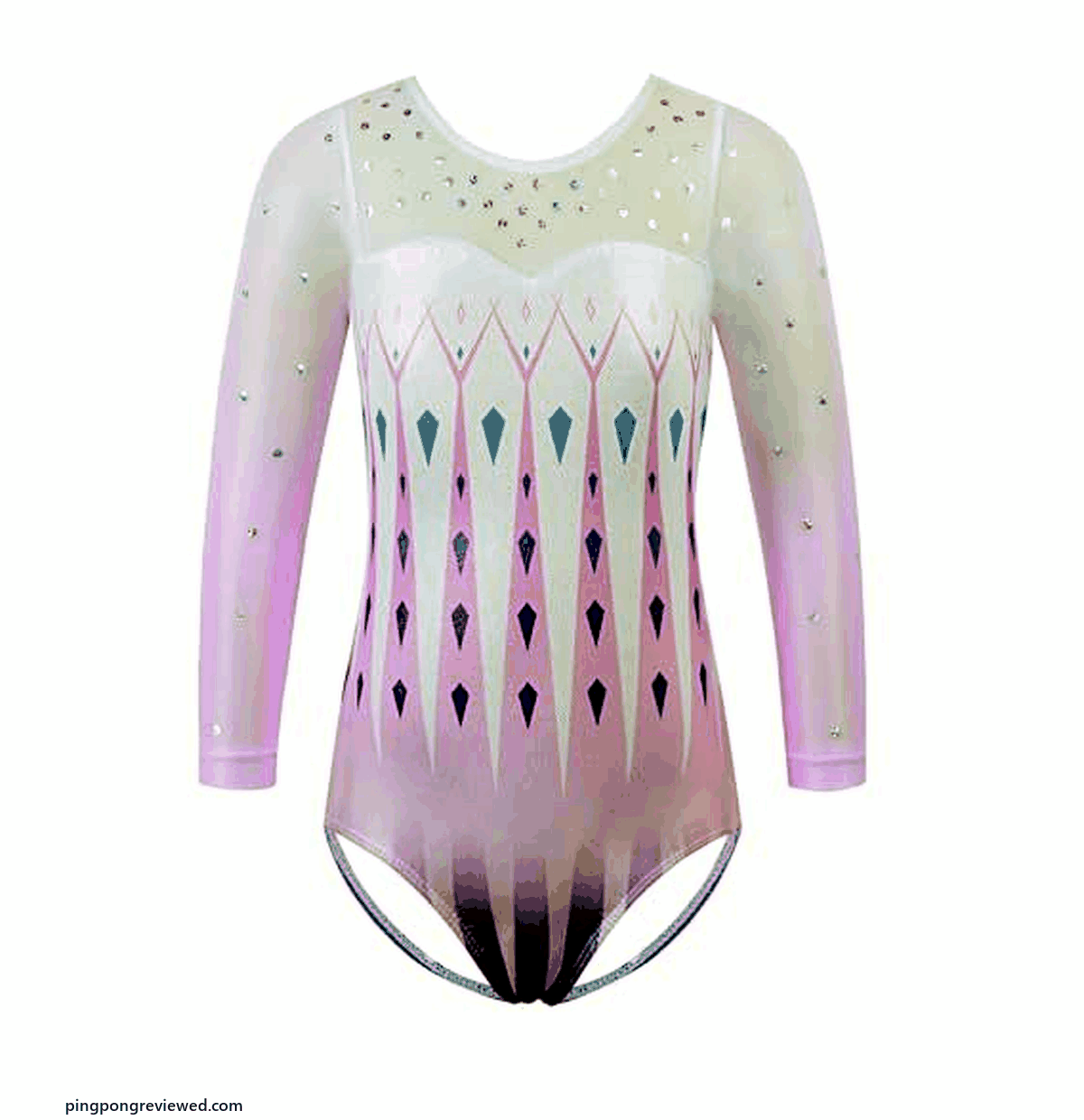
The TFJH E Gymnastics Leotards for Girls Sequin Mesh 3/4 Sleeve Age 3-12Y is a straightforward practice-tier option: 4-way stretch, moisture-wicking fabric, built for the repeated motion and sweat of a regular training schedule rather than for a single meet appearance. This is the category most gymnasts need multiples of, since a practice leotard gets worn and washed far more often than a competition one. Current price: price not listed in our data feed right now.
The Balera Metallic Leotard with Long Sleeves for Girls & Women Perfect for Gymnastics sits in the competition tier: metallic fabric with long sleeves, built for stage presence rather than daily wear. Buying this as a practice leotard is a mismatch in both directions, it costs more than practice wear needs to, and the fabric and care requirements aren’t built for daily training use. Current price: price not listed in our data feed right now.
The Snowflake Designs Boys and Mens Gymnastics Shorter Shorts – Variety of Colors represents the boys’ and men’s training category directly: fitted shorts, not a leotard, meant to be paired with a plain fitted tank or T-shirt. This is a real, distinct category in the sport, not a workaround or a downgrade from a leotard; boys’ artistic gymnastics has always used shorts-and-shirt training wear rather than a one-piece suit. Current price: $25.00.
The NEW DANCE Boy’s Basic Gymnastics Shorts Dance Shorts for Ballet Practice Athletic covers the same category at a simpler, more basic level, a plain fitted short without the color range of the option above, useful as a budget or backup pair rather than a primary choice. Current price: price not listed in our data feed right now.
📊 Note: Live pricing for some of these listings was not returned by Amazon’s data feed at the time this was written. Where you see “price not listed in our data feed right now,” check the current price and stock status directly on the product page.
Why boys’ training wear is its own category, not a substitute
It is common to see boys’ gymnastics apparel described as if it were a workaround for boys who “can’t” wear a leotard, which gets the history backward. Men’s and boys’ artistic gymnastics has used fitted shorts and a tank or shirt as its standard training and competition wear for as long as the sport has had a men’s division; it is not an adaptation of girls’ clothing but a parallel category with its own standards. A men’s competition uniform for events like floor or vault is tailored shorts and a fitted shirt, not a leotard at all.
For everyday practice, that means a properly fitted pair of shorts, not loose basketball shorts, paired with a fitted tank or T-shirt that won’t ride up or bunch during a handstand. Loose shorts that billow during a skill are a real hazard around bars and vault, in the same way loose clothing is a hazard for girls’ leotards worn with shorts over them; the fit matters more than the exact garment type.

What to avoid, regardless of category
- ✓Choose 4-way stretch synthetic blends over cotton for anything worn to train in regularly
- ✓Keep hair secured and out of the face with a fabric-covered elastic, not metal clips
- ✓Check for exposed zippers, snaps, or buttons that could catch on bars or mats
- ✓Buy boys’ training wear as its own real category, not a substitute leotard
- ✕Wear loose, baggy clothing that could catch on bars, rings, or vault equipment
- ✕Wear jewelry, watches, or hard hair accessories during practice or competition
- ✕Assume a competition leotard’s fabric and care needs suit daily practice use
- ✕Buy cotton basics for regular training just because they’re already in the closet
Hair, footwear, and the accessories nobody thinks to check
Clothing is only part of the equation. Long hair needs to be secured away from the face, usually in a bun or tight ponytail, because loose hair whipping across the eyes mid-skill is both a distraction and a genuine hazard on apparatus like beam and bars. Fabric-covered elastics or scrunchies are the standard choice; hard plastic clips and metal barrettes can dig into the scalp during a roll or catch on a mat surface.
Most gymnastics happens barefoot, particularly on floor and beam, which is why sneakers are typically not allowed in a training gym at all. Some gymnasts use thin grip socks or slippers on beam for extra traction and comfort, but these are optional additions layered on top of the clothing categories above, not a replacement for choosing the right leotard or shorts in the first place.
Buying secondhand: what to check before saving money
Leotards and boys’ training shorts both show up regularly in secondhand gymnastics groups and consignment sales, and buying used is a reasonable way to manage the cost of outfitting a fast-growing child. The main thing to check before buying secondhand is fabric stretch recovery: a leotard that has lost its snap and sags after being stretched is past its useful life regardless of how clean it looks, since the compromised fabric no longer supports the body the way it did new. Seams and any decorative elements like rhinestones are worth a close look too, since those are the first things to fail with wear.
Sizing across brands: the part that trips people up
Leotard and shorts sizing runs by brand-specific charts more than by age or general clothing size, and a size that fits well in one brand can run noticeably tight or loose in another. Measuring chest, waist, and hip against the actual chart for the specific item, rather than ordering by the size a gymnast normally wears in regular clothes, avoids most of the return and exchange hassle that comes with buying leotards online without trying them on first.
💡 Pro tip: If a gymnast is between listed sizes, sizing up is usually the safer call for a practice leotard that needs to survive a full range of motion and a growth spurt, while a competition leotard is worth sizing more precisely since it’s worn briefly and fit affects how clean skills look under judging.
Budgeting across all three categories in one purchase cycle helps avoid surprises later. A reasonable starting kit is two or three practice leotards for rotation between washes, one competition leotard if the gymnast is actually competing that season, and for boys, two pairs of shorts paired with whatever fitted tanks or shirts the gym’s dress code allows. Spending the bulk of a clothing budget on a single competition leotard while skipping backup practice wear is a common mistake that shows up fast once the primary practice leotard needs washing mid-week.
Bottom line
Real clothes for gymnastics split into practice wear, competition wear, and a distinct boys’/men’s shorts-and-shirt category, and treating any one of those as a stand-in for another usually means buying the wrong fabric, fit, or durability for the job. Match the purchase to how it’s actually going to be used: daily training calls for moisture-wicking practice wear, a meet calls for a structured competition leotard, and boys’ training calls for fitted shorts and a tank, not a leotard adapted from the girls’ line.
Can girls wear shorts over their leotard for practice?
Yes, many gyms allow fitted shorts over a leotard for extra coverage or personal preference during practice, though most require them to be snug rather than loose, for the same reason loose clothing is avoided everywhere else: it can catch on equipment. Competition rules are usually stricter and often don’t allow shorts over a leotard during a meet.
What fabric should I avoid for gymnastics clothes?
Cotton is the main one to avoid for anything worn during actual training. It absorbs sweat rather than wicking it away, stretches out of shape faster under repeated motion, and dries slowly between sessions. Synthetic 4-way stretch blends handle all three of those problems better.
Do boys really not wear leotards in gymnastics?
Correct, at the competitive level. Men’s artistic gymnastics uses fitted shorts and a shirt as its standard uniform, not a leotard; it’s a separate, established category with its own history, not an adapted or simplified version of girls’ wear.
How often should a practice leotard be replaced?
Roughly once a season for a gymnast training multiple times a week, sooner if the fabric loses its stretch recovery or the seams show wear. A competition leotard, worn far less often, typically lasts longer in wear time but may still need replacing as a gymnast grows.
As an Amazon Associate, we earn from qualifying purchases through links on this page.


