Best Foosball Table for Family Game Nights: Kid-Safety First

The best foosball table for family use has to survive kids leaning on it, spinning rods harder than intended, and years of repeated play, not just look good in a listing photo. Here’s what to check for and three tables that get the safety and durability details right.
The best foosball table for family use isn’t just the biggest or cheapest option, it’s the one built to survive kids leaning on it, spinning rods too hard, and years of use without a repair. The Best Choice Products 54 Inch ($218.49) balances sturdy leg construction with a price that doesn’t sting if it gets a scuff. For a house that wants more than one game in the room, the Barrington 3-in-1 ($429.99) adds air hockey and table tennis to the same cabinet.
This is a different question from picking a foosball table for general home use. A family table gets pulled on, climbed near, and played by kids whose grip and shot strength change every year. The features that matter here, rod-end safety, leg sturdiness, and how easy parts are to replace, barely register on a general buying guide but decide whether the table survives its first year.
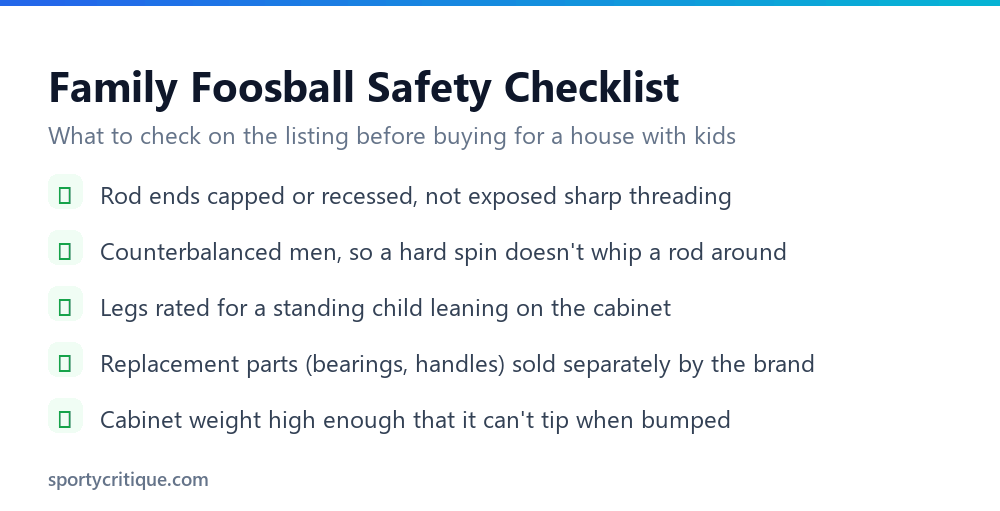
- →Rod-end safety caps matter more than table size for households with young kids
- →Counterbalanced men reduce the risk of a spun rod hitting small fingers hard
- →Leg and cabinet weight should be enough that a kid leaning on the table can’t tip it
- →Check that the brand sells replacement bearings and handles before buying, not after something breaks
- →A slightly smaller table that survives rough play beats a bigger one that needs repairs within a year
Table of Contents
Why rod ends are the first thing to check
On a standard foosball rod, the threaded metal end sticks out several inches past the cabinet on both sides. For an adult that’s just an ergonomic detail, for a kid standing at table height, it’s roughly eye and face level during a game. Telescoping rods, which retract into themselves instead of sliding all the way through, remove that specific hazard, but they’re not standard on most tables in this price range and aren’t always mentioned clearly in the listing title.
Where telescoping rods aren’t available, rod-end caps are the practical fallback: soft plastic or rubber caps that slide over the exposed threading. Some tables include them, some don’t, check the included-accessories list and the product photos specifically for capped rod ends before assuming a table has this feature.
⚠️ Watch out: A rod spun hard by an older sibling or a competitive adult moves fast enough to sting a small hand gripping the same rod, or catch a younger kid standing too close to the end. Counterbalanced men, weighted so the rod can’t free-spin after a shot, address this directly and are worth checking for by name in the product description.
Our pick: Best Choice Products 54 Inch
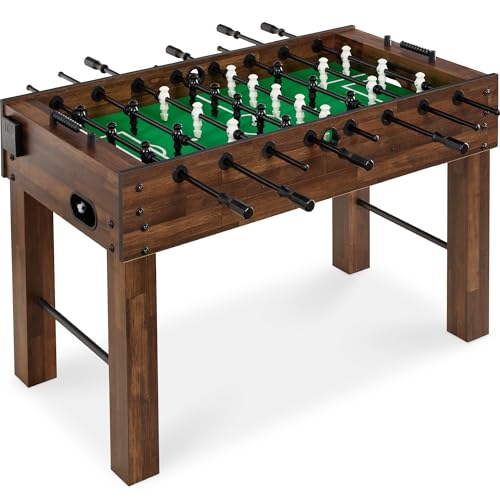
The Best Choice Products Large 54 Inch Full-Size Foosball Table (Walnut) runs $218.49, in stock. It’s a full-size 54-inch build, which gives kids and adults enough spacing to actually pass and position rather than just poking at the ball, and the walnut-finish cabinet reads as furniture rather than a toy, which matters if the table lives in a shared family room instead of a basement rec space.
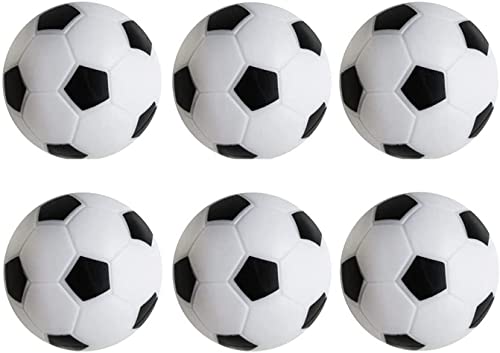
Two balls and two cup holders come included, useful for a house that’s going to lose balls under the couch within the first month. The bigger factor for family use is the leg construction: a wider stance and thicker leg material than budget tabletop-style models, which resists the tip risk that comes with a kid leaning their full weight on one end during an excited game.

For more than one game: the Barrington 3-in-1
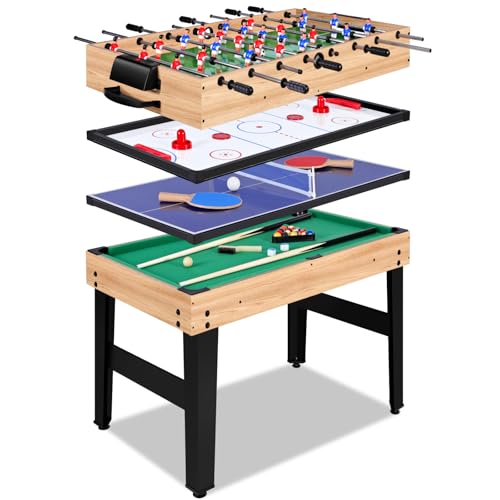
The Barrington 3-in-1 Combination Game Table (Foosball, Air Hockey, Table Tennis) costs $429.99, in stock, which is a real jump from a dedicated foosball table, but it converts between foosball, air-powered hockey, and table tennis on the same cabinet. For a family where interests change by the month, or where siblings want different games, that flexibility can be worth more than a single-purpose table at a lower price.
The tradeoff is footprint: a combo table needs the same floor space as a full-size single-game table, plus storage for whichever conversion pieces aren’t currently installed. Read the assembly and conversion process in recent reviews before buying if quick switching between games matters to your household, some combo tables convert in a couple of minutes, others need real disassembly.
A smaller, budget-friendly option: Best Choice Products 48in
The Best Choice Products 48in Foosball Table with Ergonomic Handles at $139.99, in stock, is worth including here specifically for the ergonomic handle detail. A rounded, grip-shaped handle is easier and safer for a smaller hand to hold onto through a full swing than a plain cylindrical rod end, and it’s a real, noticeable difference for a younger kid learning to play, not just a marketing description.
📊 Note: The Hathaway Primo 56-In is marketed by name for family game rooms and includes counterbalanced men and analog scoring units as standard features, both actually useful for family play. It’s temporarily out of stock as of this writing at $546.99, worth watching for if it fits your budget and comes back in stock.
Leg and cabinet construction: what to look for
A table that tips is a bigger safety concern than most rod-related hazards, and it’s the easiest one to prevent by buying correctly. Look for four-legged designs with a wide stance relative to the cabinet width, not a narrow base that saves floor space at the cost of stability. Leg levelers matter too, an unevenly sitting table rocks under normal play, and a kid pushing down on the high corner to stop that rocking is exactly the scenario that leads to a tip.
Cabinet weight is a reasonable proxy for sturdiness when you can’t test the table in person. Full-size tables under 35 pounds are worth extra scrutiny in the reviews, lighter cabinets generally mean thinner panel material, which flexes more and holds legs less securely over time.
Durability under rough, repeated use
Kids don’t play foosball the way the instruction manual assumes. Rods get spun past the recommended limit, the ball gets thrown instead of served properly, and cup holders end up holding things that aren’t cups. None of that is avoidable, so the realistic goal is picking a table where the parts most likely to take that abuse, bearings, handle grips, and the goal backstops, are either replaceable or built heavier than the minimum.
- ✓Check whether the brand sells replacement bearings and rod handles separately
- ✓Look for metal (not plastic) gears on the scoring counters if included
- ✓Confirm the goal backstops are a separate reinforced piece, not just a cutout in the cabinet wall
- ✓Buy extra balls up front; they go missing faster in a house with kids than anywhere else
- ✕Don’t buy a table with fixed, non-adjustable leg levelers if your floor isn’t perfectly flat
- ✕Don’t assume a higher price automatically means sturdier legs, check the actual leg width and material
- ✕Don’t skip reading reviews written by parents specifically, they mention failure points general reviews miss
- ✕Don’t place the table somewhere a tipped edge could reach a stairway or hard corner
Setting rules that make the table last longer
A short set of house rules extends a family foosball table’s life more than any single product choice. No standing on the cabinet base, no hanging on the sides during a game, and a rule against spinning rods past a full rotation cover most of the abuse that actually damages these tables. It’s a five-minute conversation that saves a bearing replacement or a cracked leg bracket down the line, and it’s worth having before the table gets assembled, not after the first incident.
What to expect by age group
Toddlers and early elementary kids generally do better with a smaller, lighter tabletop model they can reach comfortably from a standing or kneeling position, a full-size 54-inch table puts the playfield above the sightline of a four- or five-year-old, which turns the game into frustrated poking rather than actual play. Around ages seven to nine, kids typically have the reach and grip strength to use a standard-height full-size table, though they’ll still benefit from the ergonomic handle style covered above.
By the early teens, there’s usually no meaningful difference in how a kid plays versus an adult, so the table choice at that point is driven entirely by the room and budget factors covered elsewhere in this guide rather than anything age-specific. If your household spans a wide age range, the safety features matter most for the youngest player in the house, buy for them, and the older kids and adults will be fine with the same table.
Setting the table up somewhere kids actually use it
Placement affects how much a family table actually gets played more than any spec on the box. A table stuck in a rarely visited basement corner gets used for the first month and then forgotten; one placed somewhere central, a finished rec room, an open basement area near where kids already gather, gets regular use for years. If noise from rod impacts or a rolling ball is a concern on a shared floor, a rug or foam mat underneath cuts down on the sound without affecting play.
Leave enough clearance on all four sides for a standing child to pull a rod back fully without backing into furniture or a wall. This matters more for family tables than for adult-only setups, since kids are less likely to notice or adjust for tight clearance mid-game, and a rod pulled back into a hard edge is a common source of pinched fingers that has nothing to do with the table’s build quality.
Where this fits next to our other foosball guides
Bottom line
For most families, the deciding factors aren’t size or price, they’re rod-end safety, leg sturdiness, and whether replacement parts exist for when something eventually wears out. A table that scores well on those three holds up to years of actual family use in a way a bigger or flashier one might not.
What foosball table features actually matter for kid safety?
Rod-end protection (telescoping rods or safety caps), counterbalanced men so rods can’t free-spin dangerously fast, and a wide, stable leg stance that resists tipping. Size and price matter far less than these three details.
Are telescoping rods worth paying extra for?
If young kids will play regularly, yes. They remove the exposed rod-end hazard entirely instead of just padding it. Most tables in the budget-to-mid range don’t include them, so check specifically before assuming a table has this feature.
How do I know if a foosball table is sturdy enough for a family?
Check the stated cabinet weight (heavier generally means thicker, more stable panels) and the leg stance width relative to the cabinet. Reviews from parents specifically, rather than the star average, are the most reliable signal for real-world durability.
Is a multi-game table a good choice for families?
It can be, if different family members want different games. The tradeoff is a higher price and the same footprint as a single-game table, plus a conversion process that varies in how quick and easy it is between models.
As an Amazon Associate, we earn from qualifying purchases through links on this page.