How to Clean a Foosball Table (And Why It Plays Better After)


Clear the table, dry-wipe the playfield, then clean it with a lightly damp microfibre cloth and dry it immediately. Wipe the rods along their full length, clean inside the bearings (the step nearly everyone skips and where most of the drag comes from), wash the balls in warm soapy water, and finish by lubricating the rods with silicone lubricant only. Never use WD-40 or any petroleum-based product — it degrades plastic bearings and attracts more dirt than it removes.
A foosball table that feels slow, sticky, and unresponsive is almost never broken. It’s dirty. Dust, hand oils, spilled drinks, and whatever else finds its way onto a games-room table build up on the playfield and inside the bearings, and the result is rods that drag and a ball that skids instead of rolling.
Twenty minutes of proper cleaning will make an old table feel dramatically better — more so than any component you could buy. It’s also the difference between a table that lasts twenty years and one that’s unpleasant to play within three.
- →Dirt, not wear, is why most tables play badly. Cleaning is the first fix, not the last.
- →Clean the bearings — the step almost everyone skips and the main source of rod drag.
- →Silicone lubricant only. WD-40 damages plastic bearings and attracts dirt.
- →Never leave the playfield wet. Standing moisture warps the surface permanently.
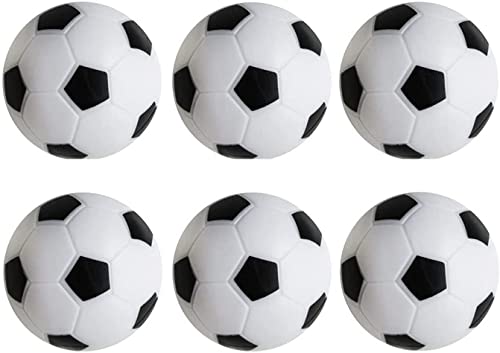
- →Wash the balls too — a sticky ball skids rather than rolling true.
- →A quick dry wipe after each session prevents most of the buildup in the first place.
Table of Contents
Approved Cleaning Agents, Solvents & Foosball Maintenance Protocols
| Component / Surface | Approved Cleaning Agent | Prohibited Damaging Solvents | Recommended Frequency | Application Technique |
|---|---|---|---|---|
| Laminated Playfield | 70% to 91% Isopropyl Alcohol | Acetone, bleach, abrasive powders | Weekly or after 10 hours play | Lightly mist microfiber cloth; buff dry immediately (never puddle liquid) |
| Chrome Steel Rods | 91% Alcohol + 100% Liquid Silicone | WD-40, motor oil, grease, Teflon spray | Every 2 to 3 sessions | Wrap alcohol rag around rod, stroke 10x; apply 2 drops silicone to rod ends |
| Polyurethane Bearings | Compressed dry air & damp soapy swab | Petroleum distillates, brake cleaners | Monthly | Blow out debris with compressed air; swab inner race with mild soapy water |
| ABS Molded Men | Diluted Dawn dish soap degreaser | Acetone or lacquer thinner (melts plastic) | Monthly | Use stiff nylon toothbrush across textured foot to strip glaze and ball wax |
| Urethane Tournament Balls | Warm water + mild dish soap soak | Bleach, dishwasher heat, harsh solvents | Every 15 games | Hand wash in basin, dry thoroughly with towel; air dry 24h to restore grip |
Why a dirty table plays badly
It’s worth understanding what dirt is actually doing, because it explains why cleaning produces such a disproportionate improvement.
On the playfield, a film of dust and oil increases friction unevenly. The ball no longer rolls predictably — it slows in patches, deflects slightly, and skids on contact instead of gripping. Passing accuracy suffers first, because a pass depends on the ball travelling in a straight line at a predictable speed.
In the bearings, the effect is worse. The bearing is the collar the rod passes through, and it’s meant to let the rod slide and rotate almost frictionlessly. Grit gets in, mixes with old lubricant, and forms a gritty paste. The rod drags, your lateral movement slows, and shots lose speed — and because the change happens gradually over months, most owners adapt to it without noticing and conclude the table is just old.
On the balls, surface residue makes them tacky. A tacky ball doesn’t roll cleanly off the men, which ruins passing and makes trapping unpredictable. Balls are also the cheapest component to replace, so once cleaning stops helping, replace them.
Rod drag builds up over months, so you adapt to it without noticing. Clean the bearings once and the table feels like new equipment.
The full clean
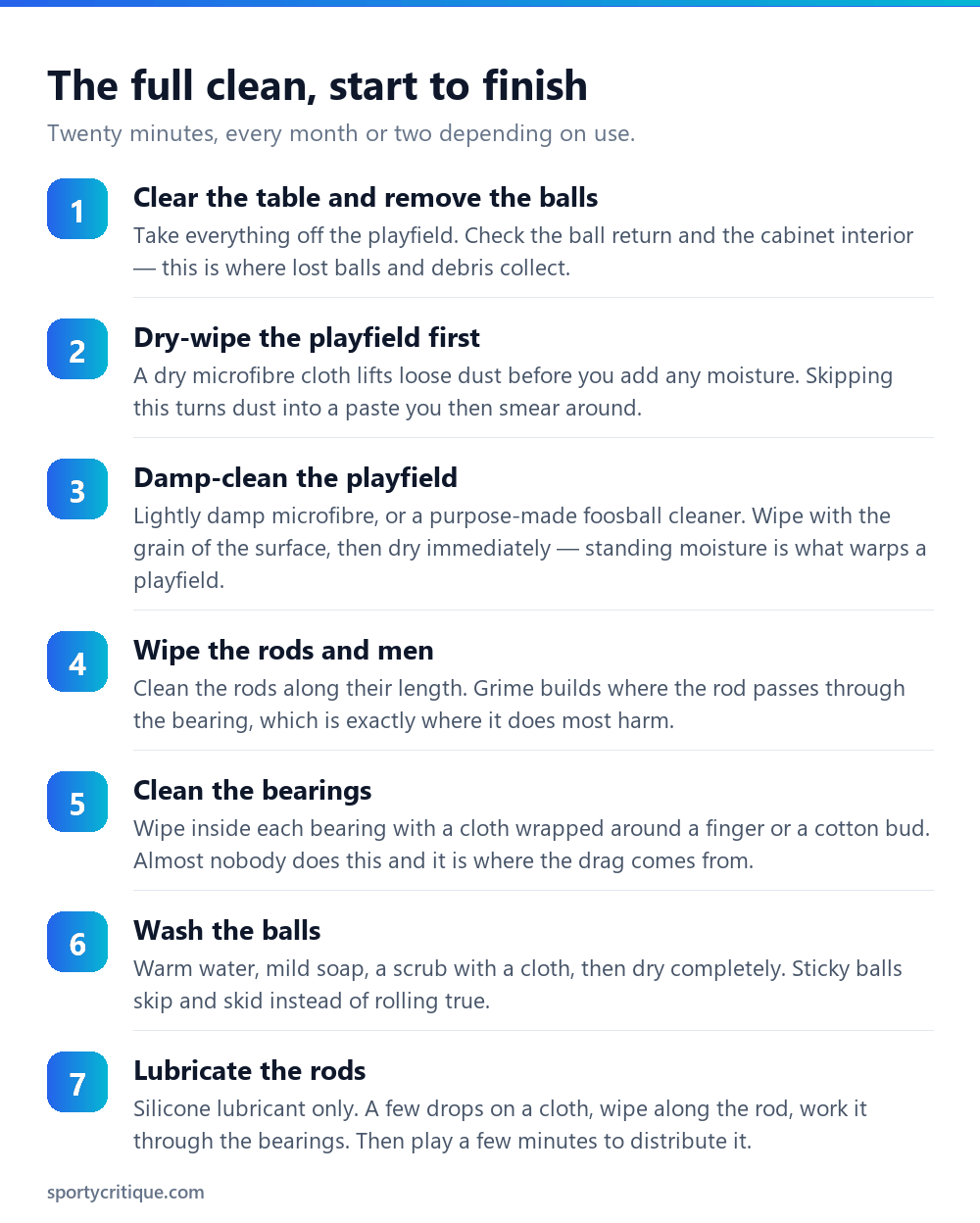
A few steps deserve elaboration.
Dry first, always. Going straight in with a damp cloth turns loose dust into a slurry you then spread across the whole playfield. Thirty seconds with a dry microfibre lifts the loose material so the damp pass actually cleans rather than redistributing.
Damp, not wet. The playfield on most tables is laminate over particleboard or MDF, and moisture reaching the substrate causes swelling and warping that cannot be undone. Your cloth should feel barely damp to the touch, and the surface should be dry within seconds of wiping. Never spray liquid directly onto the playfield.
The bearings are the point. If you’re short on time, skip the cosmetic work and clean the bearings. Wrap a cloth around a finger, or use a cotton bud, and clean inside each one where the rod passes through. Slide the rod out partway if your table allows it. This single step accounts for most of the improvement people notice.
Lubricate last, and correctly. Put a few drops of silicone lubricant on a cloth and wipe it along the rod rather than spraying at the table — overspray onto the playfield makes it slick and ruins ball behaviour. Then work the rods back and forth for a minute to draw lubricant through the bearings. Full detail is in our guide to cleaning foosball rods.
Products: what’s safe and what isn’t
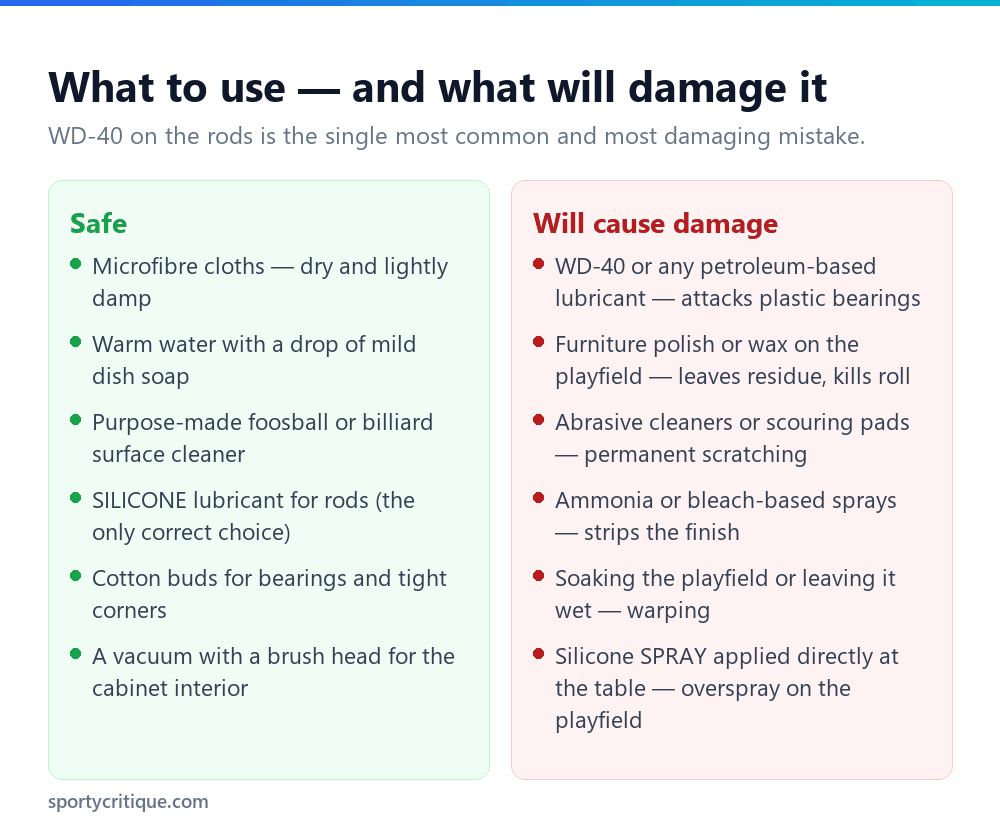
The WD-40 problem deserves its own paragraph, because it’s the most common maintenance mistake in foosball and it’s done with good intentions.
WD-40 is a water-displacing solvent, not a long-term lubricant. On a foosball table it does three bad things: it degrades the plastic and nylon bearings over time, it leaves a residue that actively attracts dust, and it evaporates — so the initial improvement disappears within days and leaves the rods worse than before. Silicone lubricant is chemically inert toward plastics, doesn’t attract dirt in the same way, and lasts.
⚠️ Watch out: If WD-40 has already been used on your table, clean the rods and bearings thoroughly with a dry cloth to remove as much residue as possible before applying silicone. Mixing the two just produces a sticky compound. Badly degraded bearings are cheap to replace and worth doing — see our repair guide.
On the playfield, avoid furniture polish and wax. They feel like the right idea for a wood-look surface and they leave a residue that makes ball behaviour inconsistent — slick in some places, grabby in others. Purpose-made foosball or billiard cleaners exist and are inexpensive; a barely damp microfibre cloth does nearly as well.
Cleaning the balls
Balls are the component people forget, and they have a surprisingly large effect on play because they’re the only part touching everything else.
Wash them in warm water with a small amount of mild dish soap, scrubbing with a cloth to remove the film that builds up from hands and the playfield. Rinse thoroughly — leftover soap is itself sticky — and dry completely before returning them to the table. Textured balls, the standard on American tables, need a bit more scrubbing because dirt sits in the texture that provides grip.
Know when to stop cleaning and replace. Balls develop flat spots, chips, and scuffs, and once a ball isn’t round it will never roll true no matter how clean it is. They’re among the cheapest parts you can buy, and a fresh set makes an immediate difference to passing accuracy. If you play regularly, replacing them annually is reasonable.
📊 Note: Different tables are designed around different balls — textured balls for Tornado-style American tables, smooth cork or plastic for many European tables. Using the wrong type changes how the table plays significantly. Match what the table was built for; our guide to playing foosball covers why brands differ so much.
Reviving a neglected table
Inheriting a table that’s sat in a garage, a student house, or the back of a bar is a different job from routine cleaning. The good news is that these tables usually look far worse than they are — the damage is normally cosmetic and the mechanics are recoverable.
The one genuinely fatal problem is a warped or swollen playfield from water damage — a table left under a leaking roof or outdoors. There’s no repair for that short of replacing the playfield, which usually costs more than the table is worth. Everything else on a neglected table is time rather than money.
Preventing the mess in the first place
Where a table lives affects its lifespan more than how often it’s cleaned.
Drinks are the main threat, and the cabinet rail is exactly the height people put a glass down on. A spill that reaches the playfield edge can wick into the substrate and cause the one form of damage you can’t undo. A rule about drinks on a side table rather than the cabinet is worth more than any cleaning product.
Sunlight and humidity both matter. Direct sun fades playfield graphics and can warp the surface over time; damp garages and unheated conservatories cause slow swelling in particleboard. An interior room with stable temperature is ideal, and a fitted cover is a cheap insurance policy for a table that isn’t used weekly — though never cover a table that’s still damp from cleaning.
Playing conditions help too. Dust settles constantly on a horizontal surface, so a table in a workshop or a room being renovated will need far more attention. And if children use it, expect the ball return and cabinet interior to accumulate more than balls.
A maintenance rhythm
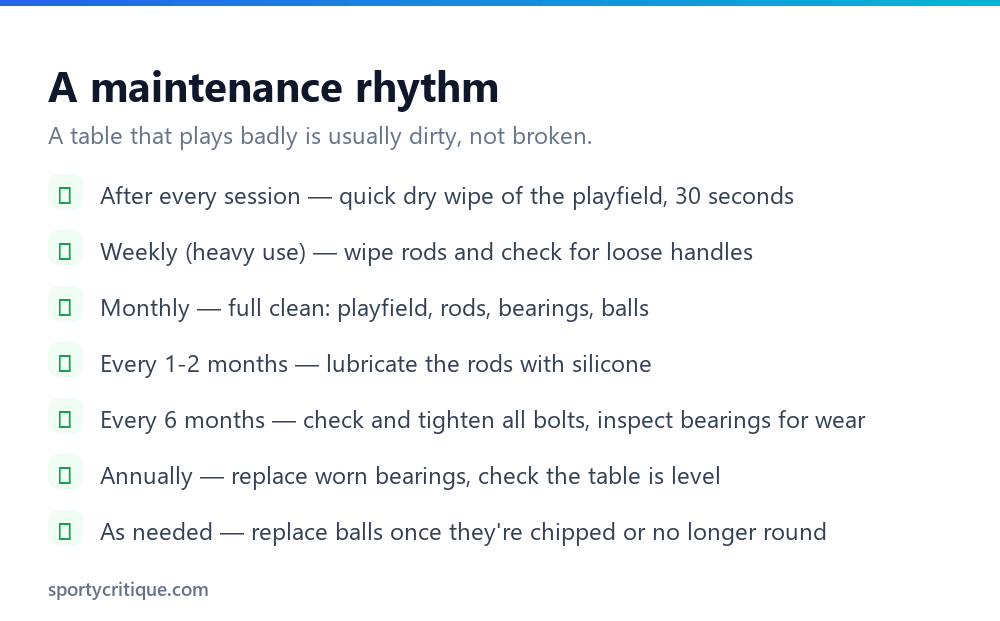
The most valuable habit is the smallest one: a thirty-second dry wipe of the playfield after a session. It prevents the buildup that makes the monthly clean necessary, and it costs nothing.
Beyond cleaning, two checks are worth building into the routine. Tighten the bolts every six months — vibration loosens table frames steadily, and a wobbly cabinet affects play more than people realise. And check the table is level using a spirit level across both axes; an unlevel table sends every loose ball drifting to one side, and players will blame their own touch for months rather than suspecting the floor.
💡 Pro tip: If your table lives somewhere with heavy use — an office, a bar, a student house — keep a microfibre cloth in the ball return or taped inside the cabinet. Maintenance that requires fetching supplies from another room doesn’t happen.
Frequently asked questions
How often should I clean my foosball table?
A quick dry wipe after each session, and a full clean every month or two depending on use. Tables in offices or bars need it more often, both because of volume and because drinks end up on them. If the rods feel draggy or the ball skids, you’re overdue regardless of the calendar.
Can I use WD-40 on foosball rods?
No — it’s the most common and most damaging mistake in foosball maintenance. WD-40 is a solvent rather than a lubricant: it degrades plastic bearings, attracts dust, and evaporates within days, leaving the rods worse than before. Use silicone lubricant, which is inert toward plastics and lasts.
What’s the best cleaner for a foosball playfield?
A lightly damp microfibre cloth handles most of it. For heavier grime, a purpose-made foosball or billiard surface cleaner is safe and inexpensive. Avoid furniture polish, wax, abrasives, and anything ammonia- or bleach-based — they leave residue or strip the finish.
Why are my foosball rods sticking?
Almost always dirty bearings rather than the rods themselves. Grit mixes with old lubricant to form a paste inside the bearing collar. Clean inside each bearing with a cloth or cotton bud, then apply silicone lubricant along the rod and work it through. If they still stick afterwards, the bearings are likely worn and need replacing.
How do I clean sticky foosball balls?
Warm water, a drop of mild dish soap, and a scrub with a cloth — then rinse well and dry completely, since leftover soap is sticky in its own right. If they’re still not rolling true after cleaning, check for flat spots and chips; a ball that isn’t round can’t be fixed and replacements are cheap.
Does cleaning actually improve how the table plays?
Noticeably, and more than most people expect. Rod drag and playfield friction build up so gradually that owners adapt without registering the change. Cleaning the bearings in particular tends to produce an immediate, obvious difference in how freely the rods move and how much speed your shots carry.
- →Cleaning and lubricating foosball rods — the detailed version
- →How to fix a foosball table — bearings, handles, and wobbles
- →Choosing a foosball table — what actually matters when buying
- →How to play foosball — the real rules and fundamentals
- →How to get better at foosball — drills that work