Best Foosball Table for Office Break Rooms

The best foosball table for office use has to hold up to daily play by people who won’t maintain it, fit into a break room that wasn’t designed for one, and stay clean enough to sit next to a lunch table. Here’s how to pick between full-size and tabletop options for a workplace setting.
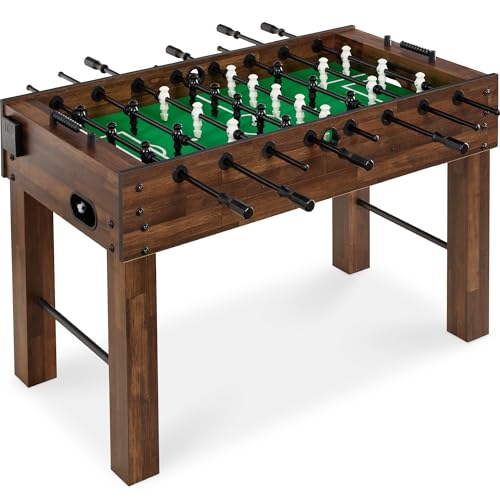
The best foosball table for office use has to survive daily use by people who didn’t buy it and won’t maintain it, and it has to fit a break room, not a dedicated game room. The Giantex 54 Inch ($265.99) is built at full adult size with a sturdy wood frame that holds up to constant use. Where floor space is the real constraint, the Best Choice Products 40in Tabletop ($89.99) sits on an existing table and takes up no permanent floor space.
Office foosball tables get a different kind of wear than a home table. Nobody in a break room owns the table personally, so nobody’s especially careful with it, rods get spun hard between meetings, balls get lost constantly, and the table has to keep working through years of that without anyone doing real maintenance. Picking for durability and easy cleanup matters more here than picking for looks.
- →Full-size tables suit a dedicated break room; tabletop models fit shared, multi-purpose spaces
- →A smooth, wipeable surface matters more in an office than at home, coffee spills happen
- →Sturdier leg and cabinet construction pays off faster under daily multi-person use
- →Skip coin-operated models for an internal office, a home-play mechanism keeps access free for staff
- →Buy extra balls up front; office tables lose them faster than any home setup
Table of Contents
Footprint: what actually fits a break room
Most break rooms weren’t designed with a foosball table in mind, so the real question isn’t which table is best in the abstract, it’s which size fits the room you actually have. A dedicated game room or lounge can take a full 54-inch table the same way a home game room would. A shared break room with a lunch table, a coffee station, and limited floor space usually can’t, which is where a tabletop model earns its place instead of being a compromise.
Measure the available floor area with the same rod-overhang math used for home tables, 8 to 10 inches of clearance per side beyond the cabinet, and compare that against your actual break room layout before committing to a full-size purchase that ends up permanently blocking foot traffic.
Full-size pick: Giantex 54 Inch
The Giantex Foosball Table Adult Size 54 Inch runs $265.99, in stock. It’s built at full adult size on a wood frame, and it’s explicitly positioned by the listing for home, office, and game-room use rather than being a home-only product repurposed for a break room. That matters less for the table’s construction than it does for expectations, this is a table designed to handle a wider range of players and use patterns than a purely residential model.
Two balls come included, which won’t last long in an office setting, buy a spare pack of replacement balls at the same time rather than waiting for the included ones to disappear before restocking.

Space-saving pick: Best Choice Products 40in Tabletop
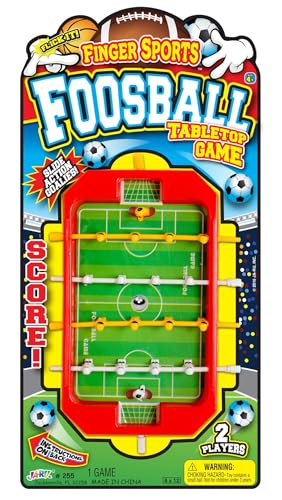
The Best Choice Products 40in Tabletop Foosball Table costs $89.99, in stock, limited quantity, and it converts an existing table, a lunch table, a conference table, into a foosball setup without adding permanent floor footprint. It’s compact enough to store in a closet or on a shelf when not in use, which is the deciding factor for offices where the break room has to do double duty as an actual break room, not just a game space.
The obvious tradeoff is play quality: a compact tabletop model plays with tighter spacing and shorter rods than a full-size table, and it won’t satisfy someone who takes foosball seriously. For a casual, quick-game-between-meetings use case, that tradeoff is usually the right call.
A middle option: GoSports 54 Inch Oak
If the office has room for a full-size table but wants a finish that reads a little more professional than black, the GoSports 54 Inch Full Size Foosball Table (Oak Finish) at $279.99, in stock, limited quantity, gives the same full-size play in an oak finish that fits an office common area better than a stark black cabinet does in some settings.
Cleanup and surface durability
A break room table gets coffee rings, crumbs, and the occasional spilled drink in a way a basement game room table mostly doesn’t. A laminate or sealed-finish cabinet top wipes clean without staining; raw or lightly finished wood doesn’t. Check the listing photos for a glossy, sealed cabinet surface specifically if the table is going in a room where food and drinks are already part of daily use.
💡 Pro tip: Keep a small pack of disinfecting wipes near the table if it’s in a shared office space. Foosball handles get gripped by more different hands per day than almost any other shared object in a workplace, wiping down the handles takes ten seconds and is worth doing regularly.
Skip coin mechanisms for internal use
Some foosball tables are sold in coin-operated versions built for commercial venues like bars and arcades. For an internal office, that mechanism is a liability, not a feature: it either has to be disabled or it becomes a small daily friction point for staff who just want to play a quick game. Confirm the listing is for a home-play (non-coin) model before buying, some manufacturers sell both versions under similar names.
⚠️ Watch out: If the table will be in a truly public-facing area, a lobby, a client-visible common space, check your company’s liability policy before installing one. A table in a purely internal employee break room rarely raises the same questions, but it’s worth a quick check either way.
Assembly: who actually does it
Office foosball table assembly usually falls to whichever employee volunteers or gets assigned it, not a facilities team with dedicated tools. Budget 60 to 90 minutes for two people with basic hand tools, and check that the included hardware is complete before starting, a missing bolt delays the project by a full shipping cycle if it has to be requested from the manufacturer.

How many people can realistically use one table
Foosball is a four-player game at most, two per side, which is a real limitation in an office with dozens of employees sharing one break room. That’s not a reason to skip the purchase, most workplaces don’t expect every employee to use every amenity every day, but it’s worth setting informal expectations early: a sign-up sheet or a simple turn-taking norm prevents the table from becoming a source of minor office friction during busy lunch hours.
If the office is large enough that a single table genuinely can’t meet demand, a tabletop model in a second common area is usually a cheaper fix than replacing a full-size table with something bigger, foosball doesn’t scale up in player count the way a pool table or a shared TV setup does.
Long-term cost beyond the sticker price
The purchase price is most of what you’ll spend, but not all of it. Replacement balls are the recurring cost that adds up fastest in an office, they roll under furniture, get pocketed as desk toys, and simply wear out faster under constant play. Budget for a fresh multi-pack every few months rather than treating the two or four included balls as a permanent supply.
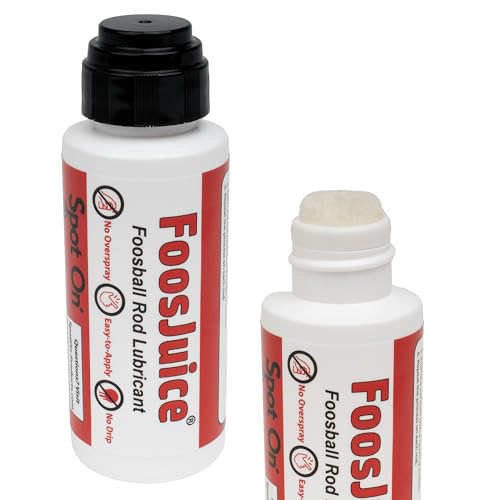
Rod lubricant is the other small, recurring cost worth planning for. A few drops of silicone lubricant applied to sticking rods every month or two keeps play smooth and reduces the strain that leads to bearing wear, it’s a five-dollar bottle that meaningfully extends the table’s usable life under office-level daily use.
Comparing foosball to other break room games
Foosball’s main advantage over alternatives like ping pong or a pool table is footprint: even a full-size 54-inch table takes up less room than a regulation table tennis table, and it’s far cheaper than most pool tables at a comparable build quality. Games finish faster too, a typical foosball match runs a few minutes, which fits a short break better than a longer pool or ping pong game where someone might feel obligated to keep playing past the actual break.
The tradeoff is that foosball caps out at four active players at once, where a pool table can have people rotating through more casually and a ping pong table works for quick singles matches just as well as foosball does. If the office already has one of those and is choosing a second game, foosball’s speed and footprint make it a reasonable complement rather than a competitor for the same use case.
Where this fits next to our other foosball guides
Lighting and flooring in a break room
Overhead fluorescent lighting, common in office break rooms, creates more glare on a glossy cabinet top than the warmer lighting typical of a home game room. It’s a cosmetic detail, not a functional one, but it’s worth knowing that a table photographed under studio lighting may look different under standard office fixtures. Flooring matters more practically: carpet tile, common in offices, can make leg levelers harder to set correctly than a hard floor, check that the table’s leveler feet have enough adjustment range to compensate before assuming carpet won’t be an issue.
Bottom line
For most offices, the choice comes down to available floor space first and price second. A dedicated break room with room to spare gets more long-term value from a full-size table; a shared, multi-purpose space is usually better served by a tabletop model that doesn’t compete for floor area the rest of the day.
What size foosball table works best in an office break room?
It depends on whether the room is dedicated to games or shared for other purposes. A dedicated space can take a full 54-inch table; a shared break room usually does better with a compact tabletop model that doesn’t take permanent floor space.
Should an office foosball table be coin-operated?
No, for internal employee use a home-play (non-coin) model removes unnecessary friction. Coin-operated versions are built for commercial venues charging per game, not for a break room where staff should have free access.
How often does an office foosball table need maintenance?
More often than a home table, given the volume of different players. A quick wipe-down of handles and a periodic check of rod smoothness (add silicone lubricant if rods start sticking) covers most of what’s needed.
Is a tabletop foosball table good enough for adults?
For casual, quick games between meetings, yes. It won’t satisfy someone who plays seriously and wants full-size spacing, but for the typical break-room use case it works well and saves floor space.
As an Amazon Associate, we earn from qualifying purchases through links on this page.