How to Play Foosball: The Real Rules and Fundamentals


Foosball is played on a table with eight rods — four each — and the aim is to get the ball into your opponent’s goal, usually first to 5 goals or best of five games. The rule almost every casual player breaks: spinning is illegal. A rod may not rotate a full 360° without touching the ball. Beyond that, the game is won at the 5-bar midfield, which is the rod beginners ignore and experienced players fight over.
⚽ Foosball Hub: Explore all 20 table reviews, rules breakdowns, and rod maintenance guides in our Complete Foosball Resource Hub.
Most people learn foosball in a bar, from someone who also learned it in a bar, which means most people learn it wrong. That’s fine for an evening. But it’s why a casual player who’s spun rods for ten years gets comprehensively beaten by a club player who’s played for one — they’re not just worse at the same game, they’re playing a different one.
This guide covers the actual rules, what each rod is for, and the handful of fundamentals that separate flailing from playing. It’ll take about ten minutes and it will change how your next game goes.
- →Spinning — a full 360° rod rotation without ball contact — is illegal everywhere except casual house rules.
- →Each player controls four rods: goalie, 2-bar defence, 5-bar midfield, 3-bar attack.
- →The 5-bar midfield decides possession, and possession decides matches.
- →Grip with your wrist, not your arm. Power comes from a wrist snap, not a shoulder swing.
- →Trap the ball before you shoot. Uncontrolled hitting is what makes casual foosball random.
- →Table brands play so differently that shots don’t always transfer between them.
Table of Contents
The setup: rods, figures, and who controls what

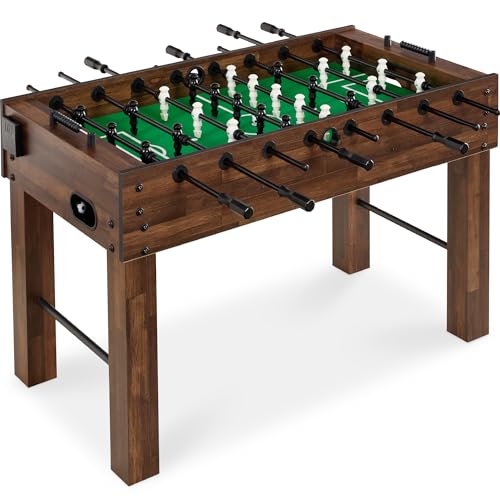
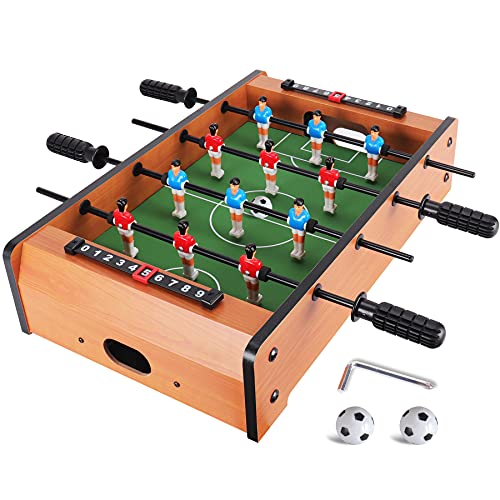
A standard table has eight rods total, interleaved so that yours and your opponent’s alternate down the table. You control four: goalie, 2-bar, 5-bar, and 3-bar. Your opponent’s rods sit between them, which is why passing the ball forward means threading it past a rod that’s actively trying to intercept.
In doubles, one player takes the goalie and 2-bar (defence) and the other takes the 5-bar and 3-bar (offence). Players may not swap during a point — that’s a rule people routinely ignore and it matters, because switching mid-rally is how casual doubles turns into four people grabbing at everything.
Figure counts vary by region: American tables use a 3-figure goalie, while many European tables use a single goalie. It changes defensive technique noticeably, which is one of several reasons a player raised on one style can look lost on the other.
The rules that actually matter
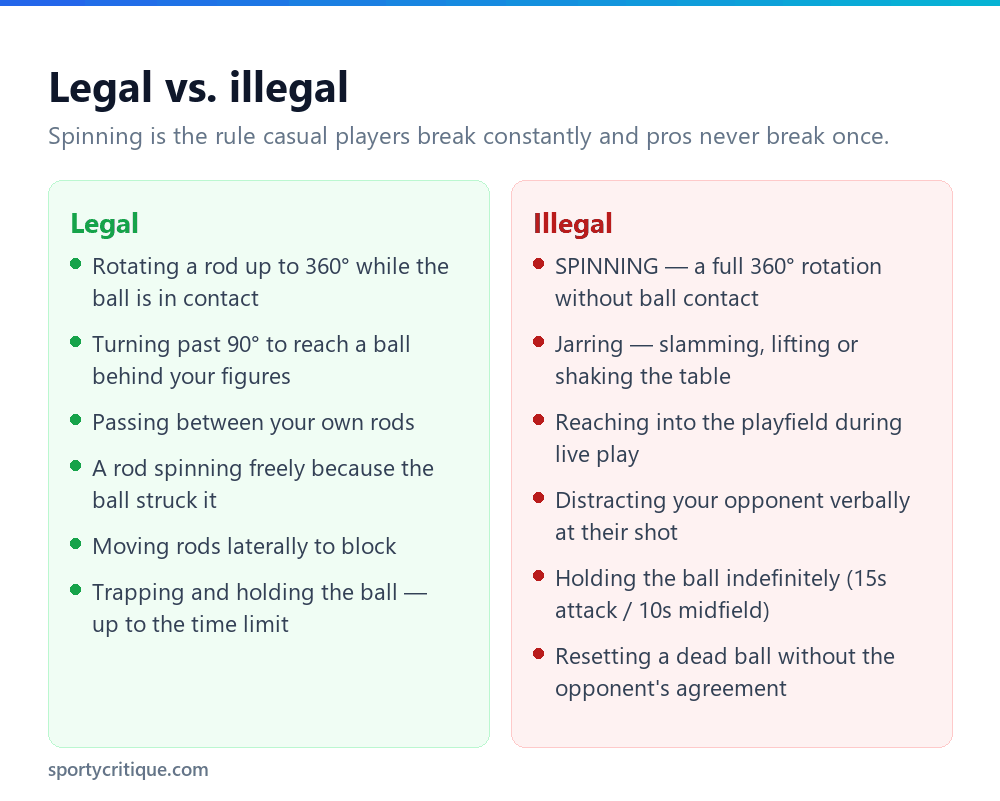
Spinning. The defining rule of real foosball. You may not rotate a rod a full 360 degrees without the figures contacting the ball. You can rotate freely as part of a shot where the ball is being struck, and you can turn past vertical to reach a ball sitting behind your men — what’s banned is the helicopter spin, where you fling the rod and hope.
Two reasons it’s banned, and both are good ones. It removes skill, turning a game of control into a lottery. And it destroys tables — spinning bends rods, wears bearings, and cracks figures, which is why bar tables that allow it feel awful within a year. One exception exists: if a rod you’re not holding spins because the ball hit it, that’s not a violation.
Jarring — slamming, lifting, or shaking the table to move the ball — is illegal, and it’s the second most common casual habit. Time limits apply too: you get roughly 15 seconds to shoot from the attack rods and 10 from the midfield, which prevents the stalling that would otherwise dominate defensive play.
⚠️ Watch out: If you’re going to play anyone seriously, agree on spinning before the first serve. Nothing sours a game faster than one player treating it as a skill contest while the other treats it as a spinning race — and the spinner genuinely doesn’t know they’re doing anything wrong.
Starting a game: the serve
Matches begin with a coin toss or a similar decider — the winner chooses either to serve first or to pick their side of the table. Side matters more than people assume, because bar tables are rarely level and one end often has better light.
The serve itself has more structure than casual players give it. The ball goes in through the serve hole on the side of the table, and under most rulesets it must touch two different figures before anyone takes a shot at goal. That rule exists to stop a server from simply dropping the ball straight onto a waiting attacker and firing — without it, the serve would be an automatic scoring chance.
After a goal, the player who was scored on serves next. If the ball goes dead — it stops somewhere no figure can reach it — it’s re-served at the nearest midfield rod rather than restarted from the hole. And a serve should be announced or at least visibly signalled; serving while your opponent is still resetting is technically legal in some rulesets and universally considered poor form.
📊 Note: Before a serve, competitive players are required to be ‘ready’ — and asking whether your opponent is ready is standard practice. In casual play this vanishes entirely, which is why so many bar games start with someone protesting that they weren’t looking.
Doubles: two players, four rods, one plan
Doubles is the format most people actually play, and it has rules of its own that casual games ignore. Each team splits the rods: one player takes goalie and 2-bar, the other takes 5-bar and 3-bar. You may not swap positions during a point, and in formal play you can only switch between games.
That restriction is what makes doubles a genuine team game rather than four people grabbing at handles. Your defender can’t rescue a lost midfield, and your attacker can’t drop back to cover a gap — so the two of you have to actually communicate. The most useful habit to develop is the defender calling what they can see, since they’re looking straight down the table at the opponent’s attack and can read a developing shot well before the attacker can.
The most common doubles failure is both players fixating on the ball. When the ball is at your opponent’s 3-bar, the attacker on your team has nothing to do with it — their job is positioning the 5-bar to intercept the clearance that’s coming. Watching the ball instead of preparing for the next phase is what turns doubles into chaos.
Grip and stance: where beginners lose the most
Almost every casual player grips the handle in a full fist and swings from the shoulder. It feels powerful and it’s the single biggest technical error in the game.
The correct grip is loose — an open or lightly closed hand with the handle resting against your palm, so the rod can rotate freely inside your grip. Power comes from a sharp wrist snap at the moment of contact, not from swinging your arm. A wrist snap is faster, far more accurate, and lets you change your mind mid-motion; an arm swing telegraphs everything and can’t be adjusted once it starts.
Stand square to the table with your weight balanced, close enough that your elbows stay bent. Reaching means you can’t control two rods at once, and controlling two at once — typically your 5-bar and 3-bar — is what lets you pass to yourself. Keep your non-shooting hand on the rod you’ll need next, not hanging by your side.
💡 Pro tip: Test your grip: someone should be able to spin your rod inside your hand without much resistance while you’re holding it ready. If your hand locks the rod in place, you’re gripping too hard, and every shot you take will be slower than it should be.
Trap first, then shoot
Here’s the concept that separates a player from a flailer. In casual foosball, the ball arrives and people hit it — wherever it goes, it goes. In real foosball, you trap the ball first: you catch it under a figure’s foot, hold it still, and then take a deliberate shot at a target.
The trap is done by bringing a figure over the ball and pinning it lightly against the playfield — enough to stop it, not so much that you can’t move it. Once trapped, you can move the ball laterally along the rod, which repositions your shooting angle and, crucially, forces the defence to move with you. Almost every real foosball shot begins from a trap.
This is also the fastest single improvement available to a beginner. Spend one session doing nothing but trapping the ball on your 3-bar and taking a controlled shot each time, and you’ll beat people who’ve played casually for years. Our guide to getting better at foosball builds a full practice routine around it.
The three shots worth knowing
- Trap the ball, move it sideways, then strike
- The lateral movement is what beats the defence
- Simplest reliable scoring shot in the game
- Ball pinned under the figure, rolled forward then struck
- Slower to set up, very hard to read
- The staple of American-style play
- Rod rests against your wrist; you roll it to generate whip
- Enormous power and deception
- Legal as long as the ball is contacted — it is not a spin
- Deliberately played off the side wall
- Beats a defence that has covered the direct lanes
- Requires knowing your table — walls vary
Don’t learn all four at once. Get the push/pull shot working from a trap, add a bank shot so you have two options from the same position, and only then look at the snake — it takes weeks to become reliable and is useless until your trap is solid.
The 5-bar: where the game is actually won
Ask a casual player which rod matters most and they’ll say the attack. Ask a club player and they’ll say the 5-bar every time.
The midfield rod is where possession lives. Whoever controls the 5-bar decides whether the ball reaches their own attack or their opponent’s, and a player who can consistently pass from 5-bar to 3-bar has an offence, while a player who can’t is just hoping the ball arrives somewhere useful. At competitive level, entire matches are decided by who wins the 5-bar exchange.
The basic skill is the pass: trap the ball on the 5-bar, move it laterally to create a lane between your opponent’s figures, and slide or push it through to your 3-bar. The defending player is simultaneously moving their 5-bar to close those lanes, which turns it into a genuine cat-and-mouse duel — the most tactical part of the sport and completely invisible to people who’ve only played casually.
Casual players fight for the ball. Good players fight for the 5-bar, because whoever wins it decides where the ball goes next.
Tables differ more than you’d think
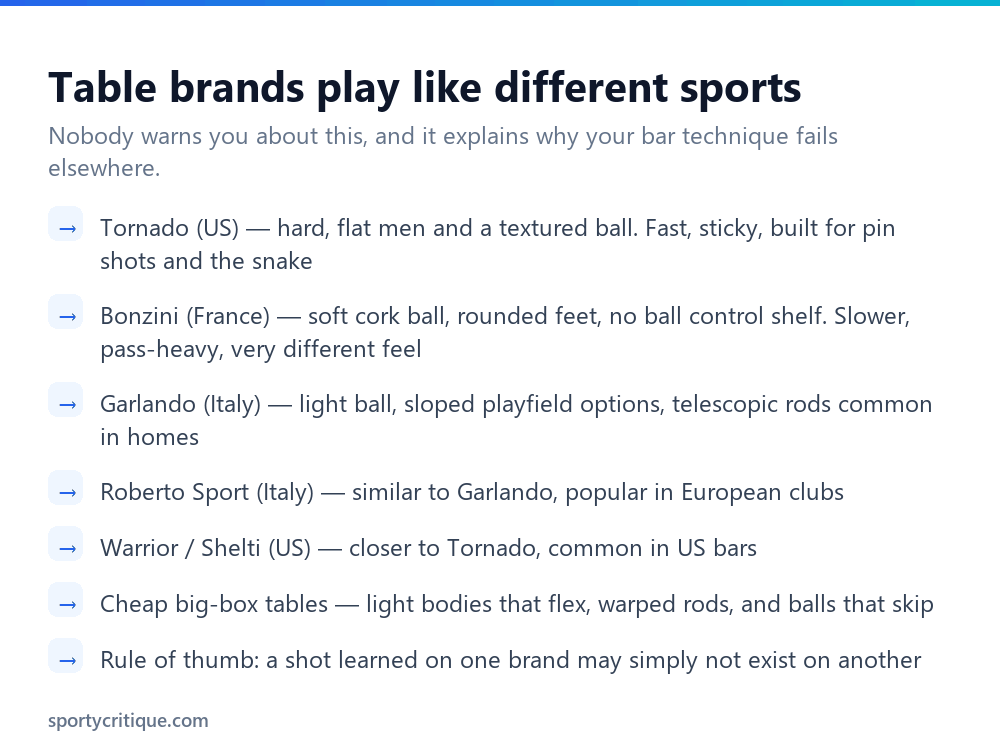
This deserves more attention than it usually gets. Foosball tables aren’t standardised the way a pool table is — brands differ in playfield surface, ball material, figure shape, rod weight, and whether the men have a flat foot capable of trapping at all.
The practical consequence: a snake shot honed on a Tornado may be impossible on a Bonzini, whose rounded figures and soft cork ball don’t allow the same pin. A player who dominates their local bar can travel across Europe and find their entire technique doesn’t apply. This isn’t a failure of skill; it’s a genuinely different implement.
If you’re buying, this is the decision that matters more than price — pick the style you want to actually play, because it determines which techniques you can develop. Our guide to choosing a foosball table covers the trade-offs, and if you inherit a neglected table, cleaning the playfield and the rods will transform how it plays before you spend anything.
Frequently asked questions
Is spinning really against the rules?
Yes, everywhere except casual house rules. A rod may not complete a 360-degree rotation without contacting the ball. It’s banned in every competitive ruleset because it removes skill from the game and physically damages tables — bent rods and worn bearings come almost entirely from spinning. The exception is a rod you aren’t holding that spins because the ball hit it.
How many points do you play to?
Most commonly first to 5 goals, with matches often played as best of three or best of five games. Bar games frequently go to 10. Tournament formats vary by federation. Agree it before you start, along with whether spinning is allowed.
What is the 5-bar and why does it matter?
The five-figure midfield rod. It controls possession — whoever wins the 5-bar exchange decides whether the ball reaches their attack or their opponent’s. Casual players treat it as a rod to whack the ball with; competitive players treat it as the central battle of the match, and that difference in understanding is worth more than any individual shot.
Can you score from the goalie?
Yes, and at higher levels it’s a real weapon. The goalie has a clear shooting lane down the table and defenders often aren’t set for it. On American 3-figure goalie tables it’s especially viable. It’s a legal shot in every standard ruleset.
Why does my table feel slow and sticky?
Almost always dirt on the playfield and dry rods rather than anything structural. Playfields accumulate dust, hand oils, and spilled drinks; rods lose their lubrication and drag in the bearings. Cleaning the surface and lubricating the rods takes twenty minutes and makes an enormous difference — see our guides to cleaning the table and the rods. If something feels broken rather than dirty, try our repair guide.
Is foosball a real sport?
It has an international federation (the ITSF), a world championship, ranked professional players, and national teams — so competitively, yes. It’s also true that the version played in most bars bears about the same relationship to that sport as a driveway basketball hoop does to the NBA. If you’re curious how far it goes, our guide to playing professionally covers the path.
- →How to get better at foosball — drills and a practice routine
- →How to defend in foosball — the half of the game nobody practises
- →Choosing a foosball table — brands, sizes, and what actually matters
- →Cleaning your table — the twenty minutes that transforms an old table
- →Playing professionally — how competitive foosball works