Best Foosball Table for the Money: Price Tiers Compared

The best foosball table for the money isn’t a single product, it’s whichever price tier actually matches how often you’ll play. Here’s what actually changes moving from a $140 compact table up through $400-plus premium builds, tier by tier.
⚽ Foosball Hub: Explore all 20 table reviews, rules breakdowns, and rod maintenance guides in our Complete Foosball Resource Hub.
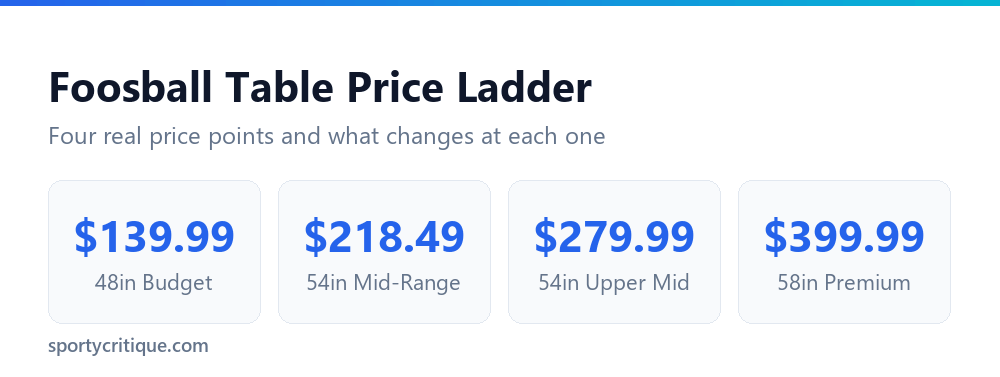
The best foosball table for the money depends on which tier actually matches your use case. At $139.99, the Best Choice Products 48in covers casual, occasional play. At $218.49, the Best Choice Products 54in adds real full-size spacing. Past $279.99, tables like the GoSports 54 Inch tighten up build quality, and at $399.99, the Barrington Richmond 58in moves into a heavier, more furniture-grade build.
“Best for the money” isn’t one table, it’s a question of which tier’s tradeoffs match what you’ll actually do with it. Someone buying a table for a few games a month has different needs than someone setting up a serious game room, and paying for the wrong tier means either overspending on features you won’t use or underbuying and replacing the table within a year. Here’s what changes at each real price point.
- →Under $150 buys a compact table that’s perfectly fine for casual, occasional play
- →$200-230 is where full-size 54-inch spacing starts showing up at a reasonable price
- →$250-280 tightens cabinet weight and bearing quality, the difference regular players notice most
- →$400 and up moves into heavier, furniture-grade cabinets built to last years of daily use
- →Paying more only helps if you’ll actually use the extra durability; occasional players rarely need the top tier
Table of Contents
Budget tier: around $140
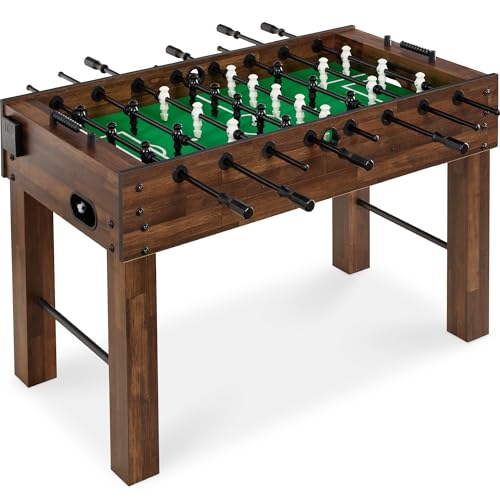
The Best Choice Products 48in Foosball Table with Ergonomic Handles at $139.99, in stock, is a 48-inch compact table with ergonomic handles and chrome-finished metal bars. This tier trades some spacing and cabinet weight for price, the table is lighter and the playfield is shorter than a full-size build, which shows up as slightly tighter passing lanes during play.
For someone who plays a handful of times a month, hosts occasional game nights, or just wants a table without a big investment, this tier does the job. The construction won’t survive years of daily aggressive play the way a heavier build would, but that’s rarely the actual use case for a budget buyer.
Mid-range: around $220
The Best Choice Products Large 54 Inch Full-Size Foosball Table (Walnut) costs $218.49, in stock. This is where full-size 54-inch spacing becomes available at a price that’s still closer to budget than premium. The extra length changes how the game actually plays, passing and positioning start to matter the way they do on a regulation table, rather than the game being mostly direct shots because there’s no room to maneuver.
This tier is the practical sweet spot for most buyers: real full-size play without paying premium prices for cabinet weight and finish quality most casual and moderately regular players won’t notice.
Upper mid-range: around $280
The GoSports 54 Inch Full Size Foosball Table (Black Finish) at $279.99, in stock, limited quantity, sits at the point where cabinet weight and bearing quality start to noticeably tighten up. This is the tier where regular players, people playing multiple times a week rather than a few times a month, start to feel a real difference: less cabinet flex under a hard shot, smoother rod glide, and a table that holds up better to sustained use without the wobble that plagues lighter budget builds.

Premium: $400 and up
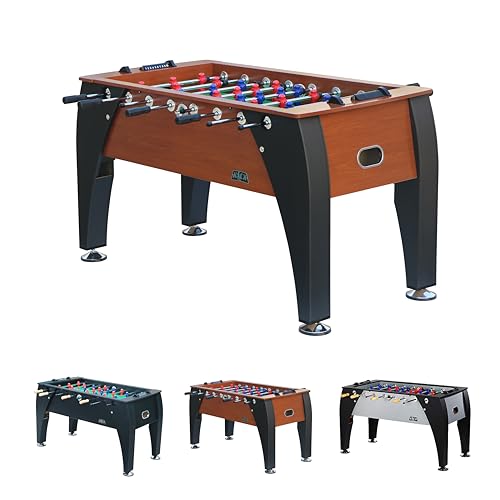
The Barrington Richmond 58in Full Size Foosball Table runs $399.99, in stock. At 58 inches it’s larger than the other tables in this guide, and the cabinet construction moves toward furniture-grade rather than game-room-utility grade, thicker panels, a heavier overall build, and a finish meant to sit in a living space long-term rather than get scuffed in a basement corner.
This tier makes sense for a dedicated game room, a household that plays foosball as a serious regular activity, or a buyer who wants the table to double as a real piece of furniture rather than sports equipment. For occasional or casual use, the jump from the upper mid-range tier rarely pays for itself in noticeably better gameplay.
What doesn’t actually change much between tiers
- ✓Expect ball size and basic accessories (cup holders, included balls) to stay roughly similar across tiers
- ✓Expect real gains in cabinet weight, bearing quality, and rod smoothness as price increases
- ✓Expect finish and color options to expand somewhat in higher tiers
- ✓Expect scoring mechanisms to stay simple (manual slide counters) across most of this range
- ✕Don’t expect low-deflection-style technology gains, that concept applies to cue sports, not foosball
- ✕Don’t expect a $400 table to play dramatically differently from a $280 one in casual use
- ✕Don’t assume higher price means better customer support or warranty terms, check those separately
- ✕Don’t expect assembly time to drop meaningfully at higher price points, it’s a similar process across tiers
⚠️ Watch out: Price alone isn’t a reliable signal within a tier, two tables at the same price point can differ meaningfully in build quality. Use the price tier as a starting filter, then check recent reviews for the specific model before buying.
How to decide which tier is actually right for you
Be honest about how often the table will actually get used. A table played a few times a month rarely benefits from premium-tier durability, the budget or mid-range tier will hold up fine for that use pattern and the money saved is real. A table that’s going to see daily use from multiple people, a busy household, a shared space, benefits much more from the upper mid-range or premium build quality, where the extra cost buys years of reduced wear rather than sitting unused.
The other honest question is whether you already know you enjoy foosball enough to invest at the premium tier, or whether you’re buying a table to find out. If it’s the latter, starting at the mid-range tier and upgrading later if the interest sticks is a more reasonable path than committing to a premium purchase upfront.
💡 Pro tip: If you’re between two adjacent tiers, check whether the higher tier is currently discounted close to the lower tier’s price. Amazon pricing on these tables fluctuates, and the gap between mid-range and upper mid-range sometimes narrows enough that the better tier is worth it anyway.
Assembly complexity by tier
Budget and mid-range tables generally ship with simpler hardware, fewer total panels, more pre-drilled holes, and a more forgiving tolerance for a slightly imperfect assembly job. Premium tables trade some of that simplicity for tighter construction: more precisely fitted joints, additional structural bracing, and in some cases more panels overall to account for the larger 58-inch frame. None of this makes premium tables meaningfully harder to assemble, budget an extra 20 to 30 minutes over the lighter tiers, but it does mean following the instructions in order matters more, skipping ahead is more likely to cause a misalignment that’s harder to correct after the fact on a heavier frame.
Across every tier, the single most common assembly mistake is fully tightening one section before confirming the whole frame is square. Snug every bolt by hand first, check that the cabinet sits level and square, then go back and fully tighten everything. It adds ten minutes and prevents the wobble complaints that show up in reviews regardless of which tier the table came from.
Reading a listing price against the actual tier
Listed prices on these tables move around more than the product itself does, a table sold at $280 one month can show up discounted closer to $220 the next, especially around major shopping periods. That means the tier boundaries in this guide are a rough guide to build quality, not a fixed price you should expect to pay. Before buying, it’s worth checking the price history if the listing shows one, a table that’s “on sale” from an inflated list price isn’t actually a deal, while a genuinely lower current price on a normally upper-tier table can be a real opportunity to buy up a tier for mid-range money.
The reverse is also true: a nominally budget-tier table temporarily priced at mid-range money isn’t a better deal just because the price moved, check what you’re actually getting in cabinet weight and size before assuming a price change reflects a real upgrade in what’s being shipped.
Where this fits next to our other foosball guides
Shipping weight and delivery, by tier
Heavier tables cost more to ship, and that cost is usually baked into the listed price rather than added separately, but it’s still worth knowing before the box arrives. A budget 48-inch table typically ships around 40 to 50 pounds in one box that two people can carry without much trouble. A premium 58-inch table can ship well over 150 pounds, sometimes split across two boxes, which changes the delivery logistics: confirm someone will be home to bring it inside, and plan for moving it in pieces rather than assembled if it needs to go through a narrow doorway or down a flight of stairs to a basement game room.
Freight delivery, rather than a standard parcel carrier, becomes more common as tables get heavier, and freight shipments often arrive on a pallet at curbside rather than being carried to your door. Check the listing’s shipping details before buying a premium-tier table if stairs, a long driveway, or a narrow hallway stand between the curb and where the table will actually be assembled, that logistics gap is easy to overlook until delivery day.
Bottom line
Match the tier to your actual use pattern rather than defaulting to the middle of your budget range. Occasional players get full value from the budget or mid-range tier, regular players see real returns from the upper mid-range and premium builds, and knowing which one you are before you shop saves both money and a table that doesn’t fit how you’ll actually use it.
What’s the best foosball table price range for most buyers?
The $200-230 mid-range tier, where full-size 54-inch spacing becomes available without paying premium prices, covers the widest range of realistic use cases without significant compromise.
Is a $400+ foosball table worth it for casual play?
Usually not. The premium tier’s extra durability and finish quality mainly pay off under daily, heavy use. Occasional players rarely notice the difference enough to justify the extra cost.
Does a more expensive foosball table always play better?
Not reliably within the same tier, build quality varies by specific model, not just price. Between tiers, higher price generally does correlate with better cabinet weight and bearing quality, but check reviews for the specific table rather than trusting price alone.
Should I start cheap and upgrade later, or buy premium up front?
If you’re not yet sure how much you’ll actually play, starting at the mid-range tier is the more reasonable path. If you already know foosball is a regular household activity, the upper mid-range or premium tier pays off faster.
As an Amazon Associate, we earn from qualifying purchases through links on this page.