Best Running Shoes for Shin Splints: Cushioning That Can Help

This guide covers the best running shoes for shin splints from a cushioning and impact-reduction angle, not a cure. It compares the Hoka Bondi 9, ASICS Gel-Nimbus 26, and New Balance 880v14 across three levels of cushioning volume, with honest guidance on what footwear can and cannot do for shin pain.
🏃 Running Hub: Explore all 23 shoe reviews, training guides, and GPS watch comparisons in our Complete Running Resource Hub.
A shoe cannot cure shin splints, but a higher-stack, well-cushioned trainer can reduce the repetitive impact loading that often contributes to them. The Hoka Bondi 9, ASICS Gel-Nimbus 26, and New Balance 880v14 all offer real, substantial cushioning volume rather than a firm, minimal ride. If shin pain persists past a reasonable adjustment period, see a doctor or physical therapist; this guide is about reducing a contributing factor, not treating an injury.
Shin splints, medial tibial stress syndrome in clinical terms, are usually driven by a combination of factors: a sudden increase in mileage or intensity, running surface, biomechanics, and, to a real but limited degree, footwear. A shoe with more cushioning and a smoother heel-to-toe transition can reduce some of the repetitive impact loading on the shin that contributes to the problem, which is a genuinely different framing from a stability shoe built to correct overpronation. This guide focuses specifically on cushioning volume and transition smoothness, not motion control, even though some runners with both flat feet and shin pain will find their needs overlap with our separate flat feet guide.
- →Shin splints are caused by a mix of training load, surface, biomechanics, and footwear; a shoe change addresses only one piece of that
- →Higher stack height and softer cushioning can reduce repetitive impact loading, which may help reduce shin splint risk, but this isn’t a guarantee or a cure
- →The Hoka Bondi 9, ASICS Gel-Nimbus 26, and New Balance 880v14 represent three different levels of maximum, high, and moderate cushioning
- →A gradual mileage increase and addressing training load matters at least as much as shoe choice for shin splint prevention
- →Persistent shin pain that doesn’t improve with rest and a cushioned shoe needs evaluation from a doctor or physical therapist, not another shoe purchase
Table of Contents
What actually causes shin splints, and where footwear fits in
Medial tibial stress syndrome develops when the muscles, tendons, and bone tissue along the shin are loaded faster than they can adapt, most commonly from a training load increase that outpaces the body’s ability to build tolerance. Hard surfaces, worn-out shoes that have lost their cushioning, and biomechanical factors like overpronation all contribute as well. Footwear is a real, addressable factor, but it’s realistically one input among several, and it will not offset a training load increase that’s simply too aggressive for where your body currently is.
⚠️ Watch out: If you’re already experiencing shin pain, changing shoes without also addressing the training load or surface that likely caused it is treating a symptom while leaving the actual cause in place. A period of reduced mileage or cross-training is usually part of a real recovery plan, not just a shoe swap.
Hoka Bondi 9: maximum cushioning for reducing impact

The Hoka Bondi 9 sits at the top of Hoka’s cushioning range, built specifically for runners who want the tallest, softest stack the brand offers. Hoka increased the stack height again for this generation and paired it with a new premium foam midsole, aimed at absorbing more impact per stride than the lighter Clifton line. For a runner managing shin splint risk, that additional cushioning volume is the most direct lever this shoe pulls: more material between the foot and the ground to spread out impact forces.
The listing checked for this guide showed no live price or stock data returned by amazon’s product api at check time. The Bondi’s rocker geometry, a pronounced curve built into the sole to help roll the foot through the stride, is more aggressive than on the Clifton or most other daily trainers, and some runners need a short adjustment period before it feels natural.
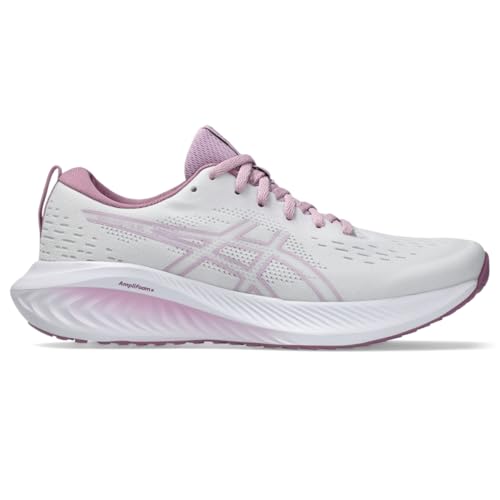
ASICS Gel-Nimbus 26: high cushioning with a gel heel insert

The ASICS Gel-Nimbus 26 takes a slightly different approach than the Bondi: a high but not maximal stack of FF Blast Plus Eco foam, plus a dedicated PureGEL insert specifically at the heel where a large share of impact lands for most rearfoot strikers. That targeted heel cushioning, on top of the overall foam volume, is the shoe’s specific pitch for runners dealing with impact-related shin discomfort rather than general daily-trainer use.
The listing checked showed as currently unavailable at the listing checked. Runners who strike more toward the midfoot or forefoot rather than the heel will get comparatively less benefit from the gel heel insert specifically, though the overall foam volume still applies across the whole shoe.
New Balance 880v14: moderate cushioning for a gradual transition

The New Balance 880v14 sits below the Bondi and Nimbus in raw cushioning volume, which makes it a reasonable middle step for a runner coming from a firm, minimal shoe who isn’t ready for a maximal stack. Its Fresh Foam X midsole is mapped for a smooth, structured transition through the stride rather than pure softness, which some runners with shin discomfort actually prefer over a very tall, softer stack that can feel unstable during the transition phase of the stride.
Amazon’s product API returned no live price or stock data returned by amazon’s product api at check time for the listing checked. This particular version includes a Gore-Tex waterproof upper; if you specifically want the standard mesh version, search for that separately since the upper material differs.
Side-by-side comparison
What footwear alone will not fix
It bears repeating plainly: none of the three shoes in this guide treat or cure shin splints. They reduce one contributing factor, repetitive impact loading, by adding cushioning volume between the foot and the ground. They do nothing about training load, running surface, or an underlying biomechanical issue that a physical therapist could identify and address directly. A runner who keeps increasing mileage too quickly will likely develop shin splints again in a new, more cushioned shoe just as they did in the old one, on a slightly longer timeline.
- ✓Increase mileage gradually (commonly cited guidance is roughly 10% per week) alongside any shoe change
- ✓See a doctor or physical therapist if shin pain persists beyond a few weeks of rest and reduced load
- ✓Try a moderate-cushion option like the 880v14 first if a maximal stack has felt unstable for you before
- ✓Check current stock and your specific size on the live listing before buying
- ✕Treat a new pair of cushioned shoes as a substitute for addressing training load or running surface
- ✕Keep running through worsening shin pain on the assumption that a softer shoe will resolve it
- ✕Assume the tallest, softest stack is automatically the best choice for your specific gait
- ✕Ignore a listing’s disclosed unavailability and assume the model no longer exists
Stack height and heel-to-toe drop, explained
Stack height is the total thickness of midsole material between your foot and the ground; a taller stack generally means more cushioning volume to absorb impact, which is the main lever each shoe in this guide pulls. Heel-to-toe drop is the difference in stack height between the heel and forefoot, measured in millimeters. A lower drop shifts more of the landing impact toward the forefoot and calf; a higher drop shifts more of it toward the heel and shin. Runners recovering from or managing shin splint risk are often advised to avoid a sudden change in drop as much as a sudden change in mileage, since a new drop changes loading patterns along the lower leg even if the overall cushioning is more generous.
💡 Pro tip: If you’re switching to one of these shoes from a very different drop than what you’re used to, treat that switch itself as a training variable. Introduce the new shoe gradually over a couple of weeks rather than immediately running your full mileage in it, the same way you’d ease into a mileage increase.
A realistic mileage progression alongside a shoe change
Commonly cited guidance among coaches and physical therapists suggests increasing weekly running mileage by roughly 10 percent at a time, though this is a general rule of thumb rather than a figure validated for every runner’s individual tolerance. Pairing that gradual progression with a more cushioned shoe addresses two separate risk factors at once: the training load itself and the impact per stride. Changing only the shoe while continuing an aggressive mileage jump, or changing only the mileage plan while running in worn-out shoes with no cushioning left, addresses just one half of a two-part problem.
Cross-training with lower-impact activity, cycling or swimming, during a period of reduced running volume is also commonly recommended by physical therapists as a way to maintain cardiovascular fitness while giving the shin tissue time to adapt or recover. None of this replaces a proper diagnosis if pain is significant or persistent, but it’s a reasonable framework alongside trying one of the shoes in this guide. Icing the shin area after runs and gentle calf stretching are two other low-cost, low-risk measures frequently mentioned alongside load management, though neither is a substitute for reducing the training load that caused the irritation in the first place.
📊 Note: This guide is not medical advice. Shin splints that don’t improve with rest, load management, and a well-fitted shoe should be evaluated by a doctor or physical therapist, since persistent shin pain can also indicate a stress fracture, which requires a different response than a shoe change.
Can the right running shoes actually prevent shin splints?
A well-cushioned shoe can reduce one contributing factor, repetitive impact loading, but shin splints are usually caused by a combination of training load, surface, and biomechanics. Footwear alone is not a guaranteed prevention method.
Which shoe in this guide has the most cushioning?
The Hoka Bondi 9 has the tallest, softest stack of the three. The ASICS Gel-Nimbus 26 offers high cushioning with a heel-specific gel insert, and the New Balance 880v14 sits at a more moderate cushioning level.
Should I keep running if I already have shin splints?
Continuing to run on worsening shin pain risks progressing to a stress fracture in some cases. Reducing mileage, addressing training load, and seeing a doctor or physical therapist for persistent pain is a more responsible approach than pushing through on a new pair of shoes alone.
Is a maximum-cushion shoe always better for shin splints than a moderate one?
Not necessarily. Some runners find a very tall, soft stack feels unstable and changes their gait in ways that shift stress elsewhere. A moderate-cushion option like the 880v14 is sometimes a better individual fit than the tallest stack available.
As an Amazon Associate, we earn from qualifying purchases through links on this page.