Body Armour Ventilator Headguard Review: Not on Amazon

The Body Armour Ventilator comes up constantly as the headguard to buy for players who find standard scrum caps too hot and restrictive. Checking it against Amazon’s live catalog turns up a gap worth knowing about before searching for it there: it is not a listed Amazon product, the brand sells primarily through its own channels and dedicated rugby retailers instead.
Short answer: Body Armour, and its Ventilator headguard specifically, is a real, currently sold product line, confirmed active on rugbystuff.com and referenced in a current player review there, but it did not turn up as a buyable Amazon listing in this review’s search. For readers specifically shopping on Amazon, the Canterbury Raze is a confirmed active listing at a verified $54.99, a different but comparably positioned World Rugby-approved full-coverage headguard. Gilbert Attack and Gilbert Xact are two further confirmed-active Amazon options in the same category. Verified on 13 September 2026.
⚠️ Watch out: This is not a hands-on tested review. What follows is an honest availability report built from a direct, authenticated Amazon product check plus each brand’s own current product listings, not a played-with, on-pitch comparison.
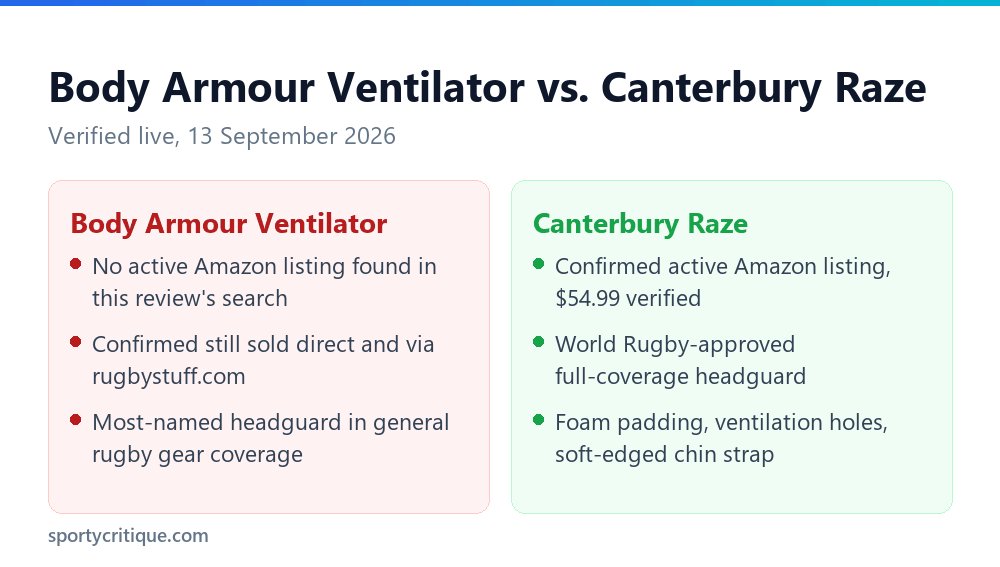
Table of Contents
Why This Site Is Flagging the Amazon Gap
Two separate Body Armour ASINs were checked for this review. One returned no catalog entry at all under an authenticated lookup, and a second, different Body Armour model, the Club Rugby Scrum Cap, came back “Currently unavailable.” Neither result confirms the brand itself is gone, Body Armour’s headguards remain listed as current stock directly on rugbystuff.com, a specialty rugby retailer, and that site even carries a dated player review specifically praising the Ventilator model. What it does confirm is that a reader searching Amazon specifically for this brand will not reliably find it there right now.
What Makes the Ventilator Design Different
Body Armour markets the Ventilator around an open-panel design specifically built to improve airflow and reduce heat buildup during play, while still providing foam protection across the crown and ears, the two areas a rugby headguard is required to cover for World Rugby approval. That open-panel approach directly targets a common complaint about standard scrum caps, that they trap heat and become uncomfortable during a full match in warm conditions, rather than being a purely cosmetic design choice.
📊 Note: No customer review count is cited here for the Ventilator because it was not found as an Amazon listing, where this site’s review-count data normally comes from. Rugbystuff.com and other specialty retailers carry their own product review sections worth checking directly.
The Amazon-Available Alternative: Canterbury Raze
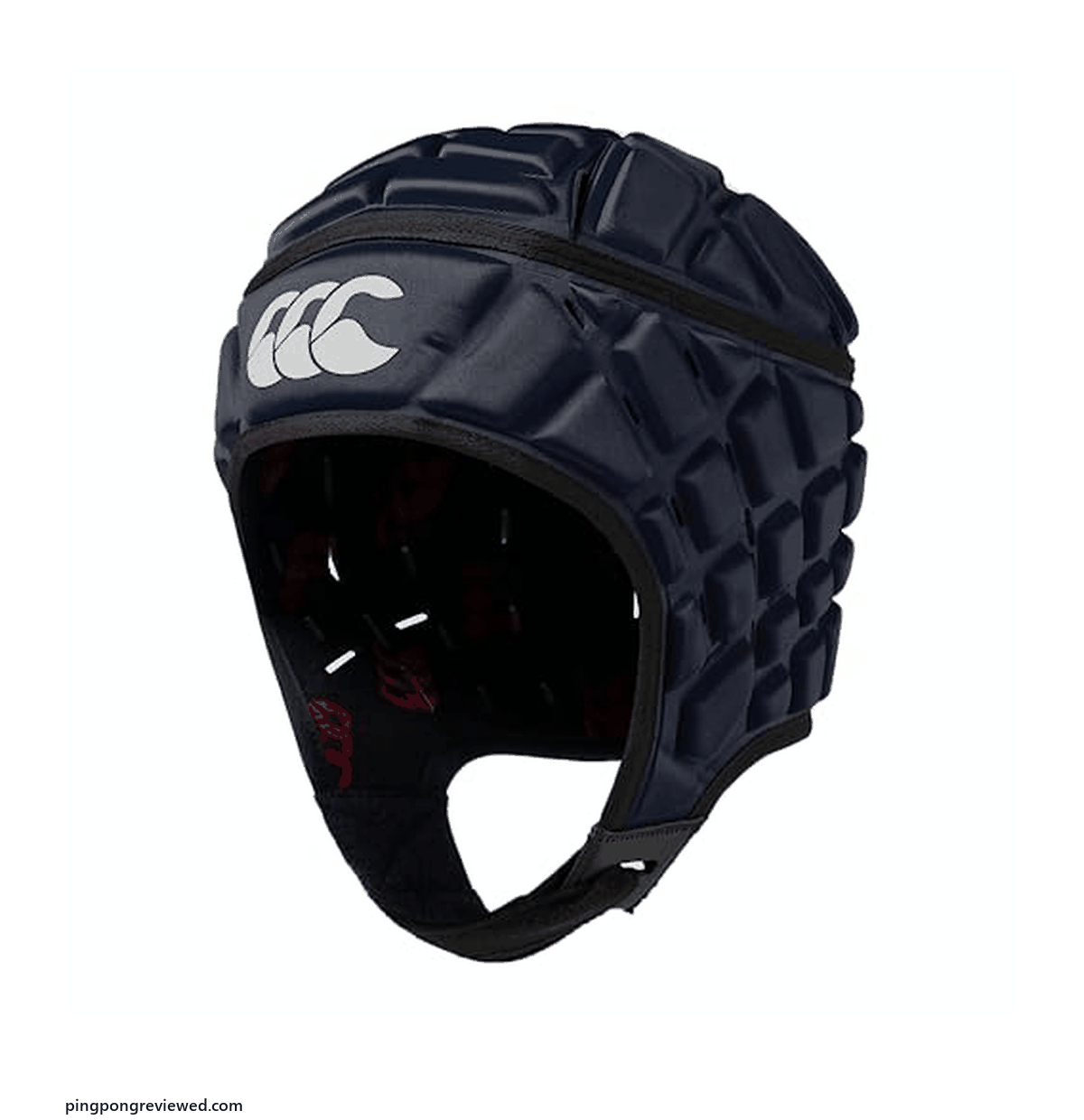
For a reader specifically wanting to buy through Amazon, the Canterbury Raze is confirmed as an active listing at a verified $54.99. It offers full coverage with foam padding, ventilation holes designed into the shell, and a soft-edged chin strap, a genuinely comparable feature set to the Ventilator on paper, though it is a different manufacturer’s design and this review makes no claim the two feel identical in fit or ventilation performance. Canterbury is a well-established, World Rugby-affiliated equipment brand in its own right, not treated here as a downgrade substitute.
World Rugby Approval: What It Actually Certifies
Any headguard marketed for use in organized rugby needs World Rugby’s Regulation 12 approval, which governs padding thickness, coverage area, and construction to prevent the guard from being used as an impact weapon or providing false confidence against concussion, not a general safety or comfort certification. This approval says nothing about breathability, fit, or comfort, factors like the Ventilator’s specific open-panel cooling design sit entirely outside what the certification measures, worth understanding before treating “World Rugby approved” alone as a complete buying signal.
Who a Ventilation-Focused Headguard Is Actually For
A ventilation-focused design like the Body Armour Ventilator targets players who specifically find standard headguards too hot or restrictive during a full match, often front-row forwards who wear a headguard through extended scrum time in warm weather. A player who has not had comfort or overheating complaints with a standard headguard design has less specific reason to prioritize a ventilation-first model over a more widely available option like the Canterbury Raze or a Gilbert model.
💡 Pro tip: Fit matters more than brand for a headguard’s actual protective value, a loose-fitting premium headguard performs worse than a properly fitted budget one. Checking a specific brand’s sizing chart against an actual head measurement is worth more time than comparing feature lists between models.
Break-In Period and Strap Adjustment
A new headguard typically needs a few sessions of wear to break in the foam padding and for a player to find the right chin strap tension, too loose and the guard shifts during contact, too tight and it becomes distracting or uncomfortable within the first half. Judging a new headguard’s comfort or fit from a single training session risks an unfair first impression that proper break-in and strap adjustment would resolve, a normal part of settling into any new headguard rather than a sign of a poor fit.
Headguard Materials: Foam Density and Shell Construction
Rugby headguards use a soft, closed-cell foam padding rather than the hard-shell plus liner construction found in helmets for contact sports like American football or ice hockey, a direct consequence of World Rugby’s Regulation 12 limiting padding thickness specifically to prevent a headguard from becoming a weapon in contact. That soft-shell approach is why headguards protect against cuts and abrasion effectively while offering little meaningful impact absorption comparable to a hard-shell helmet, a real physical limitation of the category rather than a quality gap specific to any one brand or model.
Position-Specific Headguard Considerations
Front-row forwards, who spend the most time with sustained head contact in scrums, tend to prioritize ear protection and durability most heavily, while backs who wear a headguard mainly for open-field collision protection often weigh comfort and peripheral vision more heavily than scrum-specific ear coverage. A ventilation-focused design like the Ventilator’s open-panel build can suit either position group, but a front-row player specifically should confirm the ear coverage area meets their comfort needs during extended scrum time before choosing a lighter, more ventilated design over a fuller-coverage option.
What This Review Doesn’t Cover
This page reports a live availability finding and each brand’s own stated design details, not a hands-on assessment of how the Ventilator or the Canterbury Raze actually performs across a full season of scrums and contact, how their foam padding holds up over repeated matches, or how their ventilation claims compare directly in real match-day heat. Independent player reviews, including the one referenced on rugbystuff.com for the Ventilator specifically, remain a better source for that kind of experiential detail than any single specs-and-availability review, this one included, particularly for a piece of protective equipment worn through repeated, sustained contact over a season.
How to Verify This Yourself
Retail channels for specialty rugby equipment can differ meaningfully from mainstream sporting goods, similarly to how this site has documented distribution-channel gaps directly in other equipment categories. Checking rugbystuff.com or a brand’s own site directly for Body Armour products, or checking the specific Amazon ASIN for the Canterbury Raze or a Gilbert model, both confirm whether this availability picture still holds at the time of reading rather than relying on this review indefinitely.
Check the Canterbury Raze on Amazon (Confirmed live alternative, not the Body Armour Ventilator)As an Amazon Associate, we earn from qualifying purchases through links on this page.
- ✓Buy the Body Armour Ventilator directly through rugbystuff.com or the brand’s own site
- ✓Check a specific brand’s sizing chart against an actual head measurement
- ✓Treat World Rugby approval as a cuts-and-abrasion standard, not a concussion standard
- ✓Consider the Canterbury Raze or a Gilbert model if buying through Amazon specifically
- ✕Assume the Body Armour Ventilator is available on Amazon because similar headguards are
- ✕Assume a World Rugby-approved headguard meaningfully reduces concussion risk
- ✕Judge headguard comfort from a single training session before proper break-in
- ✕Prioritize brand name over a properly fitted size when choosing between options
Where to Buy It
Rugbystuff.com and Body Armour’s own channels are the confirmed current sources for the Ventilator itself. For Amazon-specific buyers, the Canterbury Raze and Gilbert Attack or Xact models checked for this review are all confirmed active listings in the same full-coverage headguard category, worth comparing directly against each other given the price and feature differences between brands.
💡 Pro tip: Washing a headguard by hand in cool water and air-drying it away from direct heat, rather than machine washing or tumble drying, helps the foam padding keep its shape and protective properties over a full season rather than compressing or breaking down faster than it should.
None of this is meant to discourage buying the Ventilator itself, it means going in with accurate expectations about where to actually find it and what its World Rugby approval does and does not cover.
The Verdict
In short: the Body Armour Ventilator is a real, currently sold headguard with a genuinely distinct ventilation-focused design, but it is confirmed not reliably available on Amazon, buy it directly through rugbystuff.com or Body Armour’s own site instead. Readers specifically shopping on Amazon have a confirmed live, verified-price alternative in the Canterbury Raze at $54.99, a different but comparably positioned, World Rugby-approved full-coverage headguard, plus Gilbert Attack and Xact as further confirmed-active options, both worth comparing directly on fit and price before deciding between them.
Common Questions
Is the Body Armour Ventilator headguard sold on Amazon?
Not reliably, one ASIN checked returned no catalog entry and a different Body Armour model came back unavailable, as of a live check on 13 September 2026. It remains available directly via rugbystuff.com and the brand’s own channels.
Is Body Armour a discontinued brand?
No, Body Armour headguards are confirmed as current stock on rugbystuff.com, including a dated player review of the Ventilator model specifically. The gap found here is Amazon-specific availability, not the brand itself.
What is a confirmed live Amazon alternative to the Ventilator?
The Canterbury Raze, confirmed active at a verified $54.99, along with Gilbert Attack and Gilbert Xact, both also confirmed active listings in the same headguard category.
Does a World Rugby-approved headguard prevent concussions?
No, World Rugby’s own guidance is that approved headguards are designed primarily to prevent cuts, abrasions, and cauliflower ear, not to meaningfully reduce concussion risk.
Has this review actually tested the Ventilator on the pitch?
No, this is a verified-availability review based on each brand’s own product materials and current retail listings, not a hands-on tested assessment.
The Short Version
- →Body Armour Ventilator is real and current, but not reliably sold on Amazon.
- →Buy it directly through rugbystuff.com or Body Armour’s own channels.
- →Canterbury Raze is a confirmed live Amazon alternative at a verified $54.99.
- →Gilbert Attack and Gilbert Xact are two further confirmed-active Amazon options.
- →World Rugby approval governs cuts and abrasion protection, not concussion risk.
- →Fit and proper strap adjustment matter more than brand for actual protection.