How to Clean and Care for Pool Balls


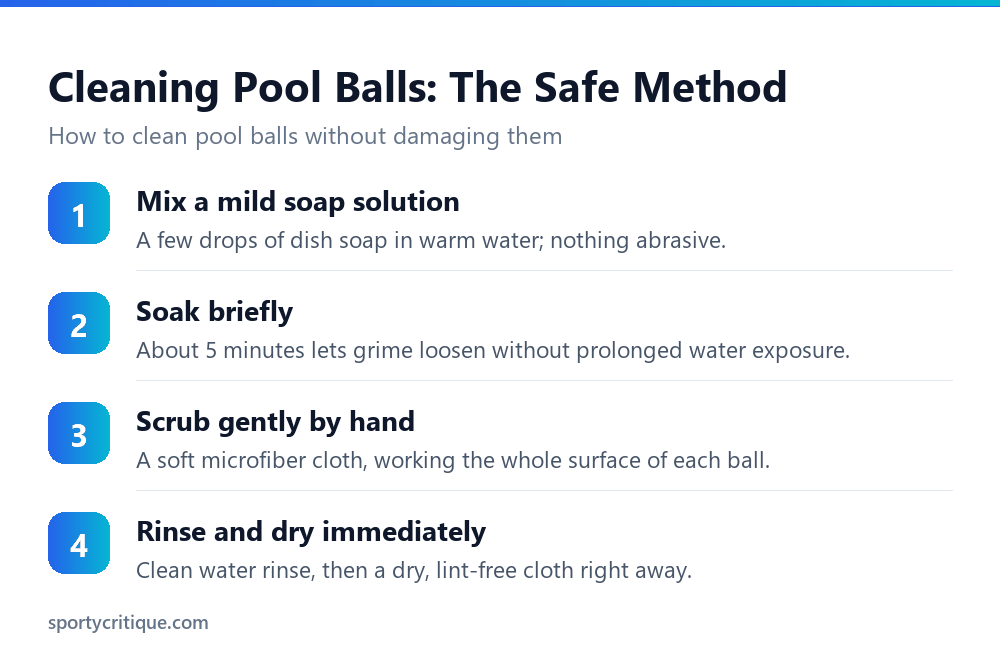
To clean pool balls, mix a few drops of mild dish soap into warm water, soak the balls for about five minutes, then scrub each one gently by hand with a soft microfiber cloth, working around the entire surface and paying extra attention to chalk marks and stained spots. Rinse thoroughly with clean water and dry immediately and completely with a lint-free towel. Never use abrasive cleaners, scouring pads, or harsh chemical solvents; they scratch or dull the surface in ways that permanently change how the ball rolls and reflects light.
Chalk residue, hand oils, and general grime build up on pool balls faster than most players notice, since the change happens gradually across dozens of sessions rather than all at once. A dirty ball doesn’t just look worse; the buildup changes friction and roll consistency in small but real ways, which shows up as position play that feels slightly less predictable than it should.
- →Mild dish soap and warm water is the safe standard method; nothing abrasive belongs anywhere near the balls
- →Soak briefly (about 5 minutes), scrub gently by hand, rinse fully, and dry immediately
- →Never use abrasive cleaners, scouring pads, or harsh solvents; they scratch and dull the surface permanently
- →Baking soda on a toothbrush handles stubborn chalk residue without the scratching risk of an abrasive pad
- →Dry immediately and completely; balls left wet or damp for extended periods can be damaged over time
Table of Contents
The Safe Cleaning Method, Step by Step
Fill a sink or basin with about a gallon of warm water and add a small amount of mild dish soap, something like Dawn or Palmolive; a few drops is genuinely enough to create light suds, and more isn’t better here. Add the balls and let them soak for roughly five minutes, which gives soap time to loosen grime without prolonged water exposure that could work its way into any seams or the ball’s surface finish.
Scrub each ball individually with a soft microfiber cloth or rag, working around the entire surface rather than just the visibly dirty spots, and paying extra attention to chalk marks and any stained areas. For chalk residue that doesn’t lift with soap and water alone, sprinkling baking soda onto a toothbrush and gently working it over the wet ball handles heavier buildup without introducing anything abrasive enough to scratch the surface.
Rinse each ball thoroughly with clean water to remove all soap residue, since leftover soap film can leave the surface feeling slightly tacky or attract dust faster once the balls are back on the table. Dry immediately and completely with a clean, dry, lint-free cloth rather than letting balls air dry, which risks water spotting and extends how long moisture sits against the surface.
⚠️ Watch out: Abrasive cleaners, scouring pads, or anything with grit will scratch the ball’s surface, and that damage is permanent. A scratched ball doesn’t just look worse; the altered surface changes how it rolls and how consistently it contacts other balls, which is a real performance problem, not just a cosmetic one.
What Not to Use
The common thread across everything on this list is uncontrolled abrasion or chemical exposure well beyond what mild soap and gentle hand scrubbing provides. A pool ball’s surface is precisely finished for consistent roll and bounce; anything that alters that finish, even in a way that looks fine to the eye, can change how the ball actually performs.
Dedicated Ball Cleaner Products
Beyond basic soap and water, dedicated ball cleaner and polish products exist specifically for billiard balls and are formulated to clean and restore shine without the scratching risk of a generic household cleaner. A product like the Aramith Pool/Billiard Ball Cleaner Polish ($20.40) is worth considering for a set that sees heavy regular use, where basic soap and water cleaning alone starts to feel insufficient to maintain the shine and roll consistency a serious player notices.
💡 Pro tip: A dedicated cleaner isn’t a requirement for casual, infrequent play; soap and water handles that use case perfectly well. It becomes more worthwhile specifically for tables seeing heavy, regular use where the balls accumulate chalk and grime fast enough that a more thorough periodic cleaning routine makes a real difference.
Cleaning Do’s and Don’ts
- ✓Use mild dish soap and warm water as the standard method
- ✓Scrub gently by hand with a soft microfiber cloth
- ✓Dry immediately and completely after rinsing
- ✓Use baking soda on a toothbrush for stubborn chalk residue
- ✕Using abrasive cleaners, scouring pads, or anything gritty
- ✕Soaking balls for extended periods beyond the necessary few minutes
- ✕Letting balls air dry instead of drying them immediately
- ✕Running balls through a dishwasher or washing machine
How Often to Clean
There’s no fixed universal schedule, since cleaning frequency depends heavily on how often and how heavily a table gets used. A casual home table played occasionally might only need cleaning every few months, while a heavily used table, a bar, a rec center, or a serious daily player’s home setup, benefits from cleaning every few weeks to keep chalk buildup from accumulating to a noticeable level.
Visible chalk residue, a dull or hazy appearance replacing the balls’ normal shine, or a noticeably tacky feel when handling them are all practical signals that cleaning is overdue, more reliable than trying to stick to a fixed calendar schedule regardless of actual use volume.
Storage Between Cleanings
Storing balls in a rack or a dedicated ball tray rather than loose in a bag or pile reduces incidental scratching from balls knocking against each other, which happens even without active play if they’re stored carelessly. This is a small habit that extends how long a set stays in good condition between actual cleaning sessions.
Keeping balls away from direct sunlight and extreme temperature swings during storage also protects the surface material over the long term, the same general principle that applies to cue storage and table cloth care. None of these storage habits require special equipment beyond basic care and a reasonable storage spot out of harsh conditions.
Why Balls Discolor and Yellow Over Time
Beyond surface grime that regular cleaning removes, some pool balls, particularly older sets made from certain resin formulations, genuinely yellow or discolor over years of exposure to UV light and general aging, a chemical change in the material itself rather than dirt sitting on the surface. No amount of cleaning reverses this kind of true material discoloration, since it’s happening within the resin, not on top of it.
Distinguishing true discoloration from surface grime matters before assuming a cleaning routine has failed. If a thorough soap-and-water clean, including the baking soda step for stubborn spots, doesn’t restore a ball’s original color and shine, the discoloration is likely a material aging issue rather than something cleaning can fix, and replacement is the realistic path forward for that specific ball or set.
📊 Note: Storing balls away from direct, prolonged sunlight slows UV-driven yellowing meaningfully over the years a set stays in regular use. This is a preventive habit, not a fix for discoloration that’s already happened, but it protects a newer set from developing the same issue prematurely.
Special Considerations for the Cue Ball
The cue ball takes more direct chalk contact than any object ball, since it’s struck directly by a chalked tip on every single shot, which is part of why some players clean it more frequently than the rest of the set. The same soap-and-water method applies identically; there’s no special cleaning process required specifically for the cue ball on a standard home table.
Coin-operated tables sometimes use an oversized or magnetically weighted cue ball so the table’s internal mechanism can separate it from the object balls after a shot. That weighted or magnetic core sits inside the ball’s outer shell and isn’t exposed to water during a normal surface cleaning, so the same cleaning method remains safe, though prolonged soaking beyond the standard few minutes is worth avoiding out of general caution with any internally-constructed ball.
Restoring Shine to a Dull, Heavily Used Set
A set that’s been in heavy use for years, cleaned regularly but still looking dull compared to new, has likely accumulated countless microscopic scratches from normal contact with other balls, cushions, and the table surface over that time. Basic cleaning doesn’t address this kind of cumulative micro-wear, since it’s a physical surface texture change, not residue sitting on top of an otherwise intact finish.
A dedicated ball polish, distinct from a basic cleaner, is formulated to address this specific kind of surface dulling, restoring shine through a light polishing action rather than just removing surface grime. This is a reasonable step for a well-loved set that’s otherwise still structurally sound and playing fine, just visually duller than it once was, rather than a sign the set needs full replacement.
Realistic expectations matter here: a polish restores shine and can meaningfully improve appearance, but it won’t undo genuine, deep scratches the way a professional resurfacing service might for a valuable set. For most home and casual use, the appearance improvement from a good polish is more than sufficient without needing to pursue more involved restoration options.
Frequently Asked Questions
Can I use rubbing alcohol to clean pool balls?
It’s not recommended as a standard method, since alcohol and other solvents can affect the ball’s surface finish over repeated use. Mild dish soap and water is the safer, standard approach for regular cleaning.
Why do my pool balls feel sticky even after cleaning?
Leftover soap residue from an incomplete rinse is the most common cause. Rinsing thoroughly with clean water before drying removes this, and drying immediately with a clean cloth prevents new residue from settling back onto the surface.
Does cleaning actually improve how the balls play, or just how they look?
Both. Chalk and grime buildup changes surface friction in small but real ways, so cleaning restores more consistent roll and contact behavior, not just visual shine.
Is it safe to clean a cue ball the same way as the object balls?
Yes, the same mild soap-and-water method works identically for the cue ball. Some players clean the cue ball more frequently than the object balls since it contacts the cue tip and chalk residue directly on every shot.
Why won’t my balls come back to their original color no matter how much I clean them?
If a thorough clean doesn’t restore original color and shine, the ball is likely showing true material discoloration from age and UV exposure rather than surface grime. No cleaning method reverses this kind of chemical change in the resin itself.
Is a ball polish different from a ball cleaner?
Yes. A cleaner removes surface grime and chalk residue, while a polish addresses the microscopic surface scratches that accumulate over years of use and cause a dull appearance even on a clean set. Heavily used sets benefit from both, used for their different purposes.
Consistent, gentle cleaning is a small routine that pays off in both appearance and actual playing consistency, which is worth the few extra minutes it takes compared to skipping it entirely and hoping the balls hold up on their own.
As an Amazon Associate, we earn from qualifying purchases through links on this page.