How to Clean Golf Clubs the Right Way, Club by Club

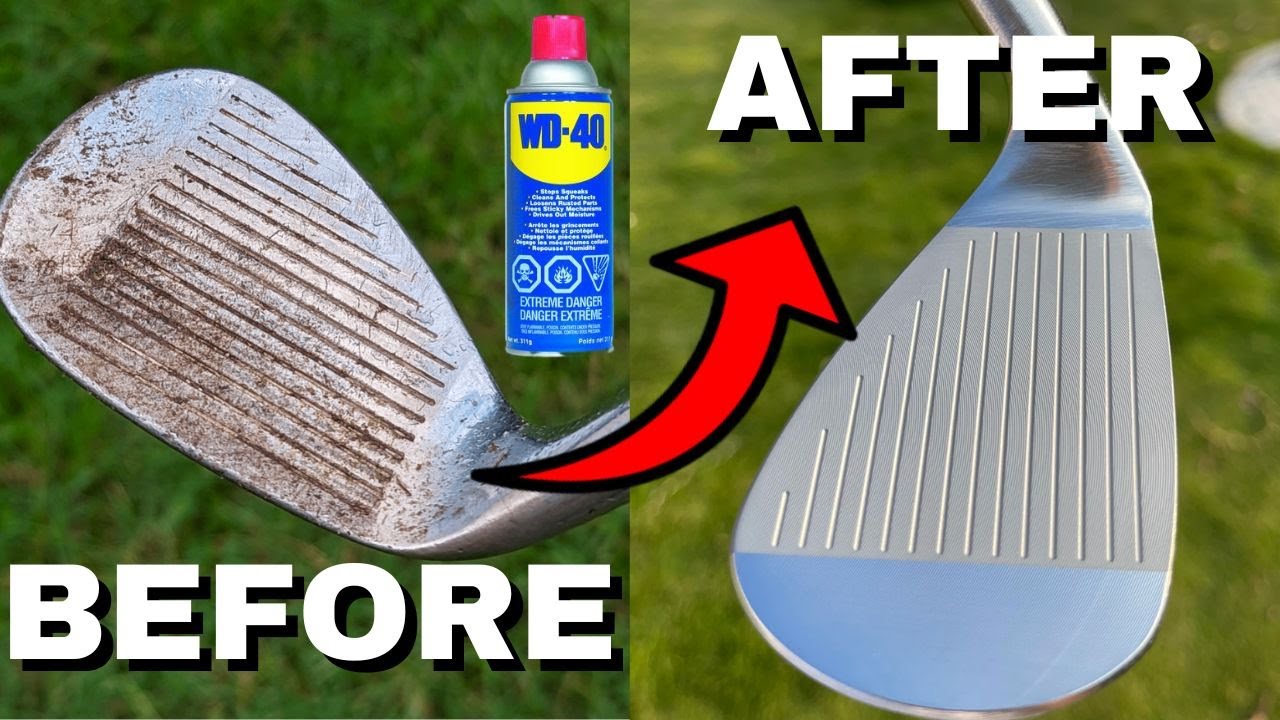
Irons, woods, and putters don’t clean up the same way, and treating them like they do is how faces get hazed and shafts get soaked. Here’s the right method for each, and the mistakes that quietly damage clubs over time.

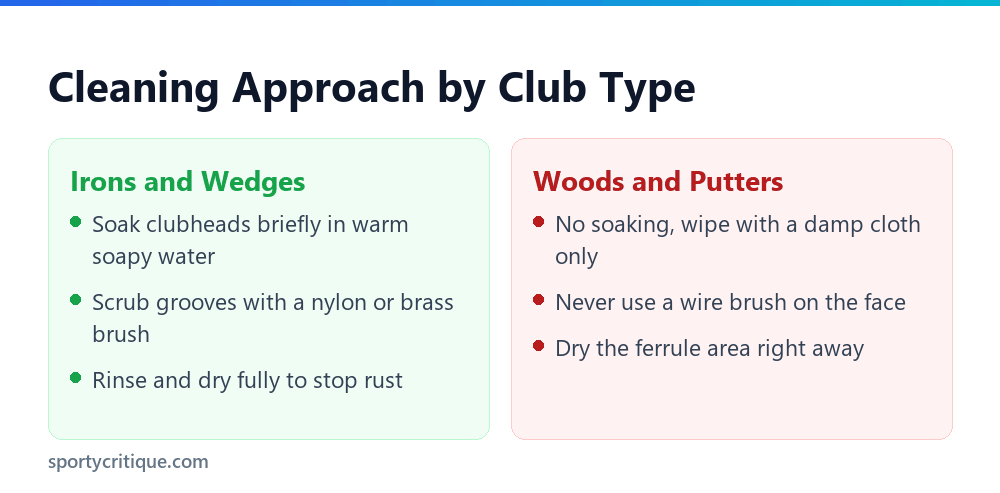
To clean golf clubs, soak iron and wedge heads briefly in warm soapy water and scrub the grooves with a nylon or brass-bristle brush, but skip the soak for woods, hybrids, and putters and just wipe them with a damp cloth. Never use a wire brush or steel wool on a chrome or PVD-coated face, and don’t let a graphite-shafted clubhead sit submerged for long, since water can wick up into the shaft.
Dirty grooves cost you spin, and a grimy grip costs you control, so learning to clean golf clubs properly is worth the fifteen minutes it takes after a round. The catch is that irons, woods, and putters don’t all want the same treatment, and the wrong method on the wrong club can do real damage: soaking a driver head, scrubbing a chrome putter face with a wire brush, or leaving a graphite shaft wet at the hosel.
- →Irons and wedges can be soaked briefly; woods, hybrids, and putters should only be wiped, never soaked
- →A nylon or brass brush is safe on iron grooves; a wire brush or steel wool will haze chrome and strip PVD coatings
- →Keep water away from the ferrule (where the shaft meets the head) and out of a graphite shaft entirely
- →Dry every club fully before it goes back in the bag; damp clubheads left in a closed bag is how rust starts
- →Clean grips with a damp cloth and mild soap, not the same brush you use on grooves, to avoid grinding grit into the rubber
Table of Contents
What you need
Cleaning irons and wedges
⚠️ Watch out: Wedges see the most groove buildup, especially if you practice out of sand or rough often. Grit packed into sand-wedge grooves is what quietly kills spin, and a quick brushing after every few range sessions, not just after rounds, keeps it from compacting.
Cleaning woods, hybrids, and drivers
Skip the soak entirely for woods and hybrids. Modern driver and fairway wood heads are hollow, and enough exposure to standing water can work its way in through the hosel over time, which affects swing weight and, in rare cases, the internal sound-dampening material. Wipe the face and crown with a soft cloth dampened in soapy water, then dry it right away with a separate dry cloth.
Pay attention to the ferrule, the small plastic or composite ring where the shaft enters the head. It’s a common entry point for moisture, so wipe around it rather than letting water pool there, and dry that area first before moving on to the rest of the clubhead.
Cleaning your putter
Putters get the gentlest treatment of any club in the bag. Wipe the entire head, insert, and any alignment markings with a damp cloth, and use a soft brush only on grooves or milled patterns if dirt is actually packed in. Insert-faced putters, the kind with a separate softer material set into the face for feel, are especially easy to damage: aggressive scrubbing can loosen the adhesive holding the insert in place over time.
What not to do
- ✓Use a soft nylon or brass brush on iron and wedge grooves
- ✓Wipe woods, hybrids, and putters instead of soaking them
- ✓Dry every club fully before it goes back in the bag
- ✓Spot-clean rust with distilled white vinegar on a cloth
- ✕Using a wire brush or steel wool on any chrome, PVD-coated, or painted face
- ✕Soaking a graphite-shafted clubhead for extended periods; water can wick up into the shaft
- ✕Running clubs through a dishwasher, which can warp graphite and loosen ferrules
- ✕Letting a wet clubhead sit in a closed bag, which is a fast route to surface rust
⚠️ Watch out: A wire brush will haze a chrome finish and can strip a PVD coating in a single cleaning session. If a listing or a forum post recommends one for grooves, use a nylon or brass-bristle brush instead. It’s gentler on the finish and still clears packed dirt out of a groove effectively.
Cleaning grips
Grips lose tackiness from dirt and oil buildup well before they physically wear out. Wipe them with a cloth dampened in warm soapy water, working in small circles to lift grime out of the grip’s texture, then rinse the cloth and wipe again to remove soap film before it dries and leaves a slick residue behind. Avoid soaking grips or spraying cleaner directly onto them; a damp cloth gives enough moisture without risking water running down into the shaft.
💡 Pro tip: A dedicated brush that combines groove-cleaning bristles with a retractable clip, like the Golf Club Cleaning Brush and Groove Cleaner with Retractable Clip, Extends 2 ft Brass, clips right onto your bag so it’s on hand after every hole rather than sitting in a garage drawer. At the time of writing it’s a low-cost add-on, though prices and stock on Amazon change, so check the current listing before buying.
Cleaning shafts, not just heads
Shafts get overlooked because they don’t obviously get dirty the way a clubface does, but sunscreen, sweat, and course dust build up on them too, especially on the lower third you grip during a swing. Wipe steel shafts with the same damp soapy cloth you use on the clubhead. Graphite shafts are generally safe to wipe down as well since you’re not submerging anything, just avoid letting water sit at the point where the shaft meets the ferrule or hosel, which is the one spot on a graphite shaft that isn’t sealed against moisture the way the painted length of the shaft is.
A quick shaft wipe also gives you a chance to inspect for hairline cracks near the tip, which show up more clearly on a clean surface than a dusty one. Catching a cracked shaft during a cleaning pass, before it fails mid-swing, is a small side benefit of making this part of the routine instead of skipping straight to the clubhead.
Cleaning your bag and headcovers
A clean clubhead going back into a dirty bag pocket just picks up grit again on the next round. Turn the bag upside down periodically and shake out loose dirt, grass clippings, and old tees, then wipe the interior pockets with a damp cloth. Headcovers, especially the fabric or knit style used on woods, absorb moisture from wet clubheads and can hold onto it long enough to grow mildew if they’re stored damp; let both the cover and the clubhead air-dry fully before pairing them back together after a wet round.
Zippered pockets that hold tees, ball markers, and rangefinders collect a surprising amount of grass and dirt over a season. Emptying and wiping them out every few rounds keeps that grit from transferring onto grips and clubheads every time you reach in for a tee.
Storing clubs between rounds
Where you keep your clubs between rounds matters almost as much as how you clean them. A hot car trunk speeds up grip degradation and can soften certain adhesives over a season of repeated heat cycles, even though it won’t damage the metal heads themselves. A cool, dry closet or garage corner, away from direct sun and swings in temperature, is a better home for a bag between rounds, particularly during summer months in hot climates.
📊 Note: If clubs will sit unused for an extended stretch, such as an off-season in a colder region, clean and fully dry them first rather than storing them dirty. Dirt left on a clubface over months of storage holds moisture against the metal and is a common cause of the light rust spots people find when they pull clubs out again in spring.
Dealing with rust
Light surface rust on iron faces or grooves usually responds to distilled white vinegar on a soft cloth: apply it, let it sit for a minute or two, then wipe and rinse. For rust that’s actually pitted into the metal rather than sitting on the surface, a light cleaning is about the ceiling of what you should attempt yourself; deeper pitting affects the face’s performance and is a job for a club repair shop, not a home remedy.
A quick between-hole routine
You don’t need the full bucket-and-brush process after every single shot. Carrying a small towel, damp on one side and dry on the other, and giving the face a quick wipe after shots from the rough or a bunker keeps the worst of the buildup from packing into grooves during the round itself. It’s a small habit, but it means the at-home cleaning session afterward takes less time, since you’re removing loose dirt rather than dirt that’s already dried and hardened onto the face by the time you get home.
How often to clean your clubs
A quick wipe-down after every round keeps dirt from packing into grooves and hardening there, which is much harder to remove once it’s dried in. A deeper soak-and-scrub session for irons and wedges once every few rounds, or weekly during a heavy playing stretch, is enough to keep grooves performing close to new. Clubs stored dirty over an off-season are far more likely to show rust or grip damage than clubs wiped down before they go into storage.
Frequently asked questions
Can I put golf clubs in the dishwasher?
No. Dishwasher heat and prolonged water exposure can warp graphite shafts, loosen ferrules, and strip finishes off clubheads. Hand cleaning with a bucket, brush, and cloth takes only a few extra minutes and avoids all of that risk.
Is it safe to soak a driver head to clean it?
Not recommended. Driver and fairway wood heads are hollow, and soaking increases the chance of water working its way in through the hosel over time. Wipe the face and crown with a damp cloth instead, and dry it immediately afterward.
What removes rust from golf club grooves?
Distilled white vinegar on a soft cloth handles light surface rust well; apply it, let it sit briefly, then wipe and rinse. Deeper pitted rust that’s eaten into the metal itself is better handled by a club repair shop, since home remedies won’t reverse actual pitting.
Why shouldn’t I use a wire brush on my irons?
A wire brush is fine on some raw or unfinished groove edges, but it will haze chrome plating and can strip PVD or black-oxide coatings in a single session. A nylon or brass-bristle brush clears the same dirt without damaging a finished face.
As an Amazon Associate, we earn from qualifying purchases through links on this page.