How to Throw a Rugby Ball: The Spiral Pass, Step by Step

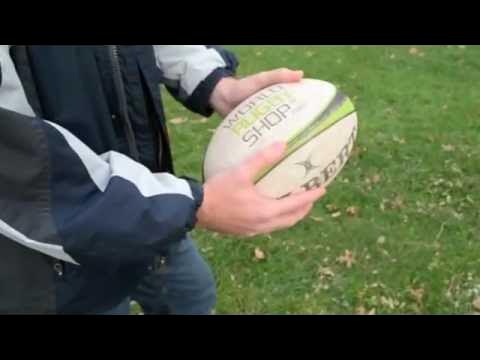
Quick Answer: Hold the ball long-ways in two hands, fingers spread across the seams. Sweep your arms across your body toward the target — power comes from the sweep and your hips, not a throwing motion — and as you release, flick your fingers down and around the ball. That flick is the entire spiral. Aim chest height, and remember the law that shapes everything: the ball can only travel sideways or backwards.
🏉 Rugby Hub: Explore all 35 boot reviews, rules breakdowns, and tackling guides in our Complete Rugby Resource Hub.
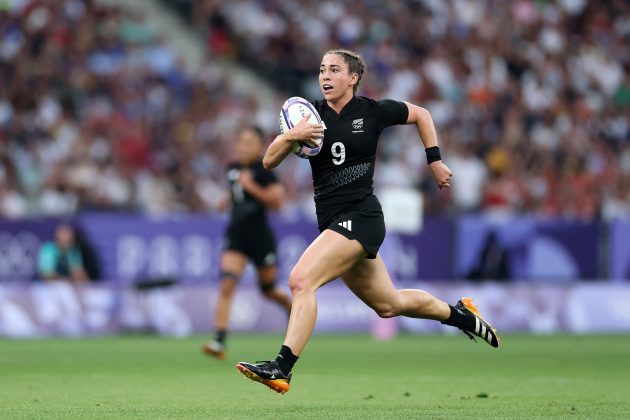
The spiral pass is rugby’s signature skill, and it’s almost entirely wrist and fingers. That’s why the smallest players on the pitch — scrum-halves who weigh 75 kilos — throw the longest passes, while gym-built forwards struggle to reach 8 metres. It’s not strength. It never was.
Here’s the technique, the physics that makes it work, and the thing every drill leaves out: how to do it while running.
Table of Contents
First, the law that shapes every pass
⚠️ The ball can never travel forward out of your hands. A forward pass concedes a scrum. Every technique below sends the ball sideways or backwards — and here’s the nuance that catches new players: the test is the direction the ball travels from your hands, not relative to the ground. A pass thrown backwards by a player sprinting forward can drift forward relative to the pitch and still be legal, which is why some passes look forward on TV and aren’t.
What isn’t legal is the most common beginner error, and it isn’t technique at all: drifting the ball forward while running. You’re moving at speed, you turn to pass, and your hands travel forward with your body before you release. The pass leaves your hands going forward. Scrum against you, and you’ll swear it was fine.
Why the spiral works: gyroscopic stability
A rugby ball is a prolate spheroid — a pointed oval — and that shape has a problem. Thrown end over end, it presents constantly changing surface area to the air, so it decelerates unpredictably and gets shoved around by any breeze. That’s a lobbed pass: slow, floaty, and easy to intercept.
Spin it around its long axis and everything changes. Gyroscopic stability keeps the nose pointed along the flight path, so the ball presents a consistent, minimal profile to the air the whole way. Less drag, straighter line, and — crucially — it holds its line in wind that would make a lobbed pass a lottery.
That’s what the finger flick buys you: the ball travels further and faster for the same effort, and arrives where you aimed it. The cost is that a fast-spinning ball is harder to catch, which is a real trade-off we’ll come back to.
The spiral pass, step by step
- Grip: two hands on the ball, held long-ways, fingers spread across the seams. Fingers do the work, not palms — a ball resting in your palms cannot spin off your fingertips.
- Set up: draw the ball back across your body, away from your target, nose tilted slightly up. Your hands should end up near your opposite hip.
- Sweep: swing your arms flat across your body toward the receiver. This is where the distance comes from — a sweep driven by hip rotation, not an arm throw.
- The flick: at release, snap your fingers down and around the ball. Passing right? Your left hand supplies the power and spin; your right hand steers. Passing left? Reverse it.
- Finish: both hands pointing at the receiver’s chest. Your follow-through and the ball go to the same place — if your hands finish at their shoes, so did the pass.
Aim for the chest. Not the hands, not out in front, not at the head — the chest of a runner who is moving. That’s the biggest target, it’s where hands naturally are, and it lets them catch without breaking stride.
💡 The drill that builds the flick — and removes everything else. Sit cross-legged on the ground, 5 metres from a partner or a wall, and spiral-pass. Sitting removes your hips, legs and body weight entirely; the only thing left is your hands. Ten minutes a day for two weeks and your pass changes permanently, because you’ve been forced to learn the one part that actually matters.
Both directions, or you’re half a player
Passing left and right feel like completely different skills, because they are: the power hand and the steering hand swap jobs. Your dominant side learns quickly. Your weak side has to learn a flick with a hand that’s never flicked anything.
Every good player drills both. Every beginner avoids one — and the avoidance is visible from the stands. A player who can only pass one way telegraphs the entire attack: defenders know which direction the ball is going before the pass is thrown, and they drift accordingly. You’ve eliminated half the pitch by yourself.
The fix is unglamorous: every passing drill, both directions, equal reps, from the first week. The weak side never quite matches the strong one — but it gets close enough that nobody can read you, and that’s the whole point.
The part drills leave out: passing while running
Here’s the gap between practice and matches. In drills you stand still, set your feet, and throw a beautiful spiral. In a game you’re sprinting, someone is arriving to hit you, and you have about a third of a second.
What changes:
- You can’t wind up. The full back-swing across your body doesn’t exist at speed. The pass becomes a shorter, sharper flick with less sweep — which is exactly why the sitting drill matters, because it trains the part that survives.
- Your body is already rotating. Running generates rotation; use it. Good passers time their pass to the natural turn of their torso rather than fighting it.
- Look before, not during. Scan for your receiver early, then pass without staring. Staring at your target for two seconds before you release tells the defence everything.
- Pass before contact, not during it. The single most valuable habit in amateur rugby. A pass thrown as you’re being tackled is a pass with no accuracy — get it away a step earlier and your teammate receives a catchable ball instead of a grenade.
The offload — a one-handed pass out of the tackle — is the advanced version, and it’s the shot that makes teams thrilling to watch. Learn it last. Learn to pass a step earlier first; it wins more ball than any offload.
The full passing menu
| Pass | What it is | When to use it | Difficulty |
|---|---|---|---|
| Pop pass | Soft, short lob into a runner’s hands | Close support, under 5m | Easy |
| Spiral / spin | Fast, flat, long | Moving the ball wide, 8m+ | The core skill |
| Cut-out pass | Spiral that skips a teammate | Beating a drifting defence | Hard |
| Offload | One-handed, out of the tackle | Keeping the ball alive | Advanced |
| Dive pass | Full-body launch from a ruck base | Scrum-half under pressure | Specialist |
| Switch/scissors | Short pass to a runner crossing behind you | Changing the attack’s angle | Timing-dependent |
⚠️ The spiral is not always the answer. Inside 5 metres, a soft pop pass is easier to catch at speed and gets there just as fast — a hard spiral into a supporter’s chest from 3 metres out is a gift to the defence, because they’ll knock it on for you. Match the pass to the distance: pop close, spiral wide. Good players choose; beginners spiral everything and wonder why their support keeps dropping it.
The faults that kill passes
| Fault | What you’d see | Fix |
|---|---|---|
| Floating | Ball balloons and hangs in the air | Nose too high at release — level the ball, aim flatter |
| Wobbling | Arrives spinning wrong, hard to catch | Palms on the ball instead of fingers on the seams |
| Telegraphing | Defence reads it every time | Scan early, then pass in one motion |
| All arm, no flick | Fast, wobbly, heavy to catch | Less shoulder, more wrist. The sitting drill |
| Passing into contact | Teammate catches it and gets smashed | Look at where the defender will be, not where they are |
| Forward drift | Scrum against you | Release earlier; let the ball leave your hands behind your shoulders |
That fifth one deserves emphasis, because it’s a thinking fault rather than a technical one. Never pass a teammate into a tackle. If your support runner will arrive at the same moment as a defender, hold the ball and take contact yourself. A good pass into a bad situation is a bad pass. Passing is a decision before it’s a skill.
The other half: catching what’s thrown at you
A pass is a transaction between two people, and half the failures in amateur rugby get blamed on the passer when the catcher caused them. Worth knowing both sides.
Hands up, early. Present a target — hands out in front of your chest, fingers spread, before the ball is thrown. A receiver running with their arms by their sides is asking the passer to guess, and the passer will guess wrong. This single habit fixes more dropped ball than any catching drill.
Watch it all the way in. The universal cause of knock-ons at club level: the receiver looks up at the defensive line a fraction before the ball arrives, because they’re worried about the tackle. The ball hits their hands while their eyes are elsewhere and bounces forward. Eyes on the ball until it’s secure, then look up. It requires trusting that the tackle will happen whether you watch for it or not.
Catch with soft hands, out in front. Receive the ball away from your body and let your arms give slightly as it arrives — catching against your chest with stiff arms turns the ball into a rebound. And catch it early: taking the ball out in front means you can pass again immediately, while catching it late means you’ve already run past your options.
The connection to passing: a catchable ball is a pass’s real specification. A 20-metre bullet that arrives spinning too fast for your winger to hold is a worse pass than a 12-metre one they catch in stride. Accuracy and catchability beat distance every single time, which is the opposite of what most players practise.
How to practise
| Drill | Setup | Builds |
|---|---|---|
| Sitting spiral | Cross-legged, 5m apart | The finger flick, isolated |
| Static both hands | Standing, 10m, alternate directions | Weak-side flick |
| Walking line | Three players walking, ball down the line | Passing while moving |
| Running line | Same, at jogging then sprinting pace | Real match mechanics |
| Pressure passing | Add a defender who closes as you receive | Passing before contact |
| Distance ladder | Move back a metre after every 5 clean passes | Honest feedback on your range |
Track your range honestly: a solid amateur spiral reaches 10–15 metres flat off either hand. Professional scrum-halves hit 20+. If you’re chasing distance with arm strength you’ll plateau early and possibly hurt your shoulder — distance follows technique, not effort. The rest of the fundamentals are in our how to play rugby guide.
Frequently asked questions
Is a spiral pass always better?
No. Inside about 5 metres a pop pass is easier to catch and just as quick. The spiral earns its keep from 8–10 metres out, where its speed and wind resistance matter.
How far should I be able to pass?
A solid amateur reaches 10–15 metres flat off either hand. Pro scrum-halves manage 20+. Distance comes from the flick and the sweep, not from strength.
Why does my pass wobble even when I flick?
Almost always a grip problem — your palms are on the ball instead of your fingers spread on the seams. The ball has to spin off your fingertips.
What counts as a forward pass?
The direction the ball travels out of your hands, not relative to the ground. A pass thrown backwards by a sprinting player can drift forward and still be legal.
How do I learn to pass off my weak hand?
The sitting drill, both directions, every session. There’s no shortcut — the weak hand has to learn a flick it has never performed. Two weeks of deliberate reps gets you most of the way.
Should I learn the offload early?
No. Learn to pass a step before contact first — it wins more ball than any offload and it’s a decision rather than a skill. The offload is what you add once your basic passing is automatic.