How to Win a Face-Off in Lacrosse

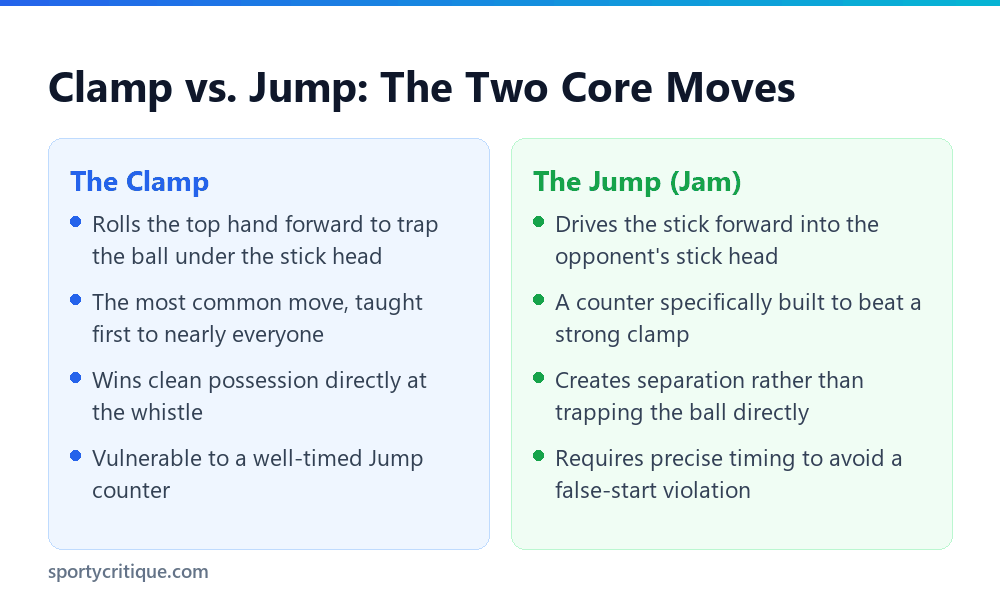
To win a lacrosse face-off, start in the legal standing neutral grip (SNG), a low, athletic stance with feet shoulder-width apart, weight on the balls of the feet, and both palms facing up. React to the whistle rather than anticipating it, then execute either the clamp, rolling the top hand forward to trap the ball under the stick head, or the jump, driving the stick forward to create separation from the opponent’s stick. Winning the initial clamp or jump is only half the battle; a fast, controlled exit move that actually gets the ball out and under control is what turns a won faceoff into an actual possession.
Face-off technique changed meaningfully with rule updates banning the old motorcycle grip (palm-down) and dropping a knee to the turf, both now illegal in NFHS and NCAA play. Anyone learning or coaching face-off technique from older material risks teaching a grip and stance that draws an automatic violation under current rules, which makes it worth confirming the legal standing neutral grip specifically rather than assuming older technique still applies.
- →The legal stance is the standing neutral grip (SNG): standing, palms up, no knee on the ground
- →The clamp, rolling the top hand to trap the ball, is the most common and first-taught move
- →The jump (jam) counters a strong clamp by driving the stick into the opponent’s stick head
- →Winning the clamp or jump means nothing without a fast, controlled exit move
- →Moving before the whistle is a violation; react to the sound, don’t anticipate it
Table of Contents
The Legal Stance: Standing Neutral Grip
Current rules require the standing neutral grip, both feet on the ground with no knee down, and the dominant hand’s palm facing up rather than down. The old motorcycle grip, palm facing down, and the once-common dropped-knee stance are both illegal under current NFHS and NCAA rules and result in an immediate violation and loss of the face-off.
Within the legal stance, feet should sit slightly wider than shoulder width, knees bent in a low, athletic position, weight on the balls of the feet rather than the heels. The foot opposite the dominant hand sits slightly forward, building a stable base that still allows explosive movement the instant the whistle blows.
⚠️ Watch out: Standing too tall reduces both leverage and reaction speed, and gripping the stick too tightly creates tension that slows the hands down rather than speeding them up. Both are common tension-driven mistakes that work against the exact explosiveness a good face-off stance is trying to build.
Grip: Dominant Hand High, Support Hand for Control
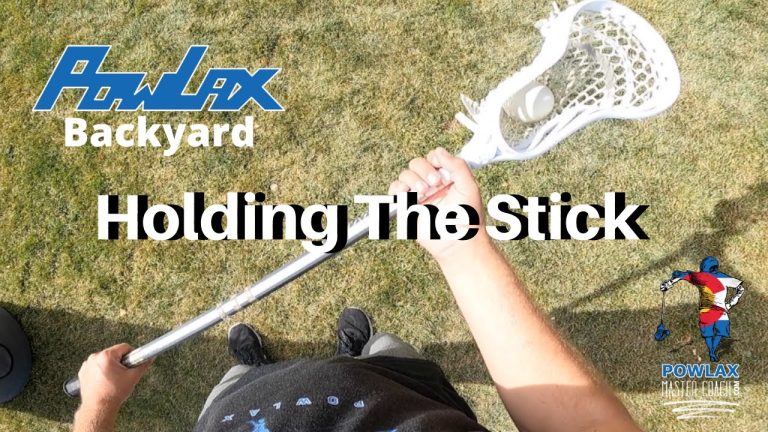
The dominant hand grips at the throat of the stick, just below where the plastic head begins, palm up per the legal standing neutral grip. The other hand sits further down the shaft, providing balance and the leverage needed for whatever exit move follows a won clamp or jump.
Bottom hand placement specifically matters for the exit, not just the initial win. A player with fast enough hands to win the clamp but poor bottom-hand control often loses the ball again immediately, since the opponent can lift the stick and steal it right back if the exit isn’t secure and quick.
The Clamp
The clamp is the most common face-off move and typically the first one taught to new players. At the whistle, the top hand rolls forward quickly to trap the ball against the ground under the back of the stick’s head, while the bottom hand and the foot on that same side drive forward together. Speed and fluidity matter more than raw strength, since the opponent is attempting the exact same motion at the same instant.
💡 Pro tip: A faceoff-specific stick head, something like the STX Duel U Unstrung Face-Off Lacrosse Head (price not returned by the Amazon API at time of writing; confirm on the listing), is built with a stiffer, more compact design specifically for the clamp-and-exit motion, differing meaningfully from a standard offensive or defensive head. Using a general-purpose head for dedicated face-off work is a common limitation for players just starting to specialize in the position.
The Jump (Jam): Beating a Strong Clamp
The jump, sometimes called the jam, is the standard counter to an opponent with a particularly strong or fast clamp. Rather than trying to out-clamp a clamp specialist directly, the jump positions the shaft parallel to the face-off line, aiming the top hand toward the opponent’s top hand and the bottom hand toward their shooting strings, then drives the stick forward into the opponent’s stick head to create separation between their stick and the ball.
This move works by disrupting the opponent’s clamp attempt rather than competing with it directly, which is why it’s specifically effective against players who rely heavily on clamp speed and strength. A player facing a much faster clamp than their own is often better served learning a reliable jump than trying to win a pure speed contest they’re likely to lose.
Exit Moves: Why Winning the Clamp Isn’t Enough
A won clamp or jump only secures the ball momentarily under the stick head; getting it fully under control and moving requires a deliberate exit move immediately after. Common exits include pulling the stick back and to the side while staying low, or rolling through the opponent to create space, both aimed at protecting the ball from an immediate counter-attempt to lift the stick and steal it back.
Practicing the exit as its own skill, not just as an afterthought following clamp or jump drills, closes a gap that shows up constantly in game situations. A player with genuinely fast hands who never developed a reliable exit move ends up winning the initial battle repeatedly only to lose the ball again seconds later, which shows up as a low actual possession rate despite a high face-off win percentage on paper.
Common Face-Off Mistakes
- ✓Use the legal standing neutral grip: standing, palms up
- ✓React to the whistle rather than anticipating it
- ✓Practice a reliable exit move as its own dedicated skill
- ✓Learn the jump as a counter for opponents with a faster clamp
- ✕Using the illegal motorcycle grip or dropping a knee to the turf
- ✕Moving before the whistle, which draws an automatic violation
- ✕Treating the clamp or jump as the finish line instead of the start of the exit
- ✕Gripping the stick too tightly, which slows reaction speed
Reading and Adjusting to an Opponent
A single technique executed identically every face-off becomes predictable within a handful of reps, giving a smart opponent time to adjust and counter it specifically. Mixing between clamp and jump based on what’s actually working, rather than committing to one move for an entire game regardless of results, is a real strategic skill that separates specialists from players who’ve only learned one technique.
Watching an opponent’s first one or two face-offs for tells, a consistent early lean, a particular hand that moves first, a tendency to jump rather than clamp, gives real information to adjust against for the rest of the game. Face-off specialists at higher levels study opponents’ tendencies specifically for this reason, the same way a goalkeeper studies a shooter’s tendencies before a penalty kick.
📊 Note: A whistle’s timing sometimes develops a subtle pattern from a specific official over the course of a game, though reacting to an anticipated pattern instead of the actual sound risks a false-start violation if that pattern doesn’t hold. React to the real whistle every time; use pattern awareness only as a very slight edge, not a replacement for genuine reaction.
Practicing Face-Off Technique
Repetition against a variety of partners, not just one consistent training partner, builds adaptability that face-off work against a single, familiar opponent doesn’t develop as well. A training partner’s specific tendencies become memorized quickly, which can create a false sense of mastery that doesn’t transfer to an unfamiliar opponent in an actual game.
Isolating the exit move specifically, practicing it separately from the clamp or jump that precedes it, closes the gap described earlier between winning the initial battle and actually controlling the ball afterward. A drill that ends the moment the ball is trapped under the stick, without a full exit and clear-out, only trains half the skill that a real face-off actually requires.
Reaction-time drills using an auditory cue, a whistle, a clap, any sudden sound triggering an immediate response, build the pure reaction speed that a legal stance depends on without the added complexity of executing a full clamp or jump at the same time. This kind of isolated reaction training is a common addition to a dedicated face-off specialist’s practice routine, separate from full-speed face-off reps against a partner.
Youth and Level-Specific Rule Variations
Face-off rules and technique expectations vary somewhat by level and age group, with some youth leagues using simplified or modified face-off procedures specifically to reduce injury risk and the intensity of contact at younger ages. Coaches and players moving between levels, youth to high school, or high school to college, should confirm the specific rules in effect rather than assuming full NCAA-style face-off rules apply uniformly everywhere.
This matters most for the specific legal grip and stance requirements discussed earlier, since a technique legal at one level or in one governing body’s rules isn’t automatically legal everywhere. Checking the actual rulebook for a specific league or level before drilling in a particular stance avoids building a habit that draws violations once a player moves to a level with different requirements.
Frequently Asked Questions
Is the motorcycle grip actually illegal now?
Yes, in current NFHS and NCAA rules. The palm-down motorcycle grip and dropping a knee to the turf are both violations under current rules, a change from older technique some coaching material still reflects.
What’s the difference between the clamp and the jump?
The clamp rolls the top hand forward to trap the ball directly under the stick head. The jump drives the stick forward into the opponent’s stick to create separation instead, typically used specifically to counter a faster or stronger clamp.
Why do I keep losing the ball right after winning the clamp?
This usually points to a weak or absent exit move rather than a clamp problem. Winning the initial clamp only traps the ball momentarily; a deliberate, practiced exit is what actually secures possession.
Do I need a special stick for face-offs?
Not strictly required at a beginner level, but a dedicated face-off head, built stiffer and more compact than a standard offensive or defensive head, is common among players specializing in the position and can make a real difference at higher levels of competition.
Are face-off rules the same at every level of play?
No. Youth leagues sometimes use simplified or modified procedures, and legal grip and stance requirements can differ between governing bodies. Confirming the specific rules for a given league or level avoids building habits that draw violations elsewhere.
Should I always use the same face-off technique?
No. Mixing between the clamp and jump based on what’s actually working against a specific opponent is a real strategic advantage, since a single predictable technique gives an opponent time to adjust and counter it specifically.
Face-off specialists at every level tend to be the players who treat the position as its own discipline, worth dedicated practice time rather than a skill that develops purely as a byproduct of general lacrosse practice, the same way a goalkeeper’s footwork gets its own dedicated training time separate from general team drills.
As an Amazon Associate, we earn from qualifying purchases through links on this page.