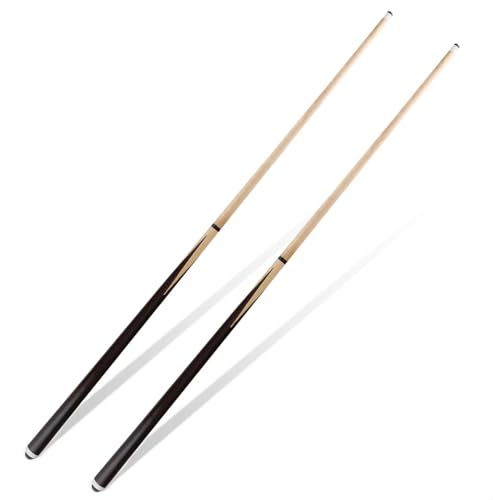
Pool Cue Anatomy Explained: Ferrule, Joint, Wrap, and Butt


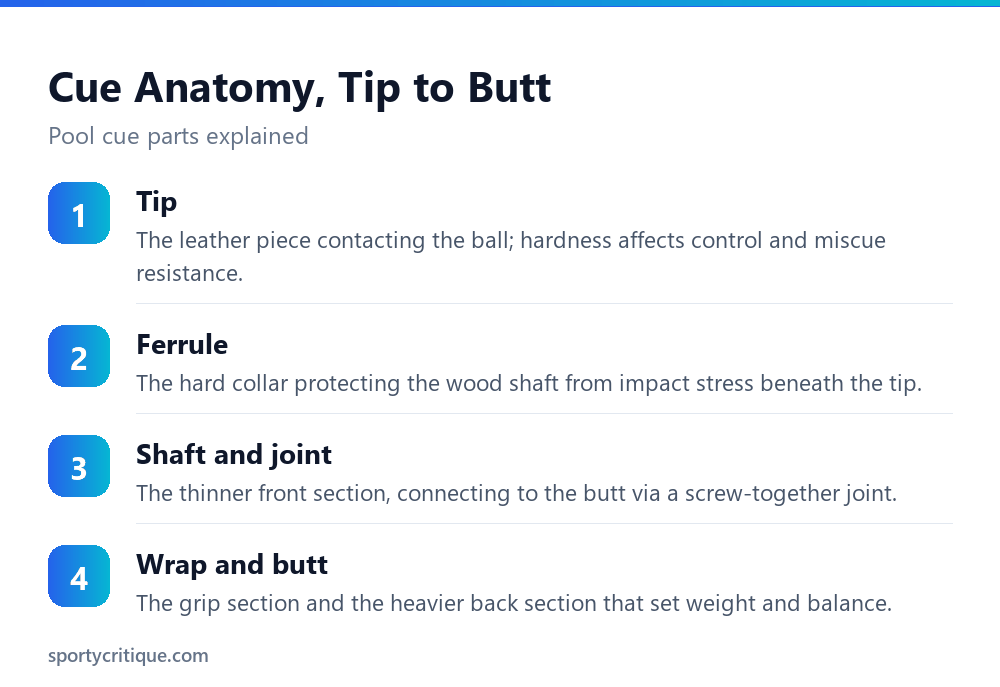
With pool cue parts explained from tip to butt: the tip is the leather piece contacting the ball, the ferrule is the small collar protecting the wood beneath the tip, the shaft is the thinner front section a player grips near for aiming, the joint is where a two-piece cue’s shaft and butt screw together, the wrap covers the grip area on the butt, and the butt itself is the thicker, heavier back section that provides weight and balance. Each part affects feel and performance differently, which is why understanding them helps make sense of buying-guide comparisons that reference these terms constantly.
Pool cue buying guides and reviews use this vocabulary constantly, tip hardness, ferrule material, shaft taper, joint type, without always pausing to define what each part actually is or why it matters to how a cue plays. This glossary walks through the anatomy from tip to butt in plain language, connecting each part to the actual performance difference it makes.
- →The tip’s hardness affects control and miscue resistance more than any other single component
- →The ferrule protects the wood shaft from cracking under the tip’s repeated impact stress
- →Shaft taper and diameter affect how the cue feels through the bridge hand during a stroke
- →The joint type affects both feel at impact and how easily a cue breaks down for storage or travel
- →The wrap and butt together determine grip comfort and the cue’s overall weight and balance
Table of Contents
The Tip
The tip is the small leather piece at the very end of the cue that makes direct contact with the cue ball on every shot, and its hardness is one of the most consequential specifications a player can choose. A softer tip holds chalk better and provides more feel and control, particularly useful for players applying significant English, while a harder tip transfers energy more efficiently for power shots but offers less forgiving feedback.
Tips wear down and compress with regular use, gradually losing their original shape and requiring periodic shaping with a tool to maintain the correctly rounded, slightly domed profile that promotes clean, consistent contact. A flattened or heavily worn tip increases miscue risk regardless of how well the rest of the cue performs.
The Ferrule
The ferrule is the small collar, typically made of a hard plastic composite like phenolic resin, sitting directly beneath the tip and protecting the wood shaft from the repeated, concentrated impact stress every shot delivers at that exact point. Without a ferrule, the wood itself would crack or splinter relatively quickly under normal play.
⚠️ Watch out: A cracked or damaged ferrule is a common, often overlooked cause of inconsistent contact and unexpected miscues, since damage at this specific point directly affects how energy transfers from the tip through to the rest of the shaft. Inspecting the ferrule periodically for visible cracks catches this issue before it causes ongoing frustration at the table.
The Shaft
The shaft is the thinner front section of the cue that runs from the ferrule down to the joint, and it’s the part a player’s bridge hand slides along during the stroke. Shaft taper, how gradually the diameter increases moving away from the tip, and overall diameter both affect how the cue feels sliding through the bridge hand and how much the shaft flexes during the stroke.
Shaft material and construction, standard solid maple versus a low-deflection design with internal engineering to reduce cue ball squirt, is a significant factor covered in more depth in other guides on this site specifically about cue deflection. The shaft is generally considered the single most influential component in how a cue actually feels and performs during play.
The Joint
The joint is the connection point on a two-piece cue where the shaft and butt sections screw together, and different joint materials and designs, wood-to-wood, metal-to-metal, or a composite pin system, produce noticeably different feel and sound at the moment of impact. Some players have strong personal preferences for one joint type’s feedback over another.
Beyond feel, the joint is also what allows a cue to break down into two shorter pieces for storage and travel in a cue case, a practical convenience that a one-piece cue doesn’t offer at all. Joint quality and precision affect how solidly the two halves connect, which in turn affects consistency of feel from one play session to the next.
💡 Pro tip: Keeping joint threads clean and lightly protected, some players use a small amount of joint protector or simply keep the threads free of dust and debris, prevents wear that can gradually loosen the connection and change how the cue feels over years of regular assembly and disassembly.
The Wrap
The wrap is the material, commonly Irish linen, leather, or cork, wrapped around the grip section of the butt where a player’s rear hand holds the cue during the stroke. Its main purpose is improving grip and comfort, absorbing hand moisture and reducing slippage during a long session, though some cues skip a wrap entirely in favor of a smooth, finished wood grip section instead.
Wrap material affects feel and moisture handling differently: Irish linen tends to breathe and wick moisture well, leather offers a smoother, sometimes cooler feel, and cork provides a softer, more cushioned grip. None of these materials is objectively superior; the choice comes down largely to personal preference and how a specific player’s hands tend to sweat during play.
Wrap Material Comparison
The Butt
The butt is the thicker, heavier back section of the cue, providing most of the cue’s overall weight and playing a major role in balance point, where the cue feels centered when held level on a single finger. Butt design, including any weight bolts or forearm detailing, is also where most of a cue’s decorative and aesthetic elements typically appear.
Balance point preference varies by player and playing style, with some preferring a more forward-balanced cue for certain shot types and others preferring a more neutral or rear-weighted feel. Many higher-end cues include an internal weight bolt system specifically so a player can fine-tune this balance without needing to buy an entirely different cue.
Common Anatomy Confusions
- ✓Understand that the ferrule protects the shaft, not the tip itself directly
- ✓Recognize that shaft taper and diameter affect bridge-hand feel, not just power
- ✓Know that joint type affects both feel and breakdown convenience for storage
- ✓Choose wrap material based on personal hand moisture and grip preference
- ✕Confusing the ferrule with the tip itself; they’re two distinct components
- ✕Assuming a thicker shaft is automatically better without considering personal feel
- ✕Ignoring joint quality when it directly affects long-term feel consistency
- ✕Assuming one wrap material is objectively better regardless of individual preference
One-Piece vs. Two-Piece Cues
One-piece cues, lacking a joint entirely, are common on coin-operated bar tables and in casual settings, offering a simpler, sometimes more rigid feel without the joint’s connection point introducing any potential inconsistency. They can’t break down for travel or storage, though, making them impractical for a serious player who transports their own cue regularly.
Two-piece cues dominate serious and competitive play specifically because of the storage and travel convenience the joint provides, and modern joint engineering has largely closed the gap in feel and consistency that once favored one-piece designs among traditionalist players. Most cues discussed in buying guides on this site are two-piece designs for exactly this reason.
The Pin: A Detail Within the Joint
The pin is the specific threaded piece within the joint assembly that screws the shaft into the butt, and its material and design, often a metal like stainless steel or a lighter composite material, are a specific sub-detail within the broader joint category that some manufacturers and players discuss separately when comparing cue specifications closely.
A collar, the visible ring often surrounding the joint where shaft meets butt, is typically decorative but can also be functional, providing additional structural reinforcement at this connection point. Not every cue includes a distinct collar; some joints connect with minimal visible hardware beyond the pin and thread itself.
Forearm and Decorative Points
The forearm is the section of the butt just above the wrap, often featuring decorative inlays, points, veneers, or other visual detailing that varies enormously between budget and premium cues. While largely aesthetic, some players do report that forearm material and construction subtly affect overall cue weight distribution and feel.
Points, the pointed veneer or inlay patterns often seen extending from the forearm toward the wrap, are purely decorative in the vast majority of cues, a craftsmanship and visual detail that affects a cue’s price and appearance far more than its actual playing performance. Buyers purely focused on performance shouldn’t weight this detail heavily in a purchase decision.
The Bumper
The bumper is the small rubber or composite cap at the very bottom end of the butt, protecting the cue’s finish and internal structure when it’s stood upright or occasionally set down more roughly than ideal. It’s a small, often overlooked component that nonetheless prevents real cosmetic and structural damage over years of regular use and storage.
A worn or missing bumper is a simple, inexpensive fix that many cue repair shops handle quickly, and replacing one proactively once it shows wear protects the more expensive butt section underneath from unnecessary damage. This is one of the cheapest maintenance items on the entire cue relative to the protection it provides.
Frequently Asked Questions
What’s the difference between the tip and the ferrule?
The tip is the leather piece that directly contacts the cue ball; the ferrule is the hard collar just beneath it that protects the wood shaft from impact stress. They’re two separate, distinct components.
Does shaft diameter really matter for feel?
Yes. Shaft diameter and taper affect how the cue feels sliding through the bridge hand during a stroke, which is a meaningful part of overall comfort and control for most players.
Why do some cues have weight bolts in the butt?
To let a player fine-tune the cue’s balance point and overall weight without needing to buy a different cue, a feature common on many higher-end designs.
Is Irish linen better than leather for a cue wrap?
Neither is objectively better; they offer different feel and moisture handling. Irish linen breathes and wicks moisture well, while leather offers a smoother, sometimes cooler feel.
Should I buy a one-piece or two-piece cue?
Two-piece cues are more practical for anyone who needs to transport or store their cue regularly, thanks to the joint allowing breakdown. One-piece cues suit fixed, casual settings like bar tables.
How do I know if my ferrule is damaged?
Look for visible cracks or separation at the ferrule, which can cause inconsistent contact and unexpected miscues even if the rest of the cue appears fine.
Knowing these parts and what each one actually does makes every other piece of cue-related content on this site, buying guides, deflection explainers, and maintenance tips, considerably easier to follow and apply to an actual purchase or repair decision.
From the tiny rubber bumper at the very bottom to the leather tip at the very top, each piece of a pool cue exists for a specific, functional reason, not just tradition or aesthetics, and understanding that reasoning turns a wall of unfamiliar jargon into a genuinely useful reference for evaluating any cue’s real quality and fit.
As an Amazon Associate, we earn from qualifying purchases through links on this page.