Best Recovery Gear for Volleyball: 3 Verified Picks

Volleyball’s repetitive overhead motion, jumping, and lateral movement puts specific, predictable stress on the shoulders, calves, and knees, and recovery gear exists to address that stress between sessions, not to replace training or a real injury evaluation. This guide covers three verified, currently buyable tools, in the order most players should actually consider adding them, rather than a long undifferentiated product list.
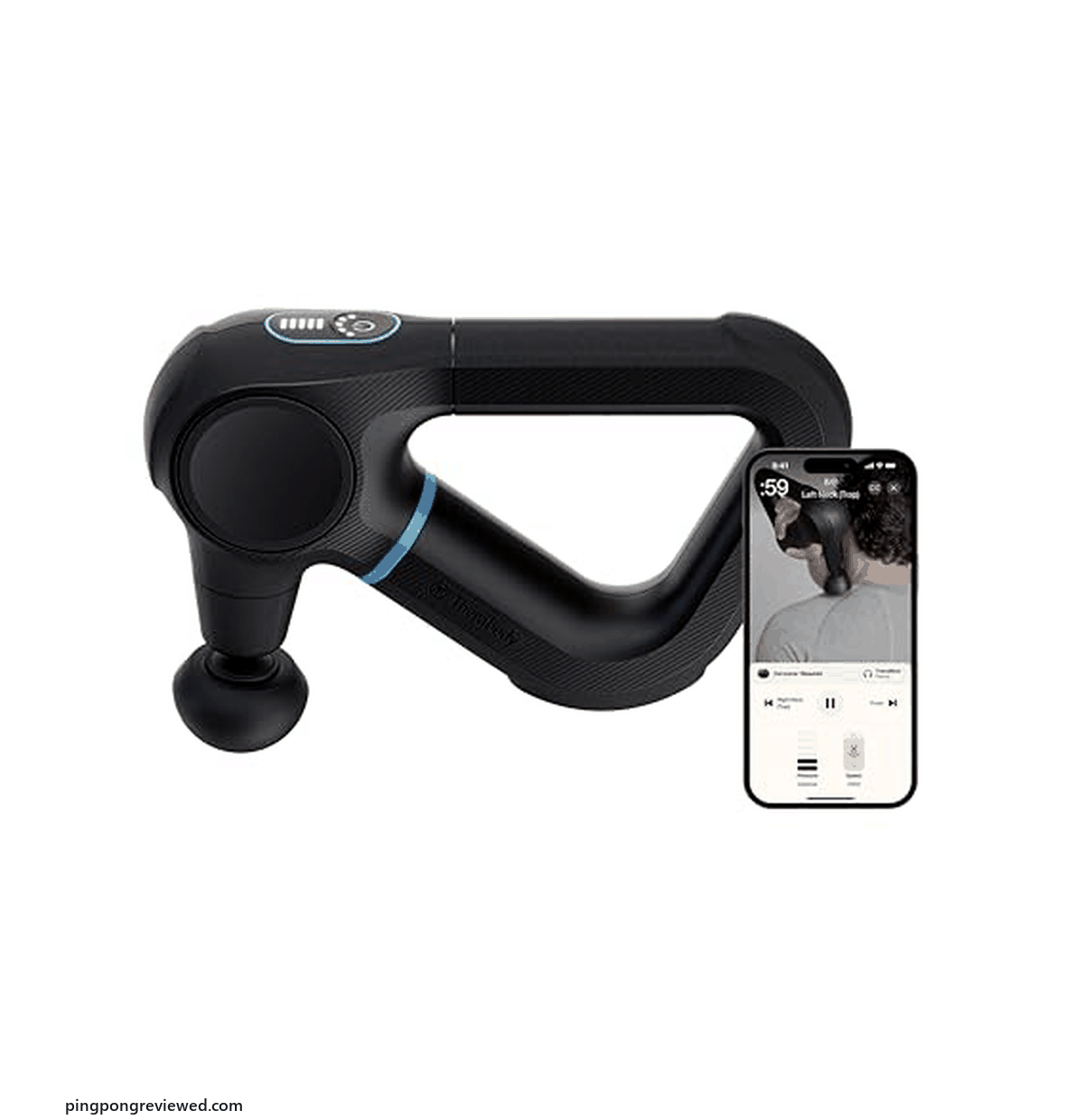
Short answer: start with a foam roller, the TriggerPoint GRID Travel roller is confirmed live at a verified $34.99. Add a percussion massage gun once training four or more times per week, the TheraGun Prime 6th Gen is confirmed in stock at $249.99 (24% off its $329.99 list price). Compression wear like the CEP calf sleeves, confirmed live at $11.95, helps most on travel days or back-to-back tournament matches rather than daily practice. Verified on 13 September 2026.
⚠️ Watch out: This is not a hands-on tested guide. What follows is an honest availability and specifications report built from a live, authenticated Amazon check on each product, not a played-with comparison of how each tool actually feels in use.
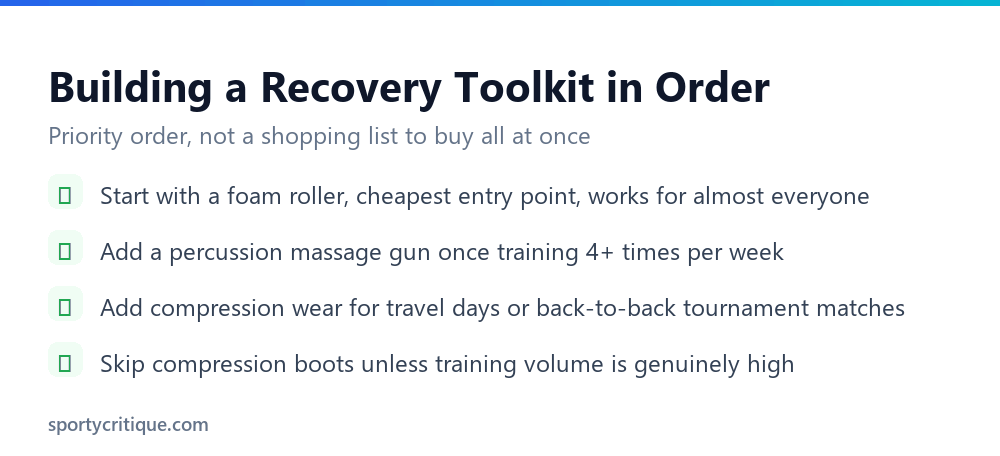
Table of Contents
Confirming All Three Are Actually Live
Two other TriggerPoint GRID listings checked for this guide, the original 13-inch roller and a separate standard-density listing, both came back “Currently unavailable,” a reminder that even a well-known product line can show inconsistent stock across different listings for what is effectively the same core product. The three products featured below were specifically chosen because they returned confirmed active status with real pricing at the time of this check.
Foam Rolling: The Cheapest, Most Accessible Starting Point
A foam roller works through self-myofascial release, applying sustained pressure to a muscle group to help reduce tightness and improve mobility, and it is the lowest-cost, most broadly useful entry point into a recovery routine for almost any volleyball player regardless of training volume. The calves, quads, and upper back, all heavily loaded by jumping and hitting mechanics, are the areas volleyball players typically get the most practical use from rolling regularly.
📊 Note: The featured TriggerPoint GRID Travel roller is a smaller, travel-friendly size. Players who want a larger rolling surface for bigger muscle groups like the quads or back should check the full-size 13″ GRID 1.0 listing directly, confirmed active in this review’s check, though no price was returned for that specific ASIN.
Percussion Massage Guns: Who Actually Needs One
A percussion massage gun uses rapid, repeated pressure strokes to a muscle, aimed at loosening tight tissue and improving local blood flow faster than manual foam rolling alone. Public recovery-gear guidance is consistent on when to add one: once training volume reaches roughly four or more sessions per week, not from day one of a recovery routine. A player training two or three times weekly gets most of the practical benefit from consistent foam rolling alone and does not need to spend on a device this early.
Compression Wear: Situational, Not Daily-Practice Essential
Compression calf sleeves are marketed around improving circulation and reducing the feeling of tired, heavy legs after extended activity, most relevant for a volleyball player on a long travel day to a tournament or working through a back-to-back multi-match schedule rather than a single evening practice. At a verified $11.95, this is a low-cost addition worth trying for a player who regularly faces multi-match tournament days, though it is reasonable to skip for a player whose season consists mainly of single, well-spaced practice sessions.
💡 Pro tip: Compression boots, like the NormaTec systems mentioned in broader recovery-gear coverage, are the highest-cost tier in a recovery toolkit and are generally recommended only for players already training at a high volume. Most volleyball players below elite club or college-level training loads can reasonably skip this tier entirely.
What Recovery Gear Does Not Replace
None of these tools substitute for a proper warm-up, adequate sleep, or a real evaluation from a medical professional for persistent pain, swelling, or an injury that does not improve with rest. Recovery gear addresses normal muscle tightness and soreness from training load, it is not a treatment for an actual injury, and a player experiencing sharp or worsening pain should see a doctor or athletic trainer rather than relying on a foam roller or massage gun to resolve it.
Volleyball-Specific Areas Worth Prioritizing
Volleyball’s overhead hitting and serving motion places specific repetitive stress on the shoulder’s rotator cuff area, an area that benefits more from targeted mobility work and a proper warm-up than from foam rolling or percussion massage alone, both tools are better suited to larger muscle groups like the calves, quads, and upper back. Jump-heavy positions like middle blocker and outside hitter tend to get the most practical benefit from calf and quad-focused rolling given the repetitive landing load those positions carry over a full match or tournament.
Building the Toolkit in the Right Order
Public recovery-gear guidance consistently recommends starting with a foam roller before adding anything else, it is the cheapest tool, requires no charging or app pairing, and covers the broadest range of practical use cases. A percussion massage gun is the reasonable next addition once training volume justifies it, and compression wear is worth adding for players specifically facing travel or multi-match tournament schedules rather than as a default daily-practice item. Buying all three at once is not necessary for most players, and a player on a budget gets more real value from a foam roller used consistently than an expensive massage gun used occasionally.
Sizing Compression Sleeves Correctly
Compression sleeves are sized by calf circumference and length rather than shoe or clothing size, and a sleeve that is too loose provides little of the circulation benefit it is designed for while one that is too tight can restrict circulation and cause discomfort during extended wear on a long travel day. Checking a brand’s specific sizing chart against an actual calf measurement, rather than guessing based on a typical shirt or shoe size, is worth the extra few minutes before ordering, particularly for a compression product where fit directly affects whether it does anything useful at all.
Foam Roller Density and Firmness Options
Foam rollers come in a range of densities, from soft, beginner-friendly foam to firm, high-density designs intended for more experienced users or deeper tissue work. A player new to foam rolling is generally better served starting with a softer or standard-density roller rather than the firmest option available, since a very firm roller applied incorrectly or too aggressively on tight, unconditioned tissue can cause more discomfort than benefit in the first few sessions. Working up to a firmer roller once the basic technique and pressure tolerance are established is a more reasonable progression than starting at the most aggressive option.
Battery Life and Charging Considerations for Massage Guns
A cordless percussion massage gun’s battery life matters more than most buyers initially expect, a device that needs frequent recharging becomes less convenient to keep in a gym bag ready for use after a late practice or tournament match. Checking a specific model’s rated battery life and charge time before buying, rather than assuming all models perform similarly, avoids a common source of buyer frustration with this category of device specifically.
What This Guide Doesn’t Cover
This page reports live availability and verified pricing for three specific products plus general, publicly available recovery-gear guidance, not a hands-on assessment of how effective each tool actually is for volleyball-specific recovery compared to alternatives, or a substitute for a sports medicine professional’s advice on a specific player’s actual training load and injury history. A team athletic trainer or physical therapist, where available, remains a better source for individualized recovery guidance than any general buying guide, this one included.
How to Verify This Yourself
Stock and pricing on popular recovery gear can shift, similarly to how this site has documented availability differences directly across other equipment categories. Checking the exact ASIN for current price and stock, or checking each brand’s own site (therabody.com, tptherapy.com, cepcompression.com) directly, both confirm whether this pricing and availability picture still holds at the time of reading rather than relying on this guide indefinitely.
Check the TheraGun Prime on Amazon ($249.99, confirmed in stock)Check the TriggerPoint GRID Travel roller on Amazon ($34.99 verified)Check the CEP compression calf sleeves on Amazon ($11.95 verified)As an Amazon Associate, we earn from qualifying purchases through links on this page.
- ✓Start with a foam roller regardless of training volume
- ✓Add a percussion massage gun once training hits four or more sessions a week
- ✓Save compression wear for travel days or multi-match tournament schedules
- ✓See a doctor or athletic trainer for sharp or worsening pain, not a recovery tool
- ✕Buy all three tiers at once before your training volume justifies it
- ✕Use a foam roller or massage gun as a substitute for proper warm-up
- ✕Treat compression sleeves as a daily-practice essential for every player
- ✕Rely on recovery gear to resolve an actual injury rather than normal soreness
The Verdict
In short: a foam roller is the right starting point for nearly every volleyball player, the TriggerPoint GRID Travel roller is confirmed live at a verified $34.99. A percussion massage gun like the confirmed in-stock TheraGun Prime at $249.99 makes sense once training hits four or more sessions weekly, and compression wear like the $11.95 CEP calf sleeves earns its place on travel and tournament days rather than as a daily-practice default. None of these replace a real injury evaluation when pain does not resolve with normal rest.
Common Questions
What recovery gear should a volleyball player buy first?
A foam roller, it is the cheapest, most broadly useful entry point. The TriggerPoint GRID Travel roller is confirmed live at a verified $34.99.
Do I need a massage gun as a volleyball player?
Only if training four or more times per week, per public recovery-gear guidance. Below that volume, consistent foam rolling covers most practical benefit.
Are compression sleeves worth it for volleyball?
They help most on travel days or back-to-back tournament matches, at a verified $11.95 they are a low-cost addition, not a daily-practice essential.
Can recovery gear treat an actual volleyball injury?
No, these tools address normal training soreness and tightness. Persistent pain, swelling, or an injury that does not improve with rest needs a doctor or athletic trainer, not a foam roller or massage gun.
Has this guide actually tested these recovery products?
No, this is a verified-availability and pricing guide based on a live Amazon check and public recovery-gear guidance, not a hands-on tested assessment.
The Short Version
- →Start with a foam roller: TriggerPoint GRID Travel, confirmed live at $34.99.
- →Add a massage gun once training hits 4+ sessions weekly: TheraGun Prime, $249.99, in stock.
- →Compression sleeves help on travel/tournament days: CEP, confirmed live at $11.95.
- →Two other TriggerPoint GRID listings checked were unavailable, verify your specific ASIN.
- →Recovery gear addresses normal soreness, not an actual injury.
- →Buy in priority order based on training volume, not all three at once.