What It Really Costs to Own and Maintain a Shuffleboard Table


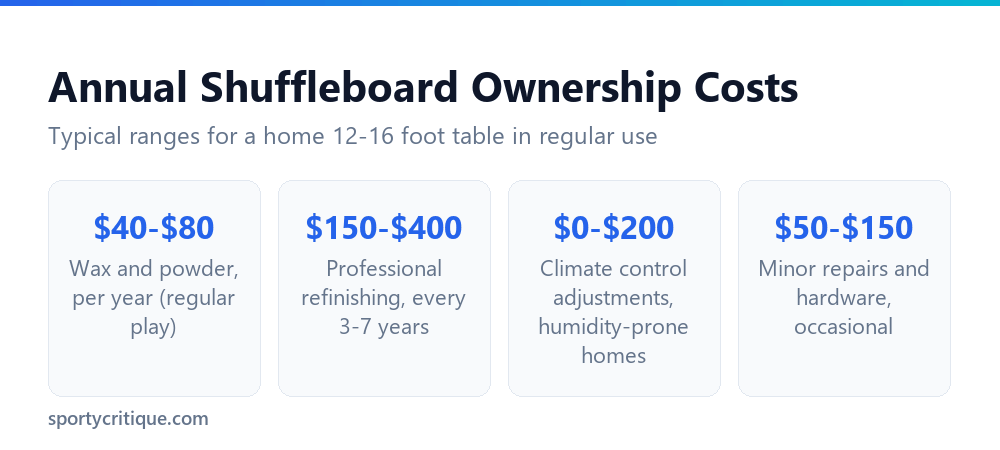
Shuffleboard table maintenance cost adds up well beyond the sticker price alone. Wax and speed powder for regular play runs roughly $40 to $80 a year. Professional refinishing of the playing surface, needed every 3 to 7 years depending on use and climate, typically costs $150 to $400. Climate control matters more than most buyers expect, since humidity swings can warp the surface or throw off puck speed, and homes without stable indoor climate control may need dehumidifiers or seasonal surface adjustments that add further ongoing cost.
Most shuffleboard buying guides focus entirely on upfront table price and comparing wood species or table lengths, leaving out the ongoing costs that actually determine how much a table costs over its full lifespan. A table that looks like a bargain at purchase can end up costing more than a pricier alternative once wax, refinishing, and climate-related upkeep are factored in over several years of ownership.
- →Wax and speed powder cost roughly $40-$80 a year for a regularly used table
- →Refinishing the playing surface every 3-7 years typically costs $150-$400
- →Humidity swings, not just heavy use, are a leading cause of surface problems
- →A climate-controlled room reduces long-term maintenance cost more than any single product choice
- →Total cost of ownership over a decade can meaningfully exceed the original purchase price
Table of Contents
Wax and Speed Powder: The Recurring Cost
Shuffleboard wax, technically a silicone-based speed powder rather than a true wax in most modern products, needs reapplying regularly to keep the puck gliding smoothly and to protect the wood surface from the wear caused by pucks and hands sliding across it repeatedly. A table used a few times a week typically needs a fresh application every one to two weeks, while occasional use stretches that interval out considerably further.
A single container of Sun-Glo Speed #3 Shuffleboard Powder Wax (Pack of 3, 16 oz Shaker Cans) ($35.99) lasts a household with moderate use several months, putting typical annual wax spending in the $40 to $80 range for most home tables. Households running frequent tournaments or heavy daily play should budget toward the higher end of that range, or slightly beyond it.
💡 Pro tip: Buying wax in a multi-can pack rather than one shaker at a time works out to a lower per-ounce cost for households that reapply regularly, and it avoids running out mid-season and having to place a rush order before the next game night.
Professional Refinishing: The Biggest Periodic Expense
Even with regular waxing, the playing surface eventually develops scratches, dead spots, or uneven wear that wax alone can’t fix, requiring a full sanding and refinishing of the wood surface. This typically runs every 3 to 7 years for a table in regular use, with heavier use and drier or more humidity-variable climates pushing that timeline toward the shorter end of the range.
Professional refinishing services typically charge in the $150 to $400 range depending on table size and the extent of surface damage, though a table with significant warping or deep gouges can run higher. Some experienced owners refinish tables themselves with the right tools and enough patience, cutting this cost substantially, but a poorly executed DIY refinish can leave the surface less level than before, which affects play quality directly.
⚠️ Watch out: Skipping refinishing entirely once the surface shows real wear doesn’t just affect aesthetics; an uneven or heavily scratched surface changes puck behavior unpredictably, undermining fair, consistent play regardless of how much wax gets applied on top of the damaged surface.
Climate Control: The Overlooked Cost Driver
Wood shuffleboard surfaces expand and contract with humidity changes, and a table kept in a basement, garage, or any space without stable climate control is far more likely to develop warping, cracking, or uneven wax absorption than one kept in a consistently climate-controlled room. This single factor affects maintenance cost and frequency more than almost any other variable in this whole comparison.
Homes in regions with significant seasonal humidity swings, or spaces without central air conditioning and heating, may need a dedicated dehumidifier running near the table during humid months, adding both an upfront equipment cost and an ongoing electricity cost to the table’s total ownership picture. This expense rarely appears in upfront buying-guide comparisons that focus purely on table price and wood species.
📊 Note: A table placed in a stable, climate-controlled living space from the start avoids much of this cost category entirely, which is worth factoring into a purchase decision alongside wood species and table length, especially for anyone planning to keep the table for a decade or longer.
Minor Repairs and Hardware Wear
Beyond the surface itself, gutters, scoring units, and leg levelers experience wear over years of use and occasionally need replacement or adjustment. These costs are typically modest individually, often in the $50 to $150 range for a given repair, but they add up as a table ages and multiple components start needing attention around the same general timeframe.
Leg levelers specifically deserve periodic checking, since an unlevel table throws off puck behavior in a way that’s easy to misattribute to wax or surface condition rather than the actual, simpler cause. Rechecking level every few months, particularly after moving the table or after a home’s flooring settles slightly over time, catches this cheap, easy fix before it gets blamed on a more expensive problem.
Keeping Total Cost Down
- ✓Wax on a consistent schedule rather than waiting until play noticeably slows
- ✓Keep the table in a stable, climate-controlled room whenever possible
- ✓Recheck leg leveling periodically, especially after any table movement
- ✓Address small surface issues before they require a full refinish
- ✕Ignoring humidity exposure because the table looks fine on the surface
- ✕Waiting until major damage appears before considering a refinish
- ✕Assuming a one-time purchase price reflects the table’s true total cost
- ✕Skipping wax reapplication for months at a time under regular use
Total Cost of Ownership Over a Decade
Adding up a decade of regular wax purchases, one or two professional refinishing cycles, occasional minor repairs, and any climate control equipment paints a fuller picture than the table’s sticker price alone. For a table used regularly over 10 years, total maintenance spending can reasonably land anywhere from several hundred to well over a thousand dollars beyond the original purchase, depending heavily on climate conditions and use frequency.
This isn’t a reason to avoid buying a shuffleboard table, since the ongoing costs remain modest relative to many other home entertainment or recreation investments over the same timeframe. It’s a reason to budget realistically from the start rather than being surprised by a refinishing quote or a wax reorder a few years into ownership.
How This Compares to Other Game Tables
A shuffleboard table’s ongoing maintenance cost sits in a similar range to a pool table’s felt replacement and cushion maintenance over a comparable timeframe, though the specific tasks differ, wax and refinishing for shuffleboard versus re-felting and rail work for billiards. Neither game table category is meaningfully cheaper to maintain long-term than the other; the costs simply show up in different forms.
Compared to a table tennis table or a foosball table, shuffleboard and billiards tables both carry meaningfully higher ongoing maintenance costs, since neither table tennis nor foosball involves a delicate playing surface that requires periodic professional refinishing. This is worth weighing for a buyer deciding between game table categories primarily on long-term cost rather than gameplay preference alone.
Moving Costs Most Buyers Don’t Plan For
A shuffleboard table, especially anything 12 feet or longer, is heavy and awkward enough that moving it after initial delivery, whether to a different room in the same house or to a new home entirely, often requires professional movers rather than a casual afternoon with friends. This cost rarely gets factored into a purchase decision but becomes very real for anyone who relocates or rearranges their game room within the table’s lifespan.
Some tables are built to disassemble into sections for easier transport, while others ship and stay as a single, solid unit. Checking this detail before buying matters specifically for anyone who anticipates a move in the coming years, since a solid, non-sectional table can turn a routine move into a costly, multi-person logistical challenge.
Buying a Used Table: Hidden Cost Traps
A used shuffleboard table at a discounted price can look like an obvious way to reduce total ownership cost, but a table that’s been poorly maintained, stored in a humid basement, or gone years without refinishing can require an immediate, expensive refinishing job that erases most or all of the upfront savings. Inspecting the surface in person for warping, dead spots, or deep scratches before buying used avoids this specific trap.
Asking a seller directly about the table’s maintenance history, how often it was waxed, whether it was ever refinished, and what environment it was stored in, gives a much clearer picture of likely near-term costs than judging purely by the table’s visible condition in photos or a quick in-person look.
⚠️ Watch out: A used table priced well below comparable new options is sometimes a genuine bargain, but it can also signal a seller trying to offload a table with expensive problems the price alone doesn’t reveal. A careful in-person inspection, or bringing along someone experienced with shuffleboard tables, reduces this risk considerably.
Accessories That Add to Total Cost
Beyond wax, pucks themselves wear down over time and need periodic replacement, particularly the plastic or resin varieties used on most home tables. A table cover, useful for protecting the surface from dust and stray spills between sessions, is a small additional cost that extends surface life and reduces how often deep cleaning or refinishing becomes necessary.
A scoring unit, whether a simple manual chalk-style scoreboard or an electronic version, represents another optional cost some buyers add after the initial table purchase. None of these accessories are strictly required to play, but most regular players end up adding at least one or two over the table’s lifetime, which is worth factoring into a realistic long-term budget alongside wax and refinishing.
Frequently Asked Questions
How often does a shuffleboard table actually need refinishing?
Typically every 3 to 7 years for a table in regular use, though climate conditions and use frequency shift that timeline meaningfully in either direction. A table kept in a stable, climate-controlled room can stretch toward the longer end of that range.
Can I refinish a shuffleboard table myself?
Experienced owners with the right tools and patience sometimes do, cutting the professional cost significantly. A poorly executed DIY refinish can leave the surface less level than before, which affects play quality, so it’s not a task to rush into without research.
Does climate really affect shuffleboard maintenance that much?
Yes, significantly. Humidity swings are a leading cause of warping, cracking, and uneven wax absorption, often mattering more to long-term maintenance needs than how heavily the table actually gets played.
How much should I budget for wax per year?
Roughly $40 to $80 for a household with moderate, regular use. Heavier use or frequent tournament play pushes that toward the higher end or slightly beyond it.
Is a shuffleboard table more expensive to maintain than a pool table?
Roughly comparable in overall cost, though the specific expenses differ, wax and refinishing for shuffleboard versus felt and cushion maintenance for billiards. Neither is clearly cheaper long-term.
What’s the single best way to reduce long-term maintenance cost?
Keeping the table in a stable, climate-controlled room. This one factor reduces warping, surface damage, and uneven wear more than any specific product or maintenance schedule choice.
Factoring wax, refinishing, and climate control into a shuffleboard purchase decision from the start avoids the unpleasant surprise of an unexpected repair bill years into ownership. A realistic maintenance budget, set alongside the purchase price, gives a far more accurate picture of what a table actually costs over the years it stays in a home.
As an Amazon Associate, we earn from qualifying purchases through links on this page.