Polyester vs Multifilament Tennis Strings: Tension Loss, Spin Potential & Arm Comfort

In modern tennis, your string bed acts as the direct mechanical engine of your racquet, dictating over 50% of its real-world playing characteristics. While players often obsess over racquet weight, balance, and beam stiffness, string choice fundamentally governs ball exit velocity, topspin rotation, depth control, and arm comfort. The modern string market is dominated by two contrasting technologies: stiff, spin-generating co-polyester monofilaments and soft, shock-absorbing multifilament strings.
Choosing between polyester and multifilament is not merely a matter of personal preference; it is a critical biomechanical decision. Choosing the wrong string setup can lead to erratic ball spraying, dead feel, or chronic arm injuries like lateral epicondylitis (tennis elbow). In this technical breakdown, we examine internal string physics, tension loss decay curves, snapback mechanics, and arm health considerations to help you select the ideal string for your stroke mechanics.
Table of Contents
Monofilament Co-Poly vs. Microfiber Multifilament Architecture
To understand performance differences, examine cross-sectional microscopic construction:
Polyester (Co-Poly) Monofilament: Polyester strings (such as Luxilon ALU Power and Babolat RPM Blast) are extruded as a single, solid strand of high-density polyester resin blended with trace additives like aluminum, fluorocarbon, or silicone lubricants. The result is a stiff, low-powered string that resists stretching. Stiff co-polys allow aggressive players to take violent, full-speed swings without fear of launching the ball long past the baseline.
Multifilament Microfibers: Multifilament strings (such as Tecnifibre X-One Biphase and Wilson NXT) are engineered to replicate the plush feel, responsiveness, and elasticity of natural gut. Manufacturers twist thousands of microscopic polyurethane or polyamide microfibers together, bonding them inside an elastic resin matrix and sealing them with a protective outer jacket. Multifilaments stretch upon ball impact, cupping the ball for extended dwell time and dissipating shock before it reaches your arm.
Polyester vs. Multifilament Tennis Strings: Technical Performance & Material Matrix
| String Category & Top Models | Internal Core Construction | Snapback Spin Generation | Tension Maintenance Stability | Arm Shock & Vibration Dampening | Amazon Price & Recommendation |
|---|---|---|---|---|---|
| Luxilon ALU Power 125 (Polyester) | Co-polymer monofilament w/ aluminum fibers | Extreme high snapback (Heavy topspin) | Fast initial tension drop (Dead in 10-15 hrs) | High stiffness; requires fast arm speed | Check ALU Power Price (The Pro Tour Benchmark) |
| Babolat RPM Blast 16/17 (Polyester) | Octagonal co-poly with silicone coating | Exceptional lateral string slide & bite | Moderate tension loss (15-20% in first 5 hrs) | Firm impact feel; crisp feedback on drives | Check RPM Blast Price (Nadal Topspin Signature String) |
| Tecnifibre X-One Biphase (Multifilament) | Thousands of bonded elastyl microfibers | Low to moderate snapback (Strings notch) | Exceptional tension holding (Closest to gut) | Plush arm comfort; absorbs 80%+ impact shock | Check X-One Price (Best Arm-Friendly Natural Gut Alternative) |
| Wilson NXT 16 (Multifilament) | Patented polyurethane impregnated resin | Moderate snapback; soft pocketing dwell | Gradual tension decline until fraying breakage | Top-rated for tennis elbow relief | Check Wilson NXT Price (Best Tennis Elbow Protection) |
| Head Velocity MLT (Multifilament) | Multi-filament core w/ low-friction coating | High snapback for a multifilament | Solid tension retention; durable outer wrap | Comfortable plush feel; excellent control | Check Velocity MLT Price (Best Value Multifilament Under $15) |
The Physics of Snapback: How Polyester Generates Extreme Spin
For decades, players believed that string texture or rough serrations generated topspin by physically biting into the ball felt. Modern high-speed video capture has debunked this myth, demonstrating that topspin is governed primarily by string snapback:
When you brush up the back of the ball during an aggressive topspin groundstroke, the vertical main strings deflect laterally across the horizontal cross strings. Because co-polyester strings are slick and rigid, the mains slide outward with minimal friction. As the ball leaves the string bed, the deflected main strings snap violently back into their original parallel alignment. This rapid snapback imparts explosive rotational torque to the ball, producing heavy topspin rates exceeding 2,500 to 3,200 RPM that cause the ball to dive inside the baseline and kick high off the court bounce.
Multifilament strings, by contrast, lack the slick surface lubricity of polyester. Under heavy brushing friction, the soft microfibers saw into each other, creating notches along the cross strings. Once notched, the main strings get locked into place, unable to slide and snap back. While multifilaments provide superb forward ball launch and comfort, they cannot match the topspin RPMs of a slick co-poly.
Tension Decay Curve: The 10-Hour ‘Dead String’ Phenomenon
One of the biggest pitfalls for recreational tennis players using polyester strings is the phenomenon of string deadening:
When strung on an electronic stringing machine at 52 pounds, a premium polyester string immediately begins losing tension due to plastic deformation. Within the first 2 to 3 hours of hitting, tension drops by 10% to 15%. By hour 10, the co-polymer chains lose their elasticity entirely. The string bed feels like a stiff wooden board. Balls begin flying uncontrollably off the racquet, tempting players to swing harder, which compounds forearm muscle fatigue.
Multifilament strings behave very differently. Because they contain thousands of elastic bonded microfibers, multifilaments maintain consistent playability throughout their operational life. While tension slowly declines over 25 to 40 hours of play, the string retains its plush elasticity and shock absorption right until the microfibers fray and snap.
Arm Health & Vibration Dampening: Preventing Tennis Elbow
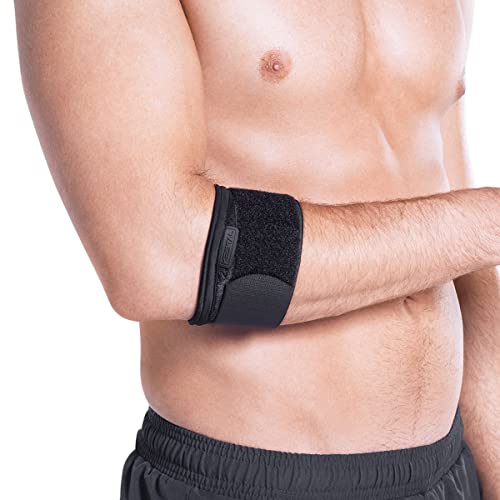
Lateral epicondylitis (tennis elbow) is one of the most common chronic injuries among recreational players. When a tennis ball impacts a racquet traveling at 70 miles per hour, shock waves reverberate through the frame at frequencies between 100 Hz and 200 Hz. If the string bed is too stiff to absorb this kinetic energy, the vibrational shock is transmitted directly into the player’s extensor carpi radialis brevis tendon origin at the lateral epicondyle.
Multifilament strings absorb up to 80% more vibrational shock than polyester monofilaments. For junior players, senior competitors, or anyone experiencing forearm tenderness, switching to a premium multifilament (like Wilson NXT or Tecnifibre X-One Biphase) strung at moderate tensions (50 to 54 lbs) provides immediate pain relief and protects joint cartilage.
The Hybrid Solution: Blending Polyester Mains with Multifilament Crosses
Players who desire the spin snapback of polyester but need the arm comfort of multifilament often turn to hybrid stringing:
Polyester Mains / Multifilament Crosses: Installing a slick co-poly (such as Babolat RPM Blast) in the vertical main strings and a soft multifilament (such as Head Velocity MLT) in the horizontal crosses allows the poly mains to slide freely for topspin while the soft cross strings soften the overall impact bed. String the polyester mains at 48 to 50 lbs and the multifilament crosses at 52 to 54 lbs to balance string bed deflection.
String Gauge Selection: 16 Gauge (1.30mm) vs. 17 Gauge (1.25mm)
String thickness (gauge) alters playability dynamics. A thinner 17-gauge string (1.25mm) cuts through the air faster, bites the ball deeper for higher spin, and feels softer on the arm, but breaks faster. A thicker 16-gauge string (1.30mm) offers higher directional control and extended durability against premature snapping, making it the preferred choice for aggressive string breakers.
The Final Verdict: Which String Type Fits Your Game?
Choose Polyester Strings If: You have modern full strokes with fast racquet head speed, generate your own pace, prioritize heavy topspin snapback and pinpoint directional control, and are willing to restring every 10 to 15 playing hours.
Choose Multifilament Strings If: You prioritize plush arm comfort, have compact or flat swings, need free depth and power from your racquet, or want strings that maintain playability for months without going dead.
String Bed Stiffness (SBS) and Electronic RDC Testing
In professional racquet tuning workshops, string bed response is measured using Racquet Diagnostic Center (RDC) machines that calculate Dynamic String Bed Stiffness (SBS) in kilograms per centimeter (kg/cm). SBS measures how many kilograms of force are required to deflect the string bed by one centimeter at impact:
Polyester String Bed Stiffness (40 to 45 kg/cm): A fresh full polyester string bed strung at 54 lbs produces a high stiffness index. At ball contact, the strings deform very little, transferring immense kinetic shock into the tennis ball in a brief 4-millisecond dwell window. This high SBS provides elite players with pinpoint directional targeting, but punishes players with slower swings who cannot compress the stiff string plane.
Multifilament String Bed Stiffness (28 to 34 kg/cm): A multifilament string bed strung at the same 54 lbs exhibits an SBS nearly 30% lower. The elastic microfibers yield and cup the ball, extending dwell time to nearly 6 milliseconds. This prolonged pocketing absorbs harsh impact frequencies, returning power to the ball like an energetic trampoline while shielding your arm from bone-jarring vibration.
Cold Weather Brittleness: Why Poly Turns Dangerous Below 50°F
Tennis players who practice outdoors during late autumn and winter must be cautious with polyester strings. Co-polyester polymers are thermoplastic materials whose elasticity drops precipitously when ambient temperatures drop below 50°F (10°C). Combined with cold, rock-hard tennis balls, hitting with a full polyester string bed in near-freezing conditions is a primary trigger for acute tendon strains and wrist cartilage tears.
In cold weather months, smart competitors switch either to a full premium multifilament (like Tecnifibre X-One Biphase or Wilson NXT) or lower their polyester stringing tension by 4 to 6 pounds (e.g., dropping from 52 lbs down to 46 lbs) to restore necessary flex and protect their joints.
The Restringing Frequency Formula: Hours vs. Weeks
For multifilament strings, the classic recreational rule of thumb holds true: restring your racquet each year as many times as you play per week (e.g., if you play 3 times a week, restring 3 times a year). Because multifilaments retain their internal elasticity until they fray and snap, players can comfortably keep them installed for months.
For polyester monofilaments, this rule does not apply. Co-poly strings suffer plastic work-hardening and molecular deadening within 10 to 15 hours of hitting, regardless of whether you play once a week or five times a week. Leaving a dead polyester string in your racquet for six months causes arm strain and degrades your groundstroke depth. If you choose full polyester, commit to restringing every 3 to 4 weeks to maintain optimal spin snapback and arm safety.
String Savers and Friction Lubrication Coatings
To extend string life and enhance snapback, tennis technicians utilize specialized friction-reduction solutions:
PTFE String Savers: Small Teflon (PTFE) inserts placed at string intersections prevent multifilament strings from sawing into each other, extending string life by up to 50% for chronic string breakers.
Silicone Oil Coatings: Premium modern co-polys (such as Babolat RPM Blast and Solinco Hyper-G) feature proprietary silicone and fluorocarbon outer coatings applied during extrusion. This low-friction surface allows vertical strings to slide effortlessly along horizontal crosses, maximizing topspin snapback throughout the first 8 to 10 hours of competitive play.
String Gauge Aerodynamics: 16 (1.30mm) vs. 17 (1.25mm) vs. 18 (1.20mm)
Thinner strings (17 and 18 gauge) offer lower wind resistance through the air, bite the ball felt deeper for higher spin RPMs, and produce softer impact sensation. However, thin strings notch and snap significantly faster. If you string with a dense 18×20 string pattern, a 17-gauge (1.25mm) string provides ideal feel; if you swing an open 16×19 pattern with heavy spin, a 16-gauge (1.30mm) string guarantees reliable durability.
Tie-Off Knot Dynamics: Preventing Tension Bleed on Outer Mains
When stringing stiff co-polyester monofilaments, improper tie-off knots can lose 5 to 8 pounds of tension on the final anchor string before the knot is cinched. Master racquet technicians utilize the Parnell Knot or Pro Knot rather than bulky double half-hitches. These low-profile knots pull parallel against the grommet barrel, locking the string without crushing the grommet flare or permitting slippage.
Frame Customization: Perimeter Lead Tape for Stiff String Beds
If you prefer the spin of a polyester string but find the string bed slightly too harsh on off-center reach volleys, customizing the racquet frame with adhesive high-density lead or tungsten tape offers immediate relief. Applying 2 grams of lead tape at 3 o’clock and 2 grams at 9 o’clock increases the racquet’s torsional twist resistance, expanding the sweet spot and softening impact shock.
Natural Gut Benchmark: The Historic Tour Hybrid Standard
The ultimate benchmark against which all multifilaments and polyesters are judged is authentic natural serosa gut (such as Babolat VS Touch). Made from purified bovine collagen ribbons, natural gut offers unmatched elasticity and tension holding across 50+ hours. The legendary Roger Federer hybrid setup—placing natural gut in the mains for explosive power and touch, paired with Luxilon ALU Power Rough in the crosses for topspin control—remains the gold standard among touring professionals.
String Stenciling Protocols and Solvent Safety
Many competitive tournament players enjoy applying brand logos to their fresh string beds using stencil ink. However, never use petroleum-based permanent markers or industrial aerosol paints. Solvents in harsh markers can degrade the outer polyurethane jacket of delicate multifilament strings or cause localized embrittlement in co-poly monofilaments. Always use dedicated, water-based tennis string stencil ink (such as Babolat Babol or Wilson Stencil Ink), applying it sparingly in a well-ventilated space.