How to Swim Butterfly Without Burning Out

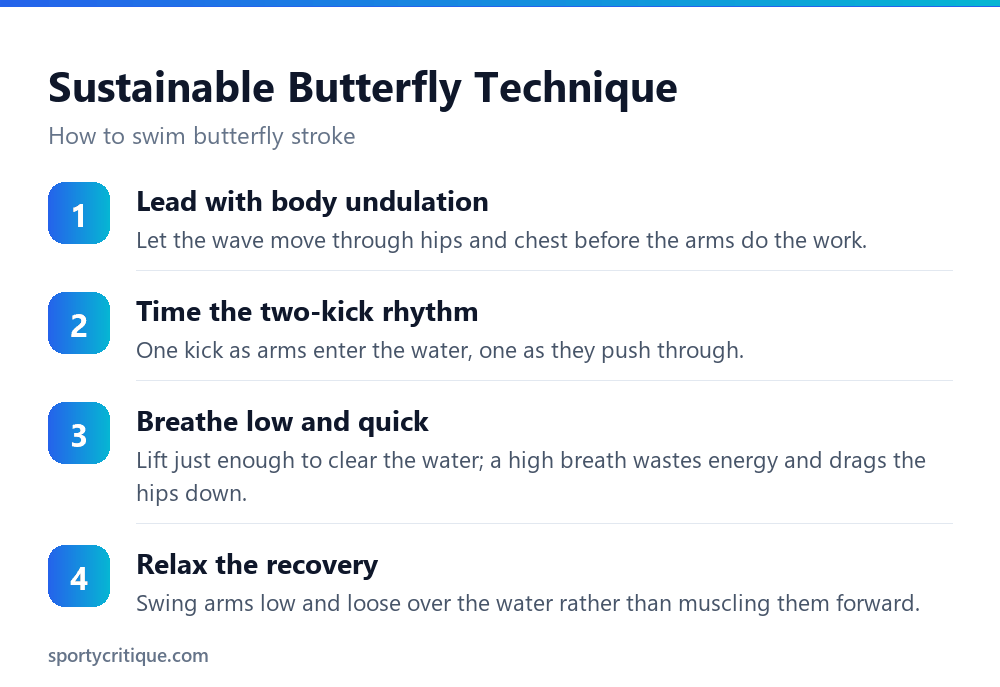
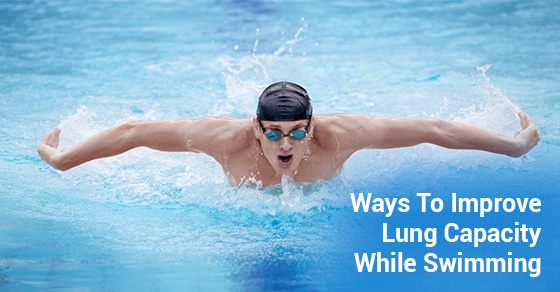
Learning how to swim butterfly stroke without burning out comes down to using body undulation and timing rather than raw arm strength to power the stroke. Leading with a wave that moves through the hips and chest, timing the two-kick rhythm correctly, keeping the breath low and quick, and relaxing the arm recovery over the water instead of muscling it forward all reduce the energy cost of a stroke that’s notorious for exhausting swimmers who rely purely on upper-body strength.
Butterfly has a reputation as the most exhausting competitive stroke, and for swimmers relying mainly on shoulder and arm strength to power through the water, that reputation is well earned. Swimmers who instead learn to generate power through body undulation and precise timing use meaningfully less energy per stroke cycle, which is the actual difference between someone who can hold butterfly for a full 100-meter race and someone who gasses out by the second lap.
- →Body undulation, not arm strength, should generate most of the stroke’s forward power
- →The two-kick rhythm needs to sync precisely with arm entry and the push phase
- →A low, quick breath wastes far less energy than lifting the head high out of the water
- →A relaxed, low arm recovery over the water conserves energy compared to a muscled, high recovery
- →Poor timing between the kick, pull, and breath is the leading cause of early butterfly fatigue
Table of Contents
Body Undulation: The Real Power Source
The wave-like motion that starts at the chest and travels through the hips to the legs is what should generate most of a butterfly stroke’s forward propulsion, not the arms pulling through the water in isolation. Swimmers who skip or minimize this undulation end up compensating with extra arm and shoulder effort, which fatigues far faster than the larger, more efficient muscle groups involved in a proper body wave.
⚠️ Watch out: A flat, undulation-free butterfly, sometimes called swimming “stiff” through the core, is one of the most common reasons recreational swimmers burn out on butterfly within just a few strokes. Without the wave doing its share of the propulsive work, the arms and shoulders end up absorbing an energy cost they weren’t designed to handle alone.
Drilling body undulation separately, using a kickboard or simply practicing the wave motion underwater without the arm stroke layered on top, helps isolate and build this movement before combining it with the full stroke. Many swimming programs specifically sequence butterfly instruction this way, undulation first, full stroke later, for exactly this reason.
Timing the Two-Kick Rhythm
Standard butterfly technique uses two dolphin kicks per arm cycle: one as the hands enter the water at the front of the stroke, and a second, typically more powerful kick as the arms push through and finish underneath the body. Getting this timing right lets the kick’s power reinforce the arm stroke’s timing rather than fighting against it or arriving at the wrong moment to help.
A swimmer whose kicks are mistimed, arriving too early or too late relative to the arm stroke, loses the compounding benefit of both movements working together and instead ends up paying the energy cost of two separate, poorly coordinated efforts. This mistiming is a common, specific cause of early fatigue that’s more about coordination than raw fitness.
💡 Pro tip: Counting the rhythm out loud or in your head, “kick-pull-kick-recover” as a repeating four-beat cycle, helps some swimmers internalize the timing faster than trying to feel it out purely through repetition alone.
Breathing Low and Quick
Lifting the head only as high as necessary to clear the mouth and take a breath, rather than lifting the whole head and chest high out of the water, conserves significant energy over a full length or race. A high, exaggerated breath also tends to drag the hips and legs down underwater, creating additional drag that the swimmer then has to work against for the rest of that stroke cycle.
Breathing on every stroke, rather than every other stroke, is common in butterfly specifically because the stroke’s higher energy demand makes consistent oxygen intake more valuable than in other strokes where breathing patterns vary more by swimmer preference and race distance. Some advanced swimmers do skip a breath periodically for a faster, lower-drag stroke cycle, but this is a race-specific tactic, not a beginner-friendly default.
Relaxing the Arm Recovery
The arm recovery, swinging the arms forward over the water after the underwater pull finishes, should stay low, relaxed, and skimming close to the water’s surface rather than being lifted high and forced forward with muscular effort. A relaxed recovery lets the arms essentially coast forward using momentum from the stroke, while a tense, muscled recovery burns energy that doesn’t contribute to forward propulsion at all.
This is a genuinely counterintuitive adjustment for many swimmers, since the instinct in an exhausting stroke is often to tense up and force every part of the motion. Learning to deliberately relax the shoulders and arms during recovery specifically, while everything else stays engaged, takes conscious practice before it becomes automatic under race or workout fatigue.
Common Butterfly Fatigue Mistakes
- ✓Let body undulation generate most of the stroke’s forward power
- ✓Time the two-kick rhythm precisely with arm entry and the push phase
- ✓Keep breaths low and quick rather than lifting high out of the water
- ✓Relax the arm recovery, letting momentum carry the arms forward
- ✕Relying mainly on arm and shoulder strength while minimizing body undulation
- ✕Letting kicks arrive mistimed relative to the arm stroke’s phases
- ✕Lifting the head and chest high for an exaggerated breath
- ✕Muscling the arm recovery forward with unnecessary tension
Pacing Strategy for Longer Butterfly Sets
Even with excellent technique, butterfly remains one of the higher energy-cost strokes, which makes deliberate pacing important for anything longer than a single short sprint. Starting a set or race at a controlled, sustainable effort rather than sprinting the first length at maximum intensity preserves the technique quality that keeps energy cost low throughout the remaining distance.
A swimmer whose technique breaks down under fatigue, losing undulation timing or reverting to arm-dominant strokes as they tire, should treat that breakdown as useful feedback about pacing rather than pushing through with degraded form. Slowing down slightly to preserve proper technique for a longer, cleaner set beats maintaining speed through a technically sloppy, exhausting final stretch.
Building Butterfly-Specific Endurance
General swimming fitness doesn’t automatically transfer into butterfly-specific endurance, since the stroke uses a distinct movement pattern and energy system emphasis compared to freestyle or backstroke. Swimmers looking to build butterfly endurance specifically benefit from including short, technique-focused butterfly repeats regularly in training rather than relying solely on general aerobic conditioning from other strokes.
Core strength training, specifically exercises that build the muscles involved in the undulation wave, complements in-pool butterfly practice by building the strength needed to sustain proper body position over a longer set. This isn’t a substitute for pool practice, but it addresses a specific physical limitation that pure swimming volume alone sometimes doesn’t fully resolve.
Head Position Beyond the Breath
Even between breaths, keeping the head in a relatively neutral, slightly forward-looking position rather than pressing it down hard or craning it far forward affects how efficiently the rest of the undulation wave travels through the body. A head held too rigidly in one extreme position can actually interrupt the natural flow of the wave from chest to hips to legs, working against the very motion that’s supposed to power the stroke.
Non-breathing strokes, where the head stays down and the swimmer doesn’t lift for air, are a good opportunity to check and reinforce this neutral head position, since there’s no breathing action to distract from focusing purely on how the head sits relative to the rest of the undulating body line.
Errors Specific to Beginners Learning the Stroke
New butterfly swimmers often try to learn the full stroke, arms, legs, breathing, and timing, all at once, which overwhelms the coordination demands the stroke actually requires. Breaking the stroke into separate drills, undulation alone, kick alone, arm pull alone, then combining them gradually, produces a more solid technical foundation than attempting the full, coordinated stroke from the very first attempt.
Another common beginner pattern is holding excessive tension throughout the entire body, not just the arm recovery specifically, treating the stroke as a maximum-effort event from the first stroke rather than a controlled, technically precise movement. This full-body tension compounds the energy cost problem discussed throughout this guide, since nearly every muscle group ends up working harder than the stroke actually requires when properly executed.
Using Equipment to Isolate Specific Elements
A kickboard or pull buoy, common pool equipment for isolating specific parts of a stroke, helps butterfly swimmers practice the undulation and kick separately from the arm pull, removing one variable at a time while building the underlying coordination. Fins are sometimes used specifically for butterfly kick drills, adding propulsion that lets a swimmer feel the undulation rhythm more clearly before removing the fins and rebuilding that same feel without the extra assistance.
Snorkels designed for swimming, distinct from recreational snorkeling gear, let a swimmer practice the stroke’s body position and timing without needing to coordinate breathing at the same time, which is particularly useful for isolating and fixing undulation and kick timing issues before layering the breath back into the full stroke.
When to Introduce Butterfly in a Swimmer’s Progression
Most swim programs introduce butterfly later than freestyle, backstroke, and breaststroke, specifically because its coordination and strength demands are higher and benefit from a swimmer already having solid fundamentals in the other strokes first. Rushing a new swimmer into butterfly before they’ve built basic water comfort and stroke coordination elsewhere tends to reinforce exactly the tense, inefficient patterns this guide addresses.
For adult swimmers picking up butterfly later in life, the same principle applies: building comfort and technique in other strokes first, then approaching butterfly deliberately and patiently rather than as an immediate goal, produces better results than attempting to force the stroke before the underlying coordination and strength are actually in place.
Frequently Asked Questions
Why do I get exhausted so quickly swimming butterfly?
Most early fatigue comes from relying on arm and shoulder strength instead of body undulation, along with mistimed kicks and an overly high breath. Fixing these technique issues typically reduces energy cost significantly before general fitness even becomes a factor.
How many kicks should I do per arm stroke in butterfly?
Standard technique uses two dolphin kicks per arm cycle, one as the hands enter the water and a second, usually stronger kick as the arms push through underneath the body.
Should I breathe every stroke in butterfly?
Most swimmers, especially beginners and those building endurance, breathe every stroke due to butterfly’s high energy demand. Skipping breaths periodically is a more advanced, race-specific tactic.
Why does my body sink or drag when I breathe in butterfly?
Lifting the head and chest too high during the breath is the most common cause, since it drags the hips and legs down and creates extra drag for the rest of that stroke cycle.
How do I build butterfly endurance specifically?
Include short, technique-focused butterfly repeats regularly in training rather than relying solely on general swimming fitness from other strokes, and consider core strength work targeting the undulation motion.
Is it normal for my technique to break down when I get tired in butterfly?
Yes, and it’s useful feedback rather than something to force through. Slowing pace slightly to preserve proper technique produces better long-term results than maintaining speed with degraded form.
Butterfly rewards patient, technique-focused practice far more than brute effort, and swimmers who invest time in undulation, timing, and relaxation see the stroke’s reputation as uniquely exhausting become far less true for their own experience in the water.
As an Amazon Associate, we earn from qualifying purchases through links on this page.