Best Carbon Plate Running Shoes for Marathon Racing: Superfoam Energy Return

The introduction of carbon-plated marathon super shoes has rewritten distance running record books from the marathon to the 5K road circuit. By combining high-stack supercritical responsive foams with rigid full-length carbon fiber plates, modern racing flats improve human running economy by three to four percent. Over the course of a 26.2-mile marathon, this metabolic efficiency translates into minutes shaved off finishing times, reduced lower-leg muscular damage, and accelerated recovery times.
Selecting the optimal carbon-plated racing shoe requires understanding the biomechanical interplay between foam resilience, longitudinal plate stiffness, and foot strike mechanics. While some shoes feature extreme forefoot rocker geometries engineered for high-cadence runners who land on the midfoot, other models provide broader rearfoot base platforms and gentle spoon-shaped plates that stabilize heel strikers late in races when muscular fatigue sets in. This engineering review analyzes five top carbon-plated marathon racers based on lab-tested energy return, supercritical foam chemistry, plate geometry, and real-world race day durability.
Table of Contents
Quick Comparison: Top Carbon Plate Marathon Racing Shoes
The Complete Marathon Race Day Setup
Updated Nov 2026
Lacing up a $260 carbon-plated super shoe without dial-in hydration, anti-friction toe protection, and hydrogel fueling leaves minutes on the course. Here is the verified race setup our sub-3 marathoners deploy:
Nike Vaporfly 3
Full-length curved carbon Flyplate embedded in ZoomX superfoam for maximum running economy and energy return.
Salomon Active Skin 8 Set
Sensifit elastic sternum harness with dual 500ml soft flasks eliminates chest chafing over 26.2 miles.
Maurten Gel 100 (12-Pack)
Natural biopolymer matrix encapsulates 25g carbohydrates for GI-distress-free gastric emptying.
Feetures Elite Max Cushion Socks
Anatomical left/right arch compression band prevents toe bunion blister friction inside snug race shoes.
| Racing Shoe Model | Midsole Superfoam | Plate Architecture | Weight & Drop | Best Running Profile |
|---|---|---|---|---|
| Nike Vaporfly 3 | ZoomX (Pebax Supercritical) | Full-Length Curved Carbon Flyplate | 6.7 oz | 8mm Drop (40mm/32mm) | Best Overall Lightweight Agility & Fast Pacing |
| Saucony Endorphin Elite | PWRRUN HG (Aliphatic PEBA) | Forked Slotted Carbon Plate | 7.2 oz | 8mm Drop (39.5mm/31.5mm) | Best Aggressive Forefoot Toe-Off & Rebound |
| Adidas Adizero Adios Pro 3 | Lightstrike Pro Dual-Layer | ENERGYRODS 2.0 Carbon Rods | 7.7 oz | 6.5mm Drop (39.5mm/33mm) | Best Marathon Rhythm Stability & Cornering |
| Asics Metaspeed Sky Paris | FF TURBO PLUS (Nylon-Based) | High-Positioned Flat Carbon Plate | 6.4 oz | 5mm Drop (39.5mm/34.5mm) | Best Stride-Extending Runners & Ultralight Weight |
| Hoka Cielo X1 | Dual-Density Supercritical PEBA | Winged Asymmetric Carbon Fiber Plate | 9.3 oz | 7mm Drop (39mm/32mm) | Best Ultra-Cushioned Rocker Propulsion |
Engineering Anatomy: Supercritical Foams and Longitudinal Plate Mechanics
To understand why carbon plate footwear dramatically outperforms traditional racing flats, sports scientists evaluate two primary mechanical components: midsole energy return and metatarsophalangeal (MTP) joint lever dynamics.
1. Supercritical PEBA vs Traditional EVA Foam Chemistry
Traditional running shoes utilized ethylene-vinyl acetate (EVA) foams, which deliver energy return ratings of only 60 to 65 percent and pack down significantly over long mileage. Modern super shoes use Polyether Block Amide (PEBA) blown with supercritical nitrogen or carbon dioxide gases under high pressure. Supercritical PEBA foams (such as Nike ZoomX and Saucony PWRRUN HG) achieve mechanical resilience ratings between 85 and 88 percent:
Energy Return (%) = (Work of Decompression / Work of Compression) * 100
Because the superfoam returns nearly ninety percent of the compressive kinetic energy stored during initial foot strike, the runner experiences substantially less muscular energy loss in the calves, hamstrings, and quadriceps across thousands of foot strike cycles.
2. Metatarsophalangeal (MTP) Joint Stiffening and the Lever Effect
Contrary to popular belief, the carbon fiber plate inside a marathon shoe does not act as a mechanical spring that catapults the runner into the air. Instead, laboratory biomechanical studies demonstrate that the plate acts as a rigid lever arm that prevents excessive bending at the metatarsophalangeal (toe) joints. In traditional flexible shoes, the foot loses substantial kinetic energy to joint deformation at toe-off. The rigid carbon plate locks the toe lever, shifting the center of pressure forward and maximizing ankle torque efficiency.
3. World Athletics 40mm Stack Height Limit Regulations
Under World Athletics Rule 5 governing competitive road races, shoes worn in certified events must not exceed a maximum midsole stack height of 40 millimeters measured at the center of the heel, and may contain no more than one rigid carbon plate (or one set of connected parallel rods). All shoes featured in this review strictly comply with these international regulations, sitting between 39.0mm and 39.5mm to maximize legal foam cushioning.
In-Depth Reviews: Top 5 Carbon Plate Marathon Racing Shoes
1. Nike Vaporfly 3 — Best Overall Lightweight Agility
The Nike Vaporfly 3 continues the lineage of the shoe that started the carbon plate revolution. Weighing an astonishing 6.7 ounces in men’s size 9, the Vaporfly 3 features a redesigned, scooped-out ZoomX foam midsole that removes unnecessary material along the midfoot sidewalls to maximize weight savings without compromising rebound velocity.
Inside the midsole, Nike embeds a full-length carbon fiber Flyplate with an aggressive curved spoon geometry. As you lean forward into your stride, the plate guides the foot smoothly from initial landing into an explosive forward transition. The upper utilizes Nike Flyknit yarn engineered with specific breathable zones over the forefoot and a reinforced heel collar that locks down the rearfoot during sharp marathon course turns. For runners seeking an agile, featherweight shoe that performs exceptionally across distances from 10K to the full marathon, the Vaporfly 3 remains the gold standard.
Key Technical Specifications:
- Midsole Foam: Full-Length Supercritical ZoomX (Autoclaved PEBA)
- Plate Architecture: Full-Length Carbon Fiber Flyplate (Curved Spoon Profile)
- Weight: 6.7 oz / 190 grams (Men’s Size 9)
- Stack Height & Drop: 40mm Heel / 32mm Forefoot (8mm Drop)
- Outsole: Thin Waffle Rubber with Reduced Midfoot Coverage
2. Saucony Endorphin Elite — Best Aggressive Forefoot Toe-Off
The Saucony Endorphin Elite introduces Saucony’s highest-resilience foam compound: PWRRUN HG. This aliphatic bead-expanded PEBA foam delivers a firm, bouncy underfoot sensation that resists compression fatigue even when running into headwinds in the final six miles of a marathon.
What sets the Endorphin Elite apart is its slotted, forked carbon plate geometry. The plate features longitudinal slits in the forefoot that allow independent lateral and medial toe articulation during uneven road camber. Combined with an aggressive Speedroll rocker that curves upward steeply under the ball of the foot, the shoe forces an immediate, powerful forward roll the microsecond weight transfers over the midfoot. Runners who prefer a firm, mechanical snap rather than a squishy sinking feel will find the Endorphin Elite exceptionally responsive.
Key Technical Specifications:
- Midsole Foam: Supercritical PWRRUN HG Aliphatic PEBA
- Plate Architecture: Full-Length Carbon Plate with Forked Forefoot Fingers
- Weight: 7.2 oz / 204 grams
- Stack Height & Drop: 39.5mm Heel / 31.5mm Forefoot (8mm Drop)
- Upper: Minimalist Open Mesh with Midfoot Webbing Lockdown Strap
3. Adidas Adizero Adios Pro 3 — Best Marathon Rhythm Stability & Grip
The Adidas Adizero Adios Pro 3 has accumulated more major marathon podium finishes in recent years than almost any competitor. Rather than using a single solid sheet of carbon fiber, Adidas utilizes five carbon-infused ENERGYRODS 2.0 that mimic the anatomical metatarsal bone structure of the human foot.
These parallel rods flex independently along the foot’s natural pronation pathway while providing immense longitudinal bending stiffness. Two distinct layers of resilient Lightstrike Pro foam sandwich the rods, providing a stable, protective landing platform that excels on technical marathon courses with multiple 90-degree turns. The outsole is layered with genuine Continental textile rubber, providing extraordinary wet-weather traction that eliminates slippage over painted road lines and damp asphalt.
Key Technical Specifications:
- Midsole Foam: Dual-Layer Lightstrike Pro Resilient Compound
- Plate Architecture: Anatomical Carbon-Infused ENERGYRODS 2.0
- Weight: 7.7 oz / 218 grams
- Stack Height & Drop: 39.5mm Heel / 33mm Forefoot (6.5mm Drop)
- Outsole: Continental Automotive-Grade High-Traction Rubber
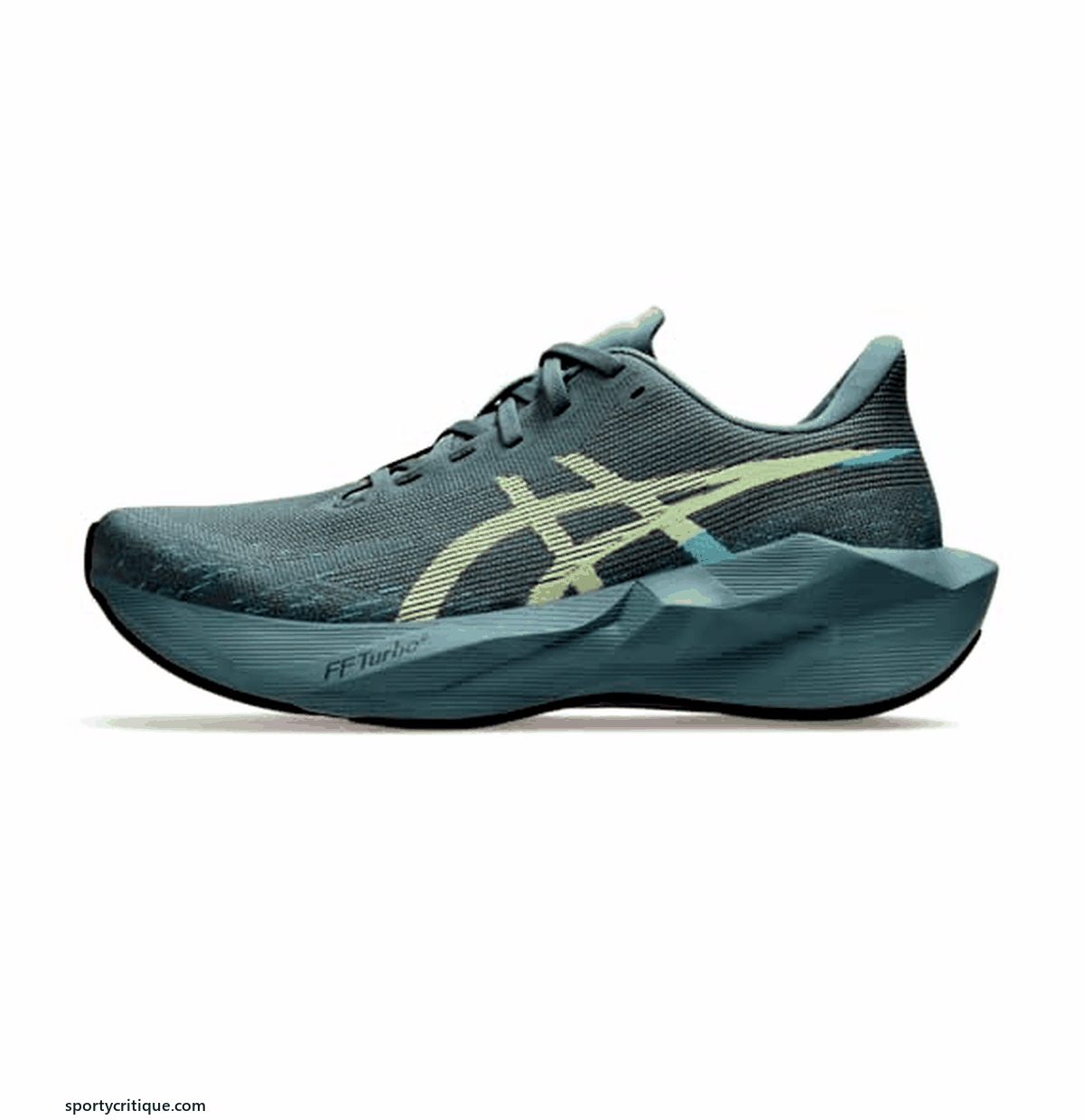
4. Asics Metaspeed Sky Paris — Best Stride-Extending Runners
The Asics Metaspeed Sky Paris is one of the lightest legal marathon racing shoes ever produced, tipping the scales at an astonishing 6.4 ounces. Asics designed the Sky Paris specifically for “stride-style” runners—athletes who increase their race pace by extending their stride length rather than increasing their cadence frequency.
The shoe features Asics’ newly formulated FF TURBO PLUS supercritical foam, which is lighter, softer, and provides eight percent more dynamic energy return than previous iterations. The full-length carbon plate is placed high in the midsole, directly under the footbed, maximizing vertical foam compression beneath the plate during downward landing forces. As you apply force into the foam, the high-mounted plate rebounds upward, propelling the runner forward with an extended flight phase that conserves vital muscular energy.
Key Technical Specifications:
- Midsole Foam: Supercritical FF TURBO PLUS High-Resilience Foam
- Plate Architecture: Wide Flat Carbon Fiber Plate Positioned High Under Footbed
- Weight: 6.4 oz / 181 grams (Featherweight Benchmark)
- Stack Height & Drop: 39.5mm Heel / 34.5mm Forefoot (5mm Drop)
- Upper: Motion Wrap 2.0 Engineered Breathable Mesh
5. Hoka Cielo X1 — Best Ultra-Cushioned Rocker Propulsion
The Hoka Cielo X1 represents Hoka’s uncompromising foray into elite marathon super shoes. Built around a dual-density supercritical PEBA midsole with massive hollow cutouts in the midfoot to reduce weight, the Cielo X1 is engineered around an aggressive early-stage Meta-Rocker profile.
Between the two foam layers sits a winged, asymmetrical carbon fiber plate featuring structural lateral and medial stability wings. When your foot strikes the ground, the softer top foam layer cushions the impact, while the winged carbon plate prevents ankle roll and channels energy forward into the firm lower foam layer. For runners who want maximum underfoot protection that completely eliminates road chatter and leaves leg muscles feeling fresh over the final 10 kilometers, the Cielo X1 is a formidable long-distance cruiser.
Key Technical Specifications:
- Midsole Foam: Dual-Density Supercritical PEBA with Dynamic Core Cutout
- Plate Architecture: Winged Asymmetric Carbon Fiber Plate
- Weight: 9.3 oz / 264 grams
- Stack Height & Drop: 39.0mm Heel / 32.0mm Forefoot (7mm Drop)
- Rocker Profile: Aggressive Early-Stage Meta-Rocker
Stride vs Cadence Biomechanics: Matching Plate Shape to Your Gait
Selecting the correct super shoe requires matching the plate curvature to your individual running gait biomechanics:
1. Stride Runners (Asics Metaspeed Sky Paris, Nike Vaporfly 3)
Stride runners naturally accelerate by lengthening their ground coverage with each step while maintaining a relatively steady step rate (between 165 and 175 steps per minute). These runners generate high vertical ground reaction forces. They benefit most from shoes with high-mounted, flatter carbon plates and softer, thicker foams that compress deeply and rebound vertically to extend air flight time.
2. Cadence Runners (Saucony Endorphin Elite, Adidas Adios Pro 3)
Cadence runners accelerate by rapidly increasing their turnover (often exceeding 185 to 195 steps per minute) with minimal vertical oscillation. They benefit most from aggressive forefoot rocker geometries and curved plates positioned lower in the foam that roll the foot forward into quick toe-offs without waiting for deep foam compression cycles.
Outsole Traction and Hydroplaning Resistance on Wet Marathon Asphalt
While supercritical foam delivers the energetic bounce, the outsole compound determines whether that propulsion converts into forward momentum or slips uselessly on damp asphalt. Major marathon courses—from Boston’s rain-soaked pavement to Berlin’s smooth roadway surfaces—present significant friction challenges:
1. Rubber Formulations: Continental vs Blown Rubber vs Textured PU
Modern super shoe outsoles utilize thin, high-tack rubber films measuring between 1.0mm and 2.0mm in thickness to minimize grams. The Adidas Adios Pro 3 utilizes Continental automotive-grade rubber featuring microscopic silica compounding that maintains high friction coefficients even on cold, rain-slicked asphalt. Conversely, shoes utilizing thin textured polyurethane films (such as early Vaporfly iterations) save ounces but require cautious cornering around wet painted roadway stripes and manhole covers.
2. Water Evacuation Channels and Siping Grooves
Under rapid foot impact, trapped water can create micro-hydroplaning between the rubber outsole and the road surface. Modern racers integrate micro-siping slits and longitudinal grooves that direct water outwards away from the high-pressure forefoot contact patch. This ensures uninterrupted road adhesion during explosive toe-off mechanics.
Achilles Tendon and Plantar Fascia Strain: Managing Plate Stiffness
The mechanical rigidity of a carbon fiber flyplate fundamentally alters the kinetic chain of the lower extremity. By restricting natural flexion at the metatarsophalangeal (MTP) joint, the plate transfers mechanical loading upward into the Achilles tendon, calf complex, and plantar fascia:
- Achilles Tendon Loading: Runners transitioning directly into carbon-plated footwear without gradual adaptation often experience calf tightness and Achilles strain due to altered lever mechanics. Incorporating eccentric heel drop exercises strengthens tendon tensile capacity.
- Plantar Fascia Stress: The rigid curved plate supports the longitudinal foot arch during mid-stance. However, if the shoe drop is too low or the foam too soft, the plantar aponeurosis can experience increased tension, making shoes with moderate 7mm to 8mm drops preferred for athletes prone to plantar fasciitis.
- Post-Race Recovery: While super shoes dramatically reduce eccentric quadriceps muscle damage during marathons, calves and Achilles tendons require active soft-tissue massage and mobility work in the days following 26.2-mile efforts.
Race Day Protocol: Shoe Lifespan and Breaking In Super Shoes
Because supercritical PEBA foams are delicate and full-length carbon plates alter foot biomechanics, runners must follow specific pre-race protocols:
- Lifespan Expectancy: Premium carbon plate super shoes maintain peak responsiveness for approximately 150 to 250 miles. While the carbon plate itself does not fatigue, the supercritical PEBA foam gradually loses its rebound elasticity after repeated compressions.
- Break-In Mileage: Never race a marathon in brand-new, unboxed super shoes. Complete one 10-mile to 13-mile marathon pace workout plus two short interval sessions (totaling roughly 20 to 25 miles) to adapt your calf muscles and plantar fascia to the stiff plate before race day.
- Rotation Strategy: Do not complete daily slow recovery runs in carbon-plated footwear. Restrict carbon shoes to race pace simulations, tempo workouts, and official races, using standard non-plated trainers for daily base mileage to prevent calf adaptation imbalances.
Frequently Asked Questions
How much faster do carbon plate running shoes make you?
Peer-reviewed sports science studies demonstrate that carbon-plated super shoes improve running economy by 3 to 4 percent on average. For a 3-hour marathon runner, this efficiency gain translates to an estimated time reduction of 4 to 6 minutes over 26.2 miles.
How many miles do carbon-plated marathon shoes last?
Most carbon racing flats maintain optimal energetic rebound for 150 to 250 miles. Many competitive runners reserve shoes for 2 to 3 full marathons plus key tune-up workouts before demoting them to training shoes.
Can beginners or heel strikers wear carbon plate racing shoes?
Yes, but with caution. Shoes with wider rearfoot platforms and gentle rockers (such as the Adidas Adios Pro 3 or Hoka Cielo X1) accommodate heel strikers effectively. However, the high stack height and plate stiffness require adequate ankle strength to avoid stability issues.
Are carbon plate shoes legal for official races?
Yes. All shoes featured in this review comply strictly with World Athletics road racing regulations, featuring stack heights of 40mm or lower and containing a single compliant carbon plate or rod system.