How to Regrip Golf Clubs Yourself: Tools, Steps, and Dry Time

Regripping golf clubs yourself is a short, mechanical job once you know the order of operations. Here is exactly what to buy, how to do it, and how long to leave the club alone before you trust it again.

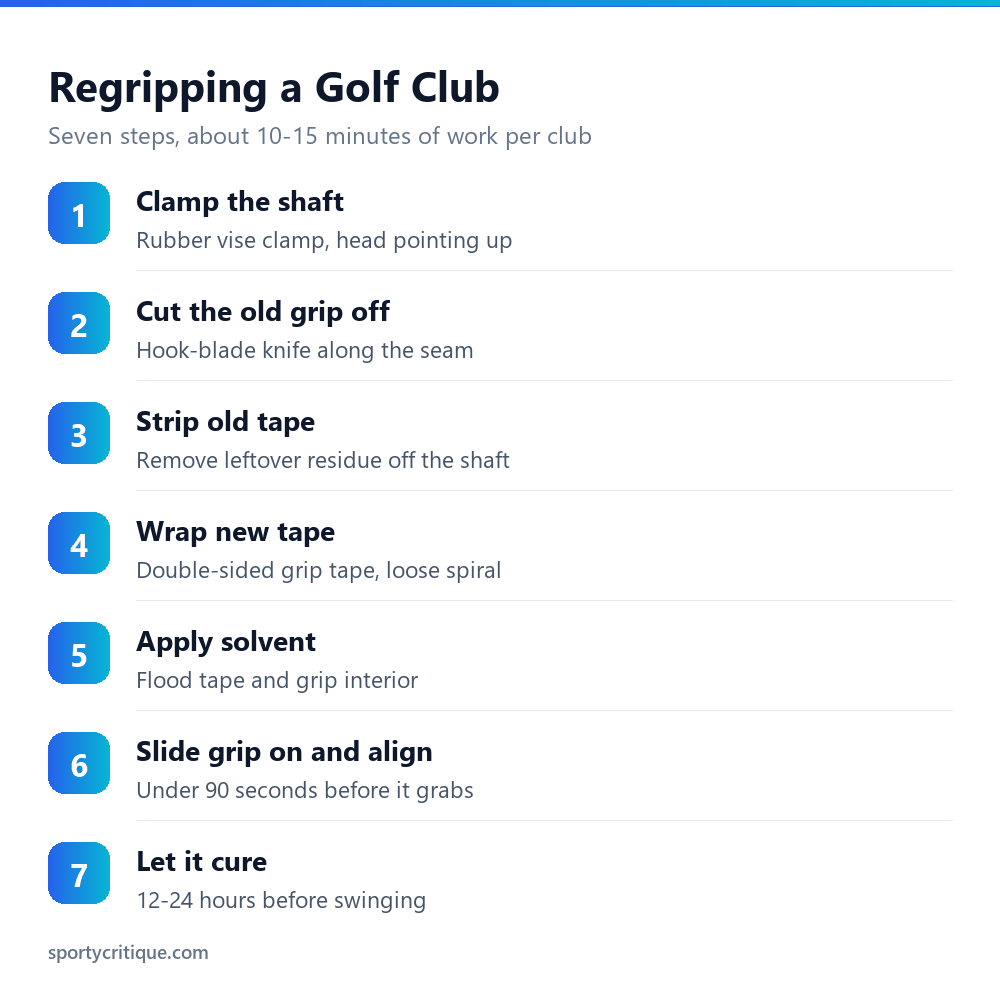
To regrip golf clubs, clamp the shaft, cut off the old grip with a hook-blade knife, strip the leftover tape, wrap new double-sided tape, soak the tape and the inside of the new grip with grip solvent, then slide the grip on fast and straight before the solvent flashes off. Let it sit at least 12 hours, ideally 24, before hitting balls.
If your grips feel slick when your hands sweat, shiny in the spots where your thumbs sit, or just plain hard compared to when they were new, it’s time to regrip golf clubs rather than live with them. Doing it yourself takes about 10 to 15 minutes per club once you’ve done a couple, and the tools cost less than a single professional regrip on one club.
- →A hook-blade utility knife and a rubber shaft clamp are the two tools that matter most; skip the vise clamp and you risk crushing a graphite shaft
- →Grip solvent, not water and not mineral spirits alone, is what lets the grip slide on and then locks it in place as it evaporates
- →You have roughly 60-90 seconds from applying solvent to having the grip aligned before it starts to grab
- →Let a freshly regripped club cure for 12-24 hours before swinging it; solvent that hasn’t fully evaporated leaves the grip loose under load
- →Double-sided grip tape, wrapped in a slight spiral rather than straight up the shaft, gives the most even solvent coverage
Table of Contents
Tools you actually need
The regripping kits sold as a bundle usually cover this list, but you can also buy each piece separately and spend less. None of it is optional if you want a grip that stays put through a full round.
⚠️ Watch out: Regular mineral spirits or paint thinner will work in a pinch, but they evaporate slower than dedicated grip solvent and leave a stronger odor. If you use a substitute, give the club extra cure time, closer to 24 hours minimum, before trusting it under full swing speed.
Step by step: how to regrip a golf club
How much solvent is too much
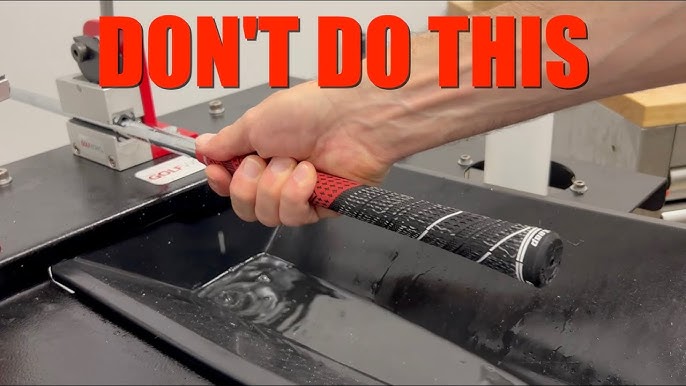
More solvent isn’t better past a certain point. Enough to visibly wet the full inside surface of the grip and soak the tape is right; a flood that drips heavily off the shaft tip onto the clubhead risks solvent creeping under the ferrule or onto a painted clubface, which can dull the finish over repeated regrips. Wipe drips immediately with the rag rather than letting them sit.
💡 Pro tip: A kit that bundles the clamp, tape, and solvent together, such as the Golf Grip Kit for Regripping Golf Clubs, is an easy way to get all of it in one order if you don’t already own a shaft clamp. Amazon listing prices move around, so check the current price and stock on the page itself rather than trusting a number printed here.
Common mistakes that ruin a fresh grip
- ✓Clamp on a rubber shaft insert, not bare metal jaws, for graphite shafts
- ✓Cut along the existing seam with a hook blade to avoid nicking the shaft
- ✓Have the new grip and tape laid out and ready before you apply solvent
- ✓Give the club a full overnight cure before swinging it
- ✕Skipping the rubber clamp insert on a graphite shaft, which can crack it under clamp pressure
- ✕Using a straight blade close to the shaft, which is how shafts get scored or cracked
- ✕Taking too long to align the grip after solvent goes on, so it grabs crooked
- ✕Hitting balls the same day, before the solvent has fully evaporated out from under the tape
How often you actually need to regrip
There’s no fixed calendar interval that applies to everyone. A player who walks 100+ rounds a year in humid weather wears grips out faster than someone who plays a dozen rounds a season in a dry climate. Watch the grip itself instead of the clock: shiny, hardened patches where your hands sit, a slick feel when your palms sweat, or visible cracking at the cap are all signs that regripping is overdue, not just due.
📊 Note: A rough general guideline some club fitters use is once a year for a player who golfs weekly, or every 40 or so rounds. Treat that as a starting point to check your grips against, not a rule to follow blindly regardless of how they actually feel.
Regripping specific club types
Putters and full-swing clubs use different grip shapes, but the mechanical process of removing and installing them is the same. A couple of details differ. Putter grips are often larger in diameter and non-tapered, so buy tape sized for the actual grip’s inner bore rather than assuming one tape width fits every club in the bag. Wedges and irons see the most wear if you practice from the rough or sand often, since grit works into your hands and onto the grip surface faster than it does off a tee.
Picking a new grip before you start
Match the new grip’s core size to your shaft. Most steel shafts use a .600 core and most graphite shafts use a .580 core; buying the wrong one leaves the grip loose inside even with tape and solvent doing their job correctly. The number is usually printed on the grip’s packaging or listed in the product title, so check before ordering rather than guessing from the shaft material alone, since some graphite shafts are built on a .600 taper specifically to share grips with steel-shafted clubs in the same set.
Tackiness fades with UV exposure and dirt buildup well before a grip physically wears through, which is a separate problem from the hardening this whole guide is about. If a grip still feels soft and un-cracked but loses traction the moment your hands get damp, a wipe with a damp cloth and mild soap solves it far more often than replacing the grip does. Save regripping for grips that are actually hard or cracked, not just dirty.
When to pay a shop instead
If you’re regripping a single club and don’t already own a clamp, paying a shop the going rate per club, which typically runs somewhere in the eight to fifteen dollar range per club plus the grip itself, is often cheaper than buying tools you’ll barely use again. The math flips once you’re doing a full set of clubs or plan to regrip again next season, where owning the clamp and buying tape and solvent in bulk pays for itself quickly.
Grip material changes the process slightly
Standard rubber grips are what most regripping kits and this whole guide assume. Corded grips, which mix rubber with a woven cotton or synthetic thread for extra traction in wet weather, are rougher on bare hands but install the same way with the same solvent and tape. Wrap grips, the tape-covered style used by some tour players, skip the double-sided grip tape step entirely since the wrap itself provides the grip surface; you’re really just taping and finishing the shaft underneath. If you’re not sure which type you’re buying, the product listing or the grip’s own box will say plainly.
Weather matters more than people expect. Solvent evaporates faster in a warm, dry garage than in a cold or humid one, which shortens your alignment window on a hot day and stretches it on a cold one. If you’re regripping outdoors in winter, expect the tape to stay tacky longer before it grabs, and budget extra cure time before that first swing.
Frequently asked questions
How long does a golf grip actually last?
It depends far more on how much you play and in what climate than on a fixed number of months. A grip that sees weekly rounds in humid, sweaty conditions can wear out within a single season, while a grip used a few times a month in a dry climate might look fine after two years. Check the surface and feel for hardness rather than counting months.
Can I regrip a golf club without solvent?
You can use plain water with dish soap as a substitute for grip solvent, and some players do. It works, but it evaporates slower and gives a shorter, less forgiving window to align the grip before the tape starts to grab. Dedicated grip solvent, or a naphtha-based substitute like lighter fluid, is easier to control for a first attempt.
Do I need a different grip size for bigger hands?
Yes. Grips come in undersize, standard, midsize, and jumbo diameters, and a size that’s too small for your hands can encourage an overly active grip pressure that hurts control. Wrapping an extra layer or two of tape under a standard grip is a common, cheap way to bump it up roughly a half-size without buying an oversize grip.
Will regripping change how my clubs feel to swing?
A properly installed grip of the same size and material as your old one should feel close to identical once it cures. Switching grip material (rubber to a corded or hybrid grip, for example) or size will change feel and tackiness noticeably, which is worth testing on one club before committing to a full set change.
As an Amazon Associate, we earn from qualifying purchases through links on this page.