Best Sunglasses for Golf

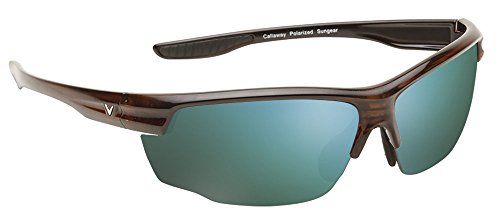
“Best sunglasses for golf” searches mostly return lists ranking pairs by brand recognition or price point without explaining what actually differs between them. This guide covers three real, currently listed golf sunglasses, verified against live Amazon product data, and focuses on the two specs that actually change how you see the course: lens tint and polarization. Pick based on which trade-off matches your actual game, not which name is most familiar. None of the products below were tested on an actual course for this guide; the comparisons rest on verified specs, listed pricing, and how each lens technology is documented to behave, not on a personal round played wearing each pair.
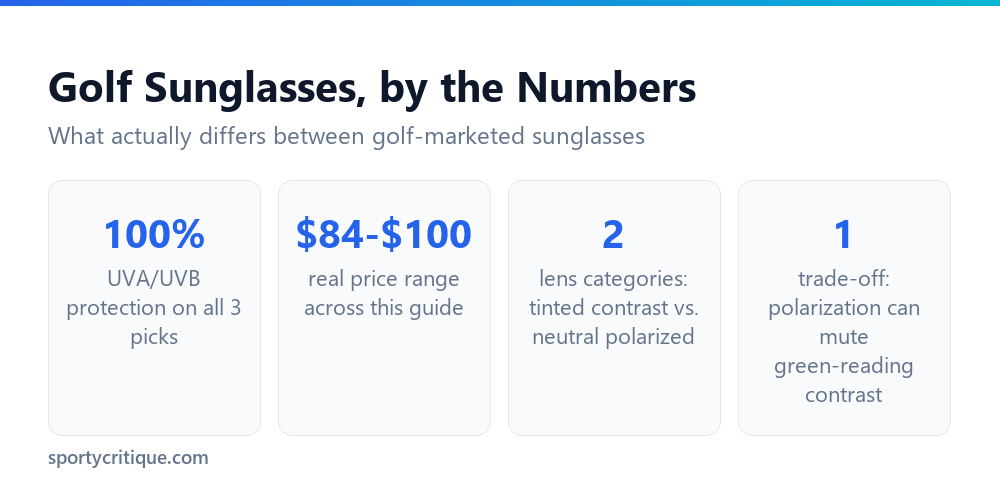
The best sunglasses for golf come down to two real trade-offs: lens tint and polarization, not brand name. For tracking a white ball against sky and grass, a contrast-boosting tint like amber or rose, found on the Under Armour Undeniable Oval Golf Sunglasses ($95.00), does that job specifically. For all-around glare cutting with a more neutral color view, the Bolle Golf King Sunglasses ($83.55) and Callaway Atlas Golf Sunglasses ($99.99) both use true polarized lenses. All three are real, currently listed products with 100% UV protection; the difference that actually matters is which trade-off fits how you play.
Every pair named here was checked against Amazon’s live product data for name, price, and stock status before writing this, not pulled from a spec sheet or press release. Prices and stock move, so treat the numbers as a snapshot rather than a promise.
Table of Contents
Lens tint: the choice that actually affects your game
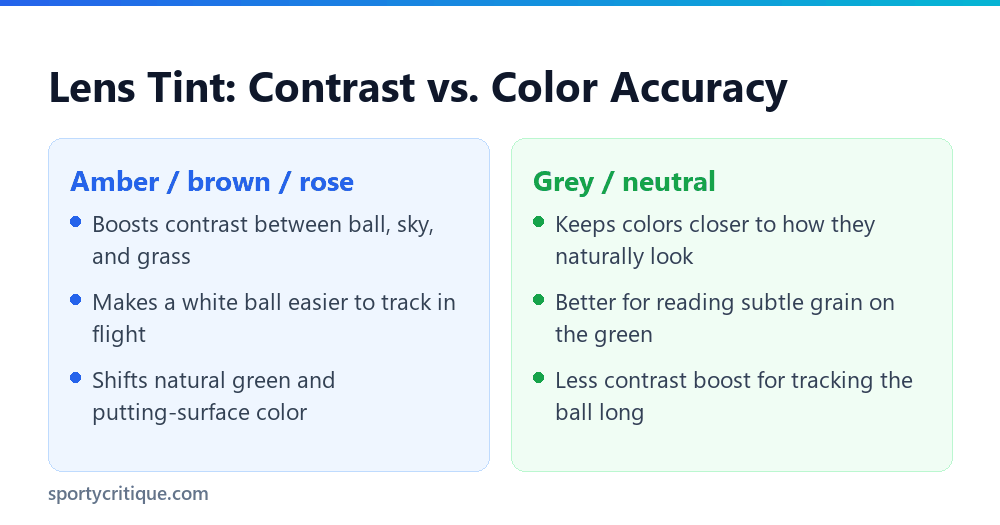
Lens color changes what wavelengths of light reach your eye, and for golf specifically that means changing how much a white ball stands out against green grass and blue or grey sky. Amber, brown, and rose-copper tints filter out more blue light, which increases the visual contrast between a white or yellow ball and its background, making it noticeably easier to track flight and find a ball that’s landed in longer grass. The trade-off is that these tints also shift how you perceive the color of the course itself, including the subtle color and shine differences golfers use to read grain direction and break on a putting green.
Grey and other neutral tints do the opposite: they reduce overall brightness without shifting color balance much, which keeps the green looking close to how it naturally looks to your eye. That’s the better choice specifically for reading putts, at some cost to the contrast boost that makes ball-tracking easier off the tee.
Polarization: cuts glare, but has a green-reading trade-off
⚠️ Watch out: Polarized lenses are excellent at cutting glare off wet grass, water hazards, and car windshields on the drive to the course, but that same glare-cutting effect can flatten some of the subtle sheen differences golfers rely on to read grain and break on the green. Golfers who putt heavily by reading surface shine sometimes prefer a non-polarized or lightly polarized lens for that specific reason, even though polarization is objectively better at reducing glare everywhere else.
This isn’t a reason to avoid polarized lenses outright, most golfers are better served by the glare reduction than hurt by the green-reading trade-off, but it’s the actual mechanism behind the sometimes-repeated advice that “polarized lenses are bad for golf,” which is an oversimplification. The real trade-off is narrow and specific to reading greens, not a broad downside that applies to every shot.
The picks, and what actually separates them
Under Armour Undeniable Oval Golf Sunglasses ($95.00): built specifically for golf’s contrast problem
Under Armour markets this model with what it calls a golf-tuned lens, aimed directly at the ball-against-sky-and-grass contrast problem rather than being a general sport sunglass with a golf label attached. That makes it the clearest pick here for someone whose main frustration is losing the ball in flight against a bright sky or blending into rough. The oval shape also gives a wider field of view than a smaller frame, which matters when tracking a shot from address through to landing rather than through a narrow window.
Bolle Golf King Sunglasses ($83.55): true polarized, all-around glare control
Bolle’s King model uses a true polarized lens rather than a tinted-only lens marketed as sport-ready, which means real glare reduction off wet grass, cart paths, and water hazards, not just a colored filter. That makes it a stronger choice for golfers who play a lot of morning or late-afternoon rounds with low, glare-heavy sun angles than for golfers whose main complaint is specifically about tracking the ball in flight.
Callaway Atlas Golf Sunglasses ($99.99): golf-brand fit with polarized lenses
Callaway’s Atlas uses handmade acetate frames and a polarized lens with a mirror coating aimed at managing short-wavelength light, similar in intent to Bolle’s approach but from a brand built specifically around golf equipment rather than general sport eyewear. If you specifically want a pair carrying a recognized golf-equipment brand rather than a crossover sport-sunglass brand, this is the pick that satisfies that preference while still delivering genuine polarization rather than a cosmetic-only lens.
UV protection: the one spec that’s actually standardized
Unlike lens tint or polarization, UV protection isn’t really a matter of preference, and all three pairs in this guide claim full protection against UVA and UVB rays. That’s worth checking on any sunglasses you’re considering, since a dark tint without real UV filtering can be worse for your eyes than no sunglasses at all: darker lenses cause your pupils to dilate to let in more light, and if that light isn’t actually being filtered for UV, more of it reaches the retina than would with bare eyes squinting in the sun. A legitimate golf or sport sunglass brand listing 100% UV protection is a baseline you shouldn’t have to think twice about, but it’s still worth confirming on the specific listing rather than assuming every dark lens on the market meets it.
Lens material: polycarbonate and why it matters on a golf course
All three picks here use polycarbonate or a comparable impact-resistant lens material rather than glass, which matters specifically on a golf course where an errant shot, your own or someone else’s, is a realistic way to take a direct hit. Polycarbonate lenses resist shattering far better than glass and weigh less, which also reduces fatigue across a full round. The trade-off is that polycarbonate scratches more easily than glass over years of use, so a hard case for transport, most golf sunglasses ship with one, is worth actually using between rounds rather than tossing the pair loose into a golf bag pocket alongside tees and ball markers.
Frame coverage and wind, not just lens choice
Beyond the lens itself, frame coverage matters more in golf than in most sports because you’re outdoors for four-plus hours across a wide range of head positions, address, backswing, follow-through, walking, rather than the more fixed viewing angle of something like driving. A wraparound or larger-lens frame blocks peripheral light leak better than a smaller, flatter frame, which reduces eye strain over a full round even when the tint and polarization are otherwise identical between two pairs. All three models here use a wraparound or oversized shape rather than a small flat lens, which is a deliberate design choice for exactly this reason, not a coincidence of style.
What the price difference actually buys
Across the roughly $16 spread between the cheapest and most expensive pick here, the price difference isn’t really about lens performance, all three deliver real UV protection and either genuine polarization or a purpose-built contrast tint. What the higher-priced options tend to add is frame material quality, acetate versus a lighter sport polymer, warranty coverage, and included accessories like a hard case or cleaning kit. None of that is irrelevant, a hard case that actually protects a polycarbonate lens from scratching has real value over a season of use, but it’s worth knowing you’re not paying more for a fundamentally better lens technology at this price range.
📊 Note: None of the three picks here include prescription options directly. If you need corrective lenses, check whether the specific listing offers a prescription-insert version or plan on wearing golf-specific sunglasses over daily contacts rather than assuming any sport sunglass line automatically supports a prescription swap.
- ✓Choose an amber, brown, or rose tint if losing the ball in flight is your main problem
- ✓Choose a neutral grey polarized lens if reading greens accurately matters more to you than ball-tracking
- ✓Confirm current price and stock on the actual listing before buying, not just this guide
- ✓Pick a wraparound or larger frame if you play full rounds outdoors regularly
- ✕Assume polarization is simply bad for golf; the trade-off is specific to reading subtle green contrast
- ✕Buy based on brand name alone without checking whether the lens is truly polarized or just tinted
- ✕Expect a golf-marketed sunglass to automatically include a prescription option
- ✕Ignore frame coverage and wind exposure in favor of lens spec alone
Bottom line
There’s no single best pair, only a best pair for what you’re actually trying to fix. If tracking the ball in flight is your problem, the Under Armour Undeniable Oval Golf Sunglasses and its golf-tuned contrast tint address that directly. If glare on bright days is the bigger issue, the Bolle Golf King Sunglasses and Callaway Atlas Golf Sunglasses both deliver genuine polarization from brands with real golf-sunglass experience, with the Callaway carrying the more recognizable golf-equipment name if that matters to you. Whichever pair you choose, matching the lens to your actual on-course complaint beats matching it to whatever a random list happens to rank first.
As an Amazon Associate, we earn from qualifying purchases through links on this page.
What’s the best lens tint for golf sunglasses?
It depends on your problem. Amber, brown, and rose-copper tints boost contrast for tracking the ball against sky and grass. Grey or neutral tints keep colors more natural, which helps with reading subtle grain and break on the putting green.
Are polarized sunglasses bad for reading greens?
There’s a real but narrow trade-off: polarization can flatten some of the subtle shine differences used to read grain and break. It’s not a reason to avoid polarized lenses outright, since the glare reduction they provide elsewhere in a round is a genuine benefit for most golfers.
Do golf sunglasses need to be polarized?
Not strictly. A contrast-boosting tinted lens without polarization, like the Under Armour pick here, is a legitimate alternative aimed specifically at ball-tracking rather than glare reduction. Which matters more depends on your specific complaint on the course.
Can I get golf sunglasses with a prescription?
Not directly through the three models covered here. Check the specific listing for a prescription-insert option, or plan to wear them over contacts rather than assuming any golf sunglass line supports a prescription swap by default.
Does frame shape matter for golf sunglasses?
Yes. A wraparound or larger-lens frame blocks more peripheral light and reduces eye strain over a full round outdoors compared to a smaller, flatter frame, even when the lens tint and polarization are otherwise identical.