Best Brand for Ping Pong Paddle by Playing Level, Not by Hype

Best brand for ping pong paddle depends less on hype and more on what each brand actually specializes in. Here’s how Butterfly, STIGA, JOOLA, DHS, and Yasaka really compare, with verified real products from each.
There’s no single best brand for a ping pong paddle, because the major brands specialize differently. Butterfly and DHS lean hardest into professional and tournament-grade equipment, where DHS in particular dominates among top Chinese national team players. STIGA and JOOLA cover a wider range from recreational to competitive with more consistently available mid-tier options. Yasaka sits closer to the traditional, control-first end of the spectrum. The right brand depends on your level and what you actually want the paddle to do, not on which name sounds most premium.
Asking for the best brand for a ping pong paddle is a little like asking for the best brand of car, the answer depends entirely on whether you need a work truck, a commuter sedan, or something built for a racetrack. Table tennis brands split along similar lines: some build almost exclusively for tournament players who assemble their own blade-and-rubber combinations, others build complete pre-made rackets aimed squarely at recreational and intermediate players. This guide compares five real brands, Butterfly, STIGA, JOOLA, DHS, and Yasaka, by what they actually specialize in, with verified example products from each.
- →Butterfly and DHS are the two brands most associated with actual professional and Olympic-level play
- →STIGA and JOOLA offer the widest range from beginner sets to competition-ready pre-made rackets
- →Yasaka leans toward a more traditional, control-oriented playing feel favored by some defensive and all-round players
- →A brand’s reputation at the professional level doesn’t automatically mean its cheapest product is the best beginner choice
- →Pre-made rackets (brand and rubber already assembled) suit most recreational buyers better than buying a blade and rubber separately
Table of Contents
Why brand comparisons in table tennis are different from most sports gear
In a lot of sports equipment categories, brand mostly signals price tier and marketing budget. Table tennis is a little more specific than that, because at the serious end of the sport, equipment is assembled from separate parts, a blade and two rubber sheets, chosen individually rather than bought as one packaged unit. That means a brand’s professional-tier reputation is really about its blades and rubbers being what top players actually choose to assemble their equipment from, not about a single flagship racket the way a tennis or golf brand might have one signature product.
For recreational and intermediate buyers, most brands also sell pre-made rackets with a blade and rubber already glued together at the factory. These are what most of this guide focuses on, since they’re what the large majority of buyers searching for “the best brand” are actually shopping for, rather than separate blade-and-rubber combinations aimed at players who already know exactly what they want.
Butterfly: the professional-tournament standard
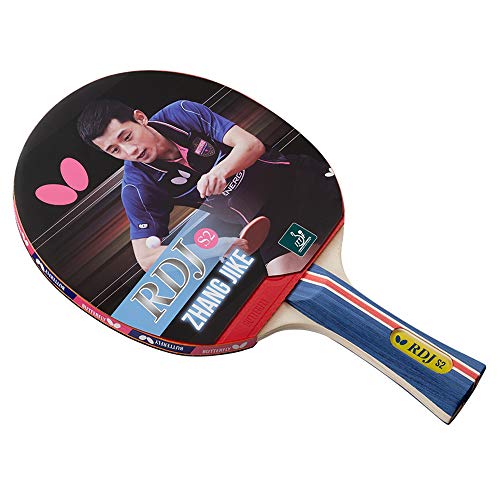
Butterfly is arguably the brand most associated with elite international table tennis, its blades and rubbers, including the well-known Tenergy rubber line, show up constantly in professional and Olympic-level equipment breakdowns. That reputation is earned at the top of the sport, but it doesn’t mean every Butterfly product is built for that level.
The Butterfly Timo Boll Shakehand Ping Pong Paddle is Butterfly’s own answer to a beginner-friendly product: a shakehand racket from its Japan Series, explicitly marketed for beginning-level players, with good speed and spin but an emphasis on control over raw power. It’s a legitimate entry point into the brand without paying for tournament-tier materials you won’t yet use fully.
The Butterfly B603FL Table Tennis Racket Set sits further up Butterfly’s lineup, built for intermediate players who’ve outgrown a beginner racket and want a stronger carbon-blade-and-rubber combination without moving to a fully custom, separately assembled setup. It’s a fair example of what “the next step up” looks like inside a single brand’s own range, rather than jumping straight from a $37 beginner racket to a $300-plus tour setup.

STIGA: the widest range, beginner through competitive
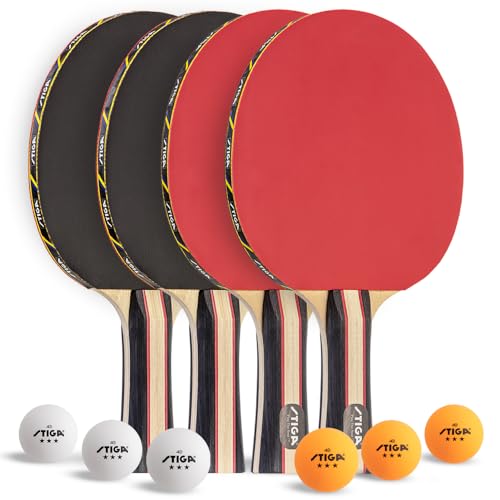
The STIGA Alpha Ping Pong Paddle is a good representative of where STIGA spends most of its catalog: solidly built recreational-to-intermediate rackets that don’t require any assembly knowledge to buy correctly. STIGA covers everything from bundled family multi-packs to its higher-end Pro Carbon line aimed at more advanced play, which makes it one of the easier brands to shop within if you’re not sure yet how serious you’ll get about the sport, since moving up their range later doesn’t mean switching brands.
📊 Note: STIGA’s higher-tier Pro Carbon and Royal Carbon rackets, aimed at tournament-level play, weren’t reliably in stock with a live price through our product check at the time of writing. That’s worth knowing if you go looking for STIGA’s top tier specifically, availability on premium tournament rackets fluctuates more than on their recreational lines.
JOOLA: recreational-friendly with real competitive options
The JOOLA Infinity Balance Ping Pong Paddle is marketed explicitly as “competition ready,” built for high-level training with rubber tuned for spin and control rather than pure recreational bounce. JOOLA has built a broad reputation partly through visible sponsorships in table tennis and, more recently, a strong crossover push into pickleball, which means the brand name now carries recognition beyond table tennis circles specifically, worth knowing so you don’t confuse a JOOLA pickleball paddle with JOOLA’s table tennis line if you’re shopping across both sports.
DHS: the brand most top Chinese players actually use
DHS is less of a household name in the United States than Butterfly or STIGA, but among the top tier of the sport, particularly China’s national team, it’s arguably the single most-used brand, with its Hurricane rubber line especially dominant among top players. That professional pedigree is real and well documented.
⚠️ Watch out: Here’s the honest catch: the DHS Ping Pong Racket Table Tennis Paddle 6002, a representative mid-tier DHS shakehand racket, showed as currently unavailable through our live Amazon product check. DHS listings on Amazon’s US marketplace come and go more than Butterfly or STIGA’s, so if you specifically want to try DHS equipment, expect to shop around, check multiple listings, or look at specialty table tennis retailers rather than assuming Amazon will always have current stock.
Yasaka: traditional, control-first playing feel
The YASAKA FLA YR-133 Table Tennis Racket represents Yasaka’s more traditional approach, a Swedish brand with a long history in the sport, generally associated with a control-oriented, slightly softer playing feel compared to the more speed-and-power-focused lines from some competitors. At the time of writing this specific listing showed a six-week shipping estimate rather than immediate stock, which is common for Yasaka’s more specialized products on Amazon and worth factoring into your timeline if you’re buying ahead of a specific event or trip.
- ✓Match the brand’s known specialty to your actual playing style, not just its reputation
- ✓Buy a brand’s entry-level product first if you’re new, rather than its flagship line
- ✓Check current stock and price before assuming any specific listing is available
- ✓Consider a second brand’s mid-tier racket if your first choice is out of stock
- ✕Assume the brand a pro uses will suit your current skill level
- ✕Buy the most expensive racket in a lineup believing it will fix a fundamentals problem
- ✕Ignore shipping estimates on specialty brands like Yasaka if you’re buying for a deadline
- ✕Treat brand reputation as a substitute for checking a specific product’s actual specs
Pre-made racket versus blade-and-rubber: which brands push which
Butterfly and DHS both sell extensively into the separate blade-and-rubber market that serious and tournament players use, alongside their pre-made recreational lines. STIGA and JOOLA lean more heavily toward complete, pre-assembled rackets across their catalog, which is part of why they’re often easier brands to recommend to someone who just wants one product to buy and start playing with, rather than a starting point for building a fully customized setup later.
If you think you’ll want to upgrade to a separate blade and rubber setup eventually, buying your first pre-made racket from a brand that also sells components, Butterfly or DHS, means you’ll already recognize their rubber names and blade options when you get there. It’s a minor consideration, not a reason to pick a brand on its own, but it can save some research time down the line.
💡 Pro tip: If you’re torn between two brands at a similar price and tier, check which one your local club, if you have one, stocks or uses most. Being able to test-hit a specific racket before buying tells you more in five minutes than any spec sheet or brand reputation will.
A note on rubber compounds, separate from the brand question
It’s worth remembering that a racket’s playing feel comes as much from its rubber compound and sponge thickness as from the brand printed on the blade. Two rackets from the same brand, one with a hard, fast rubber and one with a softer, spin-oriented rubber, can feel more different from each other than two similarly specced rackets from two different brands. Brand narrows down general positioning and manufacturing quality, but the specific rubber and sponge combination on the exact racket you’re buying still matters more for how it actually plays.
Bottom line
There isn’t one best brand for a ping pong paddle, there’s a best brand for your specific level and playing style. Butterfly and DHS carry the strongest professional pedigree, STIGA and JOOLA offer the easiest range to grow within, and Yasaka suits a more traditional, control-first game. Match the brand’s actual specialty to what you need, check real stock and pricing before you commit, and treat brand name as one input among several rather than the whole decision.
See also: Best Ping Pong Paddle for the Money for what specific price tiers buy across brands, or Best Ping Pong Paddle for Beginners if brand is less important right now than simply getting started.
What is the number one ping pong paddle brand?
There isn’t a single number one, brands specialize differently. Butterfly and DHS are most associated with professional and Olympic-level play, while STIGA and JOOLA offer a wider range for recreational through competitive players.
Is Butterfly or STIGA better for beginners?
STIGA’s catalog generally makes it easier to buy a genuinely beginner-appropriate racket without accidentally overpaying for tournament-grade materials, though Butterfly also sells dedicated beginner rackets in its Japan Series.
Why is DHS less common in the US market despite being used by top players?
DHS is the dominant brand among China’s national team and many top international players, but its US retail distribution, including on Amazon, is less consistent than Butterfly’s or STIGA’s, so stock and pricing fluctuate more.
Does a more expensive brand always mean a better paddle for me?
No. A racket’s fit depends on matching its speed and spin characteristics to your actual playing level and style. A tournament-tier racket from a top brand can play worse for a developing player than a well-matched mid-tier option.
As an Amazon Associate, we earn from qualifying purchases through links on this page.