
What to Actually Look for in a Gymnastics Beam for Home


Most “gymnastics beam for home” listings look interchangeable at a glance. They are not. Here’s the one decision that actually matters before you buy, and four real beams that cover the range.
🤸 Gymnastics Hub: Explore all 26 skill tutorials, home equipment reviews, and scoring guides in our Complete Gymnastics Resource Hub.
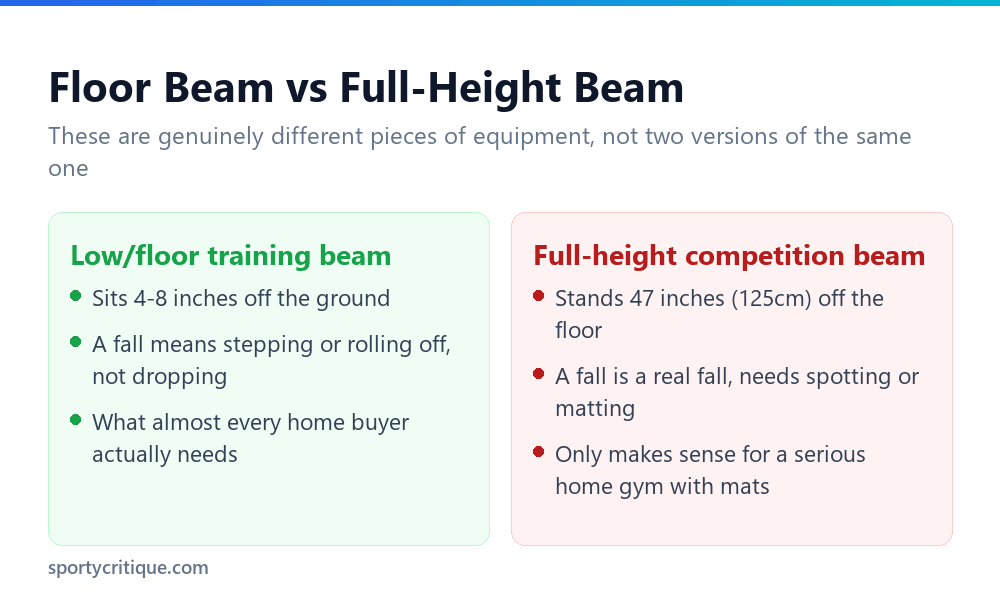
For home use, the beam almost everyone actually wants is a floor-level or low-rise practice beam, not a full-height competition beam. A floor beam sits a few inches off the ground with a padded or suede top, so a missed landing means stepping off rather than falling four feet. A suede-covered top like the Tumbl Trak Addie beam most closely copies the feel of a real competition beam; a foam-topped folding beam like the ZELUS is cheaper and easier to store but has more give underfoot.
Search “gymnastics beam for home” and most of what comes back looks the same in thumbnail: a long padded strip in a bright color. It is not the same product underneath. Height off the floor, top material, and internal core change how a beam feels under a gymnast’s feet and how much risk is involved when a skill goes wrong. This guide covers four beams that cover the real range of options, and the one distinction that matters most before you buy any of them.
- →A floor-level practice beam and a full-height competition beam are different products, not two versions of the same thing
- →Suede tops feel closest to a real competition beam; foam tops are softer, cheaper, and less accurate for skill transfer
- →8ft is the standard home length; 6ft saves floor space but limits full tumbling passes
- →A wood-core beam holds its shape under repeated use better than a foam-core folding beam, at a higher price
- →None of these beams replace spotting for a skill a gymnast hasn’t landed solo yet
Table of Contents
Floor beam or full-height beam: the decision that actually matters
A full-size competition beam stands 125cm, about 47 inches, off the floor. That height is part of the sport on purpose: the fear of a real fall is part of what a gymnast trains to manage. It is also the reason a full-height beam has no real place in most homes. A missed landing from that height without a spotter or a landing mat underneath is a genuine injury risk, not a scraped knee.
⚠️ Watch out: A floor-level practice beam and a full-height competition beam solve different problems. Buying a full-height beam for a home gym without also buying real landing mats and having a trained spotter present is how home training injuries happen. If in doubt, buy the floor beam.
Every beam in this guide except one is a floor or low-rise design for exactly that reason. The Milliard beam below is the one exception worth knowing about: it adjusts between a floor mode and a raised mode with legs, so a family can start flat on the ground and add height later, under supervision, once basic skills are solid.
Four home beams, and what actually separates them
The Tumbl Trak 8 Foot Addie Gymnastics Training Suede Balance Beam, High and Low Beam Gymnastics for Home, Non Slip Base, Competition Feel is the closest match to a real gym beam in this group. It uses a solid wood core under a synthetic suede cover, the same general build as a competition beam, just mounted low with rubber-coated steel legs instead of standing at full height. Suede grips differently under bare feet than foam does, which matters if the goal is transferring drills to an actual meet beam later. Current price: price not listed in our data feed right now.
The ZELUS 8′ Folding Gymnastics Balance Beam, Floor Balance Beam w/Carry Handles Anti-Slip Base for Kids, Beginners & Professional Gymnasts takes the opposite approach: high-density foam over a folding wood frame, with carry handles and an anti-slip base. It folds flat for storage, weighs about 11 pounds, and costs less than a suede wood-core beam. The tradeoff is real: foam compresses more under a landing than suede over wood does. Current price: price not listed in our data feed right now.
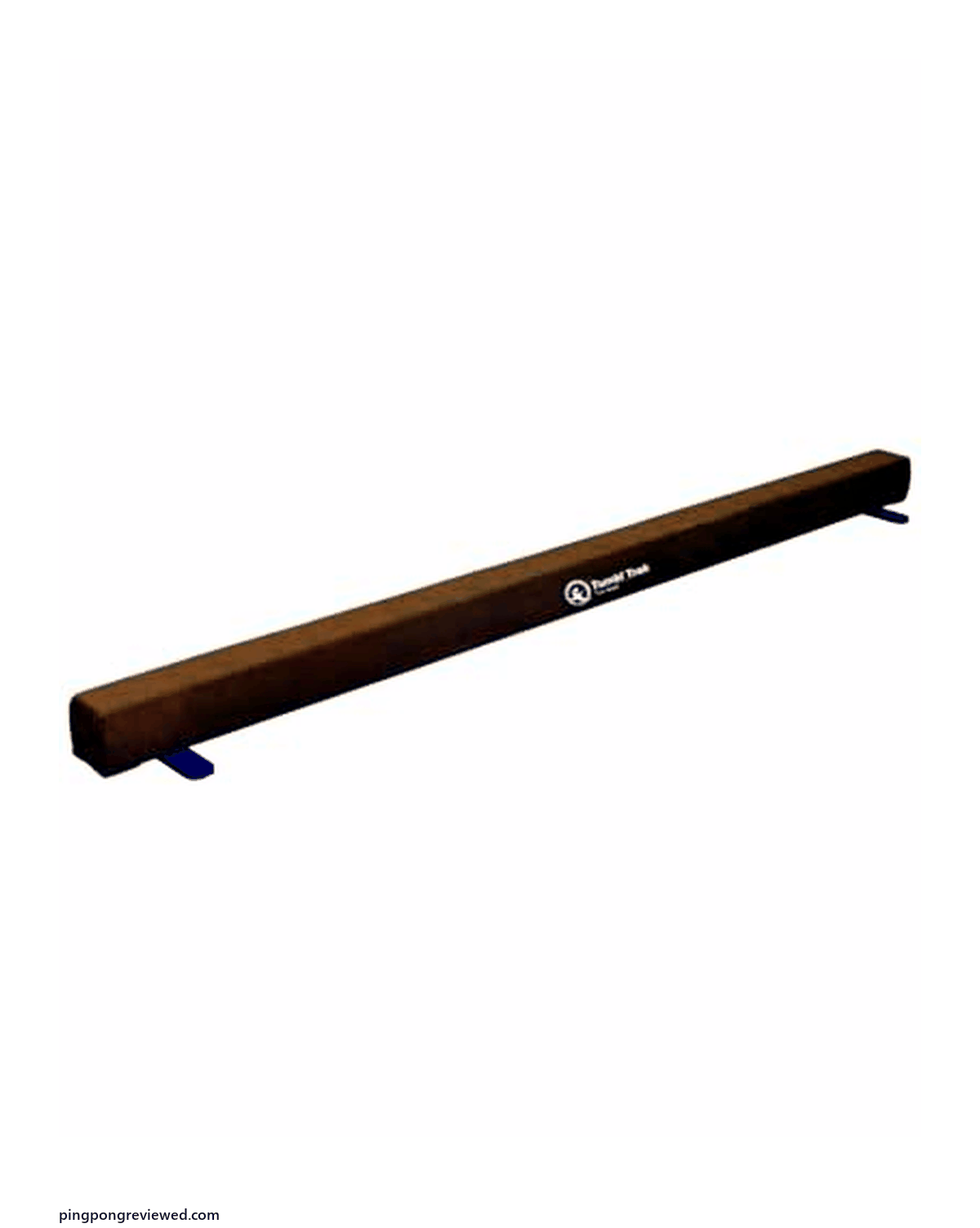
The Milliard Patented Adjustable Balance Beam, High and Low (7’7″) Floor Beam Suede Gymnastics Competition Style Training with Legs is built to adjust: a suede-covered pad that sits flat on the floor for beginners, with legs that raise it to a low competition-style height once a gymnast is ready. That flexibility is the whole point of the design, and it is also the beam on this list that most needs the safety note above taken seriously once the legs go on. Current price: price not listed in our data feed right now.
The The Beam Store Suede Gymnastics Balance Beam is a shorter, simpler option: a 6-foot suede-covered beam made in the USA, with no folding mechanism and no adjustable legs. Losing 2 feet of length compared to the 8-foot options above rules out full tumbling passes, but it also means less floor space needed and one less moving part to wear out over time. Current price: price not listed in our data feed right now.
📊 Note: Amazon’s live pricing feed did not return a current dollar figure for most of these listings at the time this was written. Where you see “price not listed in our data feed right now” above, check the current price and stock status on the product page itself before buying; it changes independently of anything on this page.
Suede top versus foam top: what the material actually changes
A suede-covered beam over a solid core, wood or dense foam, behaves close to how a real gym beam behaves underfoot: firm, with enough texture for bare feet or beam shoes to grip. That firmness is exactly what lets a skill practiced at home transfer to a real beam later, because the body learns the actual amount of give it will feel.
A soft foam-topped beam is more forgiving on a bad landing and cheaper to make, which is why it is usually the least expensive option in any given size. The cost is accuracy: a skill that feels solid on soft foam can feel different, and less stable, the first time it is tried on a firmer surface. For a gymnast training seriously outside of home practice, that gap is worth planning around rather than ignoring.
Length and storage: the tradeoff nobody mentions in the listing
An 8-foot beam is the standard length for home practice because it is long enough for a short tumbling pass and most basic beam skills. Going shorter, to 6 feet, saves real floor space in a smaller room or garage but rules out a full run into a skill; going longer than 8 feet is rare in home products because most rooms simply do not have the clearance.
Folding beams solve the storage problem directly. A wood-core suede beam like the Addie does not fold, so it needs a permanent spot against a wall or under a bed; a folding foam beam like the ZELUS collapses down for a closet. That difference is worth weighing against the suede-versus-foam tradeoff above, because the two often pull in opposite directions: the beam that feels most like a real one is usually also the one that takes up permanent floor space.
- ✓Buy a floor-level beam unless you also own real landing mats and have a trained spotter
- ✓Check the listed height off the floor before buying, not just the length
- ✓Measure your actual floor space against the beam’s folded and unfolded dimensions
- ✓Expect a foam-top beam to feel noticeably softer than a suede-top one
- ✕Assume every beam labeled “for home” is the same low-height design
- ✕Buy a full-height or adjustable-to-height beam as a first purchase for a beginner
- ✕Skip checking whether the beam folds if storage space is limited
- ✕Ignore weight capacity listed by the manufacturer, especially for adult use
Who a home beam actually makes sense for
A home beam earns its keep for a gymnast already taking lessons who wants extra repetitions on basic positions, turns, and leaps between practices. It is a poor substitute for coached practice on new or difficult skills, and it is not a safe place to attempt anything a gymnast cannot already land reliably with a coach or spotter present. For a total beginner just curious about the sport, a floor line taped on the carpet does the same job for zero dollars until interest is proven.
💡 Pro tip: If you’re not sure which length or top material fits your space, measure the room first and commit to that number before opening any product listing. It is easy to talk yourself into an 8-foot suede beam on the strength of good reviews and then discover it doesn’t fit where you planned to put it.
A note on weight capacity
Manufacturer weight limits on folding foam beams are usually lower than on wood-core suede beams, and they matter more than people expect once a teenager or an adult gymnast is using the equipment rather than a young child. Check the stated capacity against the actual weight of whoever will use the beam, not an assumption about what “should” be fine; a foam-core beam rated for a child’s weight will compress and wear out fast under an adult.
Bottom line
For nearly everyone buying a gymnastics beam for home, the right choice is a floor-level beam, not a full-height one. Among the floor options, a suede top over a solid core gets closer to how a real beam feels, a foam top is cheaper and easier to store, and an adjustable design like the Milliard splits the difference if a gymnast’s skill level is likely to change over the next year or two.
Is a full-height competition beam safe to use at home?
Only with real landing mats underneath and a trained spotter present for any skill that isn’t already reliably landed. Without both of those, a floor-level practice beam is the safer and more practical choice for home use, and it’s what most home buyers actually need.
What’s the difference between a suede-top and foam-top beam?
A suede top over a solid core feels closer to a real gym or competition beam underfoot, which helps skills transfer between home practice and the gym. A foam top is softer and more forgiving on a bad landing, usually cheaper, but less accurate for building the same feel a gymnast will need on an actual beam.
What length beam should I buy for home?
8 feet is the standard length and long enough for a short tumbling pass and most basic skills. A 6-foot beam saves floor space but rules out a full run into a skill, which matters more for gymnasts already training tumbling passes than for beginners working on positions and turns.
Do folding beams hold up as well as fixed wood-core beams?
Generally no, not under heavy repeated use. A folding foam-core beam is more convenient to store but will show wear and compression sooner than a solid wood-core beam under a suede cover. For occasional home use that difference may not matter; for a gymnast training daily, it’s worth the extra cost of a fixed beam.
As an Amazon Associate, we earn from qualifying purchases through links on this page.


