Best Hockey Elbow Pads

The best hockey elbow pads combine a hard molded plastic elbow cap for impact protection with dual-density foam for shock absorption, in either a two-piece (better mobility) or three-piece (better stability and slip resistance) construction. Two-piece designs suit players prioritizing range of motion; three-piece strapping systems suit players who’ve had trouble with pads sliding down the arm during play. Three real options across price tiers are compared below.
Elbow pads get less attention than skates, sticks, or even shin guards, but the elbow is a common contact point in checking, falls, and board collisions, and a pad that doesn’t fit or stay in place defeats its own purpose regardless of how well-padded it looks on the shelf. Fit and construction type matter as much as brand name for this specific piece of equipment.
- →Two-piece construction offers better mobility; three-piece offers more coverage and slip resistance
- →A hard molded plastic cap over dual-density foam is the standard, effective protection format
- →Fit and slip resistance matter as much as padding thickness for actual in-game protection
- →Budget pads work fine for recreational and youth play; premium pads add coverage and mobility refinement
- →Sizing correctly, checking that the pad covers the elbow through a full range of arm motion, matters more than brand
Table of Contents
Two-Piece vs. Three-Piece: What the Difference Actually Means
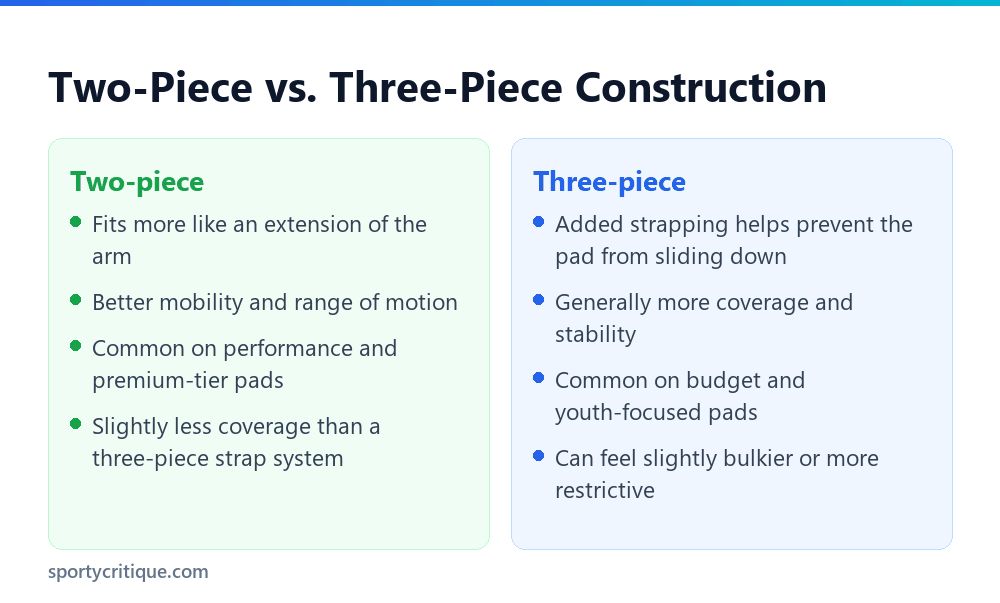
Two-piece elbow pads fit more like an extension of the arm, using a single hinged or segmented cap-and-foam assembly that moves with the elbow through its natural range of motion. This construction generally favors mobility, which is why it shows up more often on performance and premium-tier pads aimed at players who prioritize unrestricted movement.
Three-piece pads add a separate strapping system specifically to help prevent the pad from sliding down the arm during play, a common frustration with lower-profile designs. That extra strapping generally adds coverage and stability at some cost to the sleekest possible mobility, making three-piece construction more common on budget and youth-focused pads where staying in place reliably matters more than shaving off every gram of bulk.
The Cap and Foam: What Actually Protects the Elbow
A hard, molded plastic elbow cap is the primary impact-resistant layer, designed to disperse force across a wider area rather than letting it concentrate directly on the joint. Underneath that cap, dual-density foam absorbs and dampens the remaining shock, with denser foam typically placed closer to the impact zone and softer foam providing cushioning against the arm itself.
Premium pads sometimes add specialized impact-absorbing materials, proprietary foams that harden on sudden impact while staying flexible during normal movement, layered inside or outside the cap for additional protection without adding bulk. This kind of material generally shows up at higher price points and matters most for players facing frequent, hard contact rather than recreational or casual play.
3 Real Elbow Pads, Compared
Sizing and Fit Matter More Than Brand
An elbow pad sized correctly for a specific player’s arm length and elbow position provides real protection regardless of brand or price tier; an ill-fitting pad from a premium brand still leaves gaps in coverage or slides out of position during play. Checking that the pad covers the elbow fully through a complete range of arm motion, not just when the arm is relaxed and straight, is the real fit test.
⚠️ Watch out: Buying oversized “to grow into,” a common instinct for youth equipment, can leave a gap between the elbow pad and other gear, or let the pad shift out of protective position during play. A properly sized pad now, replaced as the player grows, protects better than an oversized one worn for an extra season to save money.
Choosing the Right Pad
- ✓Prioritize fit and coverage through a full range of motion over brand name
- ✓Choose two-piece for maximum mobility, three-piece if slip resistance is a known issue
- ✓Check for a hard cap over dual-density foam as the baseline protective standard
- ✓Size for current fit, not room to grow, especially for youth players
- ✕Buying based on brand reputation alone without checking actual fit
- ✕Assuming a more expensive pad is always meaningfully more protective for casual play
- ✕Choosing oversized youth pads that leave gaps or shift during play
- ✕Ignoring how the pad performs through actual arm movement, not just at rest
Who Actually Needs Premium-Tier Pads
Players facing frequent, hard contact, competitive checking leagues, higher levels of play with faster puck and body speed, benefit most from the specialized impact materials and refined two-piece mobility that premium pads offer. The performance and protection difference matters more when the frequency and severity of real impacts is higher.
Recreational, non-checking, and youth players generally get adequate protection from budget or mid-tier pads with a solid hard cap and dual-density foam, without needing the added cost of premium materials that address a level of impact frequency and severity those players aren’t likely to actually experience regularly.
Budget shifts naturally as a player’s level and contact frequency change, and there’s no requirement to buy premium equipment ahead of actually needing it. Moving up a tier when a player transitions into checking leagues or more competitive play is a reasonable, cost-effective approach rather than overbuying protection for a level of play a player hasn’t reached yet.
Selling or passing down outgrown or downgraded equipment, rather than discarding it, also makes sense once a player has moved to a higher tier, since a pad that no longer suits a more competitive player’s needs can still provide perfectly adequate protection for a younger or more casual player starting out at a lower level of contact and intensity.
Checking for Coverage Gaps With Other Gear
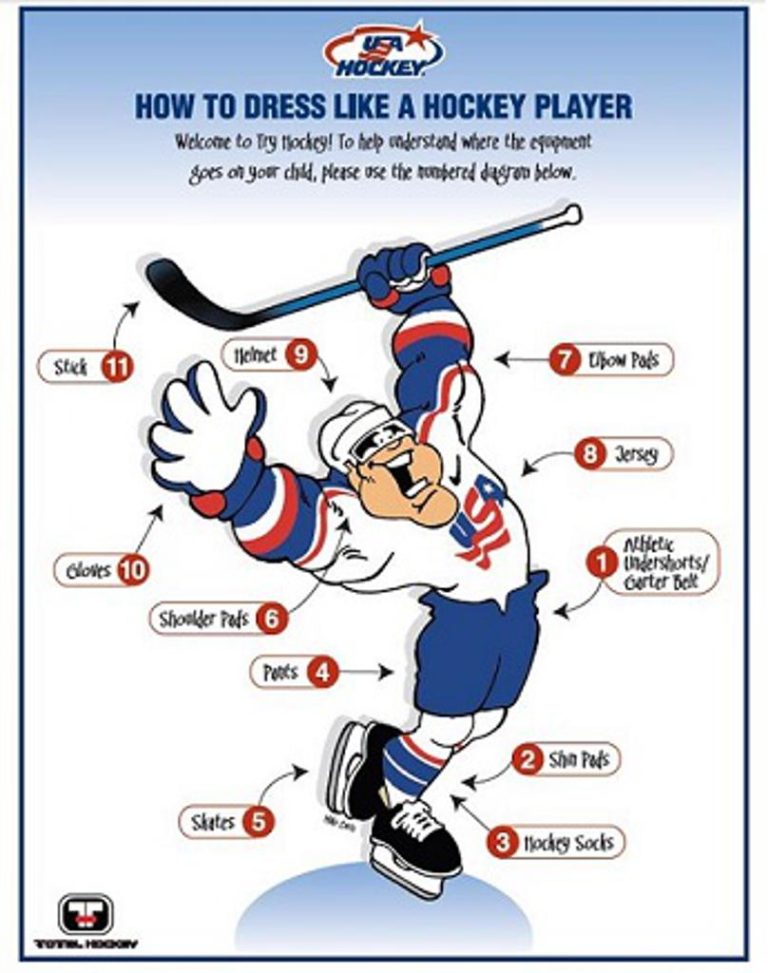
Elbow pads need to work together with gloves and shoulder pads to avoid a gap of exposed forearm or upper arm between pieces of equipment. A player whose gloves ride low and whose elbow pad sits high, or the reverse, can end up with a real coverage gap even though each individual piece of equipment fits correctly on its own.
Trying on the full combination, gloves, elbow pads, and whatever jersey or undergarment layer sits between them, rather than checking each piece in isolation, catches this kind of gap before it becomes a problem during actual play. This matters more for growing youth players, whose different pieces of equipment often get replaced on separate schedules as they outgrow each one individually.
💡 Pro tip: Raise the arm overhead and reach across the body while wearing the full combination of gear during a fitting check, not just holding the arm in a neutral position. Gaps between pieces of equipment often only appear during specific arm positions that a static, relaxed fitting check won’t reveal.
Strapping Systems and Adjustability
Velcro straps are the most common adjustment mechanism across nearly all price tiers, letting a player fine-tune fit without needing a perfectly sized pad off the shelf. The number and placement of straps varies by construction type: two-piece pads often use fewer, simpler straps relying on the cap’s shape to stay positioned, while three-piece pads use a more elaborate strapping system specifically to prevent slippage.
Strap quality and durability matter over the life of the pad, since a strap that loses its grip or wears out effectively turns a well-designed pad into one that slides during play regardless of how good the cap and foam underneath still are. Checking strap condition periodically, and replacing a pad whose straps no longer hold reliably even after readjustment, keeps the whole system functioning as intended.
Basic Care Extends Usable Life
Hockey equipment gets genuinely rank if left wet and sealed in a bag between sessions, and elbow pads are no exception; the foam inside absorbs sweat during play and needs to actually dry out between uses rather than sitting compressed in a closed bag. Hanging pads out to air-dry after each use, rather than immediately repacking them, extends both the pad’s usable life and how tolerable it is to be around.
Wiping down the hard plastic cap and checking for cracks periodically catches structural damage before it becomes a real protection gap. A cracked cap has already lost some of its ability to disperse impact force the way an intact one does, even if the crack looks cosmetically minor at first glance and the pad still feels fine to wear during a casual check.
📊 Note: Most elbow pads shouldn’t go through a washing machine or dryer, since the foam and plastic components can be damaged by machine washing and drying heat. Hand-washing the fabric portions with mild soap and air-drying the whole pad is the safer standard care routine across nearly every brand and price tier, and it’s worth building into a regular post-game habit rather than an occasional deep clean.
Frequently Asked Questions
Should I buy two-piece or three-piece elbow pads?
Two-piece if mobility is the priority and the pad fits securely without slipping; three-piece if a lower-profile pad has slid down the arm during play in the past. Neither is universally better; the right choice depends on fit experience and playing style.
How do I know if my elbow pads fit correctly?
Check coverage through a full range of arm motion, not just with the arm relaxed and straight. The pad should stay positioned over the elbow through bending, reaching, and shooting motions without shifting noticeably.
Do youth players need the same protection level as adults?
Youth players need properly fitted protection matched to their size and level of play, not necessarily the same premium materials adult competitive players might use. Correct sizing and a solid hard-cap-and-foam standard matter more than matching adult-level materials.
How often should hockey elbow pads be replaced?
There’s no fixed schedule, but visible cracking in the hard cap, compressed or degraded foam that no longer springs back, or straps that no longer hold the pad securely in place are all signs it’s time for replacement regardless of how long the pad has been in use.
Can I wash hockey elbow pads in a washing machine?
It’s generally not recommended, since machine washing and drying heat can damage the foam and plastic components. Hand-washing fabric portions with mild soap and air-drying the whole pad is the safer standard approach across most brands.
How do I check for coverage gaps between my elbow pads and other gear?
Put on the full combination of gloves, elbow pads, and any layer between them, then move through a full range of arm motion, reaching overhead and across the body, rather than checking fit with the arm held still and relaxed. Gaps often only appear in specific positions a static check won’t reveal.
None of these three options is a wrong choice within its intended level of play. The right pick comes down to matching construction style, budget, and fit to how and how often a specific player actually plays, rather than defaulting to whichever brand name is most recognizable on the shelf at a local sporting goods store.
As an Amazon Associate, we earn from qualifying purchases through links on this page.