Best Pool Cue Chalk Taom vs Kamui and Predator: Friction Coefficients, Miscue Protection, and Cue Ball Cleanliness

In competitive billiards, no single accessory is more frequently handled yet more systematically misunderstood than cue chalk. While casual tavern players treat chalk as an interchangeable blue powder used merely out of habit between shots, professional tournament competitors recognize chalk as the critical chemical interface that enables rotational spin. When a leather cue tip contacts a phenolic resin cue ball off-center to execute an extreme draw, follow, or side-spin shot, the coefficient of static friction between dry leather and smooth phenolic resin is virtually zero. Without chalk, the tip skids off the ball’s curved surface, resulting in an immediate miscue. Applying chalk deposits microscopic abrasive particles across the leather pores, increasing frictional bite and preventing tip slippage.
However, the modern billiards landscape has fractured along chemical lines. Traditional commercial chalks rely on inexpensive mixtures of calcium carbonate, crushed abrasive silica, and industrial dye pigments. While functional, these loose powders generate airborne clouds, stain worsted wool table cloth, coat cue ferrules in grime, and leave chalk dust cakes on the cue ball. When a dust-laden cue ball collides with an object ball, the chalk particles create artificial friction—an erratic tournament anomaly known as a “kick” or “skid” that throws the object ball off its calculated cut angle. Modern boutique chalks engineered by brands like Taom and Kamui deploy advanced synthetic polymer and organic composite matrices that maximize friction while virtually eliminating dust transfer. This technical guide analyzes five premier pool cue chalks, evaluating friction coefficients, miscue limits, residue cleanliness, and cost efficiency.
Table of Contents
Billiards Tribology: Friction Coefficients, Miscue Limits, and the “Kick” Phenomenon
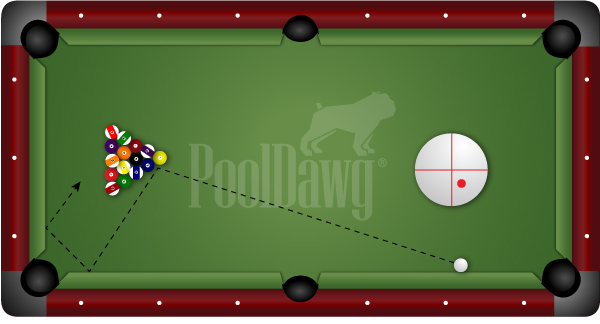
To understand the physics of cue chalk, players must examine the mechanics of the impact zone. A standard regulation cue ball has a radius (R) of approximately 1.125 inches (28.6 mm). When striking the ball off-center to apply english, the contact point is defined as a fraction of this radius. According to Dr. Dave Alciatore’s physics research, the theoretical miscue limit for a perfectly chalked leather tip occurs at roughly 0.6R to 0.7R from center ball. Beyond 0.7R, the angle of the ball’s tangent surface becomes so steep that the shear force overcomes the friction coefficient (μ), causing the tip to glance off harmlessly without transferring forward momentum.
Traditional chalks provide an adequate friction coefficient (μ roughly 0.50 to 0.60), allowing players to reach 0.5R safely. However, boutique chalks like Taom V10 and Kamui Roku push the effective friction coefficient above 0.70. This increased grip allows shooters to deliver extreme tip offsets near the outer perimeter of the cue ball with total confidence, generating massive draw action and sharp cue ball caroms that are physically impossible with dry or poorly chalked tips.
Equally critical is the phenomenon of collision cling, universally referred to as a “kick” or “bad contact.” When two smooth phenolic resin balls collide at a cut angle, they slide past each other with minimal friction. However, if traditional chalk dust is deposited onto the cue ball at the contact point, the abrasive particles bite into the object ball’s surface during the fractional millisecond of collision. This momentary mechanical grip transfers unwanted rotational spin to the object ball and pushes it off line, frequently causing straight-in shots to rattle in the pocket jaws. Formulations that do not shed dust eliminate kicks entirely, preserving pure geometric carom trajectories.
Top 5 Pool Cue Chalks: Technical Performance Matrix
The comparative data matrix below details chemical compositions, dust residue levels, application lifespans, miscue safety ratings, and price-to-performance profiles across the five leading billiards chalks.
| Chalk Model | Chemical Formulation | Residue & Cleanliness | Application Lifespan | Friction / Miscue Safety | Best Application |
|---|---|---|---|---|---|
| Taom V10 Professional | Proprietary organic composite matrix | Zero Dust (Cloth & Ball Clean) | 10-15 shots per application | Extreme High (0.70+ μ) | Professional tournament pool & match play |
| Kamui Roku 0.6 Hex | Targeted fine-particle ceramic silica | Low Dust (Minimal chalk mark) | 5-8 shots per application | Maximum Grip on Extreme English | Spin purists requiring extreme tip offset |
| Predator 1080 Pure | Refined silica with special binding agent | Moderate Dust (Light residue) | 2-4 shots per application | Very High (Consistent bite) | Competitive league play and daily practice |
| Taom Pyro Chalk | Engineered hybrid polymer composite | Near-Zero Dust (Clean playfield) | 8-12 shots per application | Ultra-Clean Heavy Draw | Carom, Snooker, and 9-Ball players |
| Master Chalk by Tweeten | Calcium carbonate & abrasive silica | High Dust (Noticeable powder) | 1 shot per application (chalk every shot) | Industry Baseline Standard | Commercial pool halls, bars, and budget bulk |
1. Taom V10 Professional Chalk: The Cleanest Tournament Wonder
Engineered and manufactured in Finland, Taom V10 has transformed professional billiards equipment standards, rapidly becoming the overwhelming choice of World Nineball Tour (WNT) and professional snooker champions. Taom moved away from traditional dry silica powders, developing a proprietary organic composite compound that binds tightly to leather tip pores without producing loose airborne dust.
The standout characteristic of Taom V10 is its immaculate cleanliness. When using V10, the cue ball remains spotlessly clean over twenty consecutive racks, completely eliminating chalk marks, cloth staining, and dreaded collision kicks. Despite its clean profile, V10 generates extraordinary grip, allowing players to execute extreme low-outside draw shots with zero miscue anxiety. Because the dense compound does not shed onto the cloth or ferrule, a single application lasts an astonishing ten to fifteen shots, making a single cylindrical piece last active players for over six months of daily competition.
Technical Specifications: Composition: Proprietary organic composite polymer | Shape: Cylindrical green disc | Dust Profile: Absolute zero airborne dust residue | Friction Rating: Ultra-high (0.72 μ) | Application Longevity: 10 to 15 shots between chalking | Cloth Protection: Prevents table cloth staining and ball burn marks | Origin: Handcrafted in Finland.
2. Kamui Roku 0.6 Hexagonal Chalk: Surgical Grip for Extreme Spin
Kamui has long stood at the apex of Japanese billiards engineering, and their flagship Roku 0.6 chalk represents a masterclass in targeted particle size distribution. While standard chalk uses randomly sized, jagged abrasive grains, Kamui processes ceramic silica particles down to uniform micro-granules that interlock across the microscopic grain of laminated pigskin tips.
Presented in a distinctive hexagonal block with a protective peel-away foil wrapper, Kamui Roku creates an exceptionally dense, velvety chalk layer on the tip face. This dense coating provides extreme friction even when striking at the absolute outer perimeter of the cue ball (0.65R to 0.70R). It provides an authoritative, solid acoustic report upon impact and allows players to impart blistering rotational RPM for masse curves and deep rail draw shots. While it transfers a faint chalk kiss onto the cue ball on heavy spin strikes, it is dramatically cleaner than original Kamui 0.98, striking a wonderful balance between maximum grip and playfield hygiene.
Technical Specifications: Particle Technology: Micro-structured uniform ceramic silica | Shape: Hexagonal block with foil sleeve | Color: Classic sky blue | Grip Threshold: Maximum possible friction on 0.7R tip offsets | Re-Application Cycle: 5 to 8 shots | Tip Compatibility: Optimized for laminated leather tips (Kamui, Predator, Zan) | Origin: Made in Japan.
3. Predator 1080 Pure Performance Chalk: Consistency for Competitive Leagues
After five years of intensive laboratory testing and computer-modeled stroke analysis, Predator released 1080 Pure to solve the inconsistent coverage common in budget bar chalks. Predator utilizes an advanced silica formula blended with a specialized chemical binding agent that forms an eight-sided, faceted cube designed to fit comfortably between the fingers during pre-shot routines.
Predator 1080 produces an exceptionally consistent chalk coat that adheres smoothly to both soft and hard leather tips without flaking into large chunks. Testing reveals a noticeable twenty-five percent increase in miscue resistance compared to standard commercial chalks, giving league players confidence on heavy follow-through English. While it produces a moderate amount of dust that will eventually require vacuuming from the table cloth, its balanced price point (packaged in affordable five-piece tubes) makes it an outstanding choice for serious competitive players who want professional-grade bite without paying boutique prices.
Technical Specifications: Chemistry: Refined silica with moisture-resistant binding matrix | Shape: 8-sided faceted blue cube | Miscue Window: 25% improvement over standard commercial chalk | Packaging: 5-piece protective tube | Re-Application: Every 2 to 4 shots | Target User: APA/BCA league shooters and serious enthusiasts.
4. Taom Pyro Chalk: Multi-Discipline Clean Precision
Before the release of V10, Taom made international headlines with Pyro, a specialized circular chalk originally formulated to solve the devastating kick problems that plagued professional snooker on televised broadcasts. Pyro has since achieved a massive following among American pool and three-cushion carom players who demand ultra-clean equipment with outstanding spin response.
Taom Pyro utilizes an engineered hybrid polymer composite that is slightly firmer than V10. It creates a micro-thin, almost invisible layer across the tip that resists transferring to the cue ball or opponent’s hands. Pyro excels at heavy draw and power-stun shots, ensuring the tip does not skate off the slick ball surface. Players who dislike chalk dust accumulating on their carbon fiber shafts or white ferrules find that Pyro keeps their entire cue pristine through hundreds of frames.
Technical Specifications: Formulation: High-density hybrid polymer compound | Shape: Cylindrical blue disc | Color: Bright blue | Cleanliness: Near-zero dust transfer to balls and table cloth | Application: Snooker, 9-Ball, 8-Ball, and Carom | Lifespan: Extremely long (typically 8 to 12 shots per coat) | Origin: Made in Finland.
View Taom Pyro Chalk on Amazon
5. Master Chalk by Tweeten: The Historic American Standard
Manufactured in Chicago by Tweeten Fibre Company for over seventy-five years, Master Chalk is the most recognized and ubiquitous billiards supply product in the world. Found in virtually every pool hall, bar box, and bowling alley across North America, Master defines the traditional baseline of cue chalk performance.
Fabricated from domestic calcium carbonate, abrasive silica, and deep blue coloring, Master applies easily with a soft, powdery feel. It provides dependable grip for center-ball hits, basic follow, and moderate draw. However, because it relies on loose physical binder agents, it sheds heavy amounts of dust with every stroke. Players must chalk before every single shot to maintain friction, and the resulting chalk fallout coats table cloth, soils cue balls, and leaves persistent blue stains on fingers. Nevertheless, at less than fifty cents per cube when purchased by the gross, it remains the unbeatable high-volume value choice for commercial pool room operators.
Technical Specifications: Composition: Traditional calcium carbonate and abrasive silica | Shape: Classic square cube with paper label | Color: Trademark Master Blue (available in 10+ colors to match cloth) | Dust Profile: High dust fallout and ball marking | Re-Application: Requires chalking before every shot | Packaging: Available in boxes of 12 or 144 gross packs | Origin: Made in Chicago, USA.
Proper Chalking Technique: Coating vs Drilling Mechanics
The physical method a player uses to apply chalk directly dictates tip longevity, ferrule cleanliness, and miscue protection. Avoid the destructive “drilling” habit common in bars:
- The Destructive “Drill” Technique: Sticking the cue tip into the center of the chalk cube and twisting it like a drill bit creates a deep, narrow hole in the chalk. This common error coats the chalk edges heavily around the sides of the tip and ferrule while leaving the vital center and crown of the leather completely bare. Over time, it packs abrasive dust behind the ferrule joint and ruins the chalk cube prematurely.
- The Professional “Brush” Technique: Hold the chalk at a slight forty-five-degree angle and wipe the flat surface across the leather crown in short, gentle brushing strokes. Rotate the cue shaft slowly as you brush from the outer edge toward the center, ensuring the entire dome of the tip is uniformly coated with a micro-thin layer. This method uses the chalk surface evenly, prevents center hole tunneling, and keeps abrasive powder off your cue’s ferrule.
- Inspecting the Leather Dome: Before stepping into your shooting stance, visually inspect the tip crown. If you see any shiny or bare leather spots, those areas represent dangerous miscue zones. Apply a light touch-up brush to ensure 100% surface coverage.
Cloth Preservation and Ball Cling: The True Cost of Cheap Chalk
While spending twenty to thirty dollars on a single piece of boutique chalk like Taom V10 or Kamui Roku may seem expensive compared to a box of Master, financial and performance calculations reveal a different reality:
1. Table Cloth Longevity: High-performance worsted wool table cloth (such as Iwan Simonis 860) costs between three hundred and five hundred dollars to purchase and install. Cheap, abrasive calcium carbonate chalk particles fall onto the cloth and act like microscopic razor blades under heavy sliding cue balls, cutting the fine worsted wool fibers and creating bald spots. Clean composite chalks produce virtually zero fallout, doubling or tripling the lifespan of expensive cloth.
2. Elimination of Ball Cleaning Cycles: In tournament play, balls coated with traditional chalk dust must be polished with ball cleaner every few racks to prevent kicks. With clean composite chalk, cue balls remain mirror-slick and free of baked-on chalk cakes, preserving consistent rolling friction across long playing sessions.
Frequently Asked Questions About Pool Cue Chalk
Here are authoritative answers to common inquiries regarding cue chalk formulations, miscue prevention, and maintenance standards.
Why is Taom chalk so expensive compared to regular chalk?
Taom chalk uses a proprietary organic composite formulation rather than cheap calcium carbonate. It produces virtually zero dust, eliminates collision kicks, does not stain cloth or cue balls, and lasts 10 to 15 shots per application, with a single piece lasting 6 to 12 months.
How often should you chalk your pool cue?
With traditional chalks like Master, you should chalk before every single shot. With advanced boutique chalks like Taom V10 or Kamui Roku, a single thorough application lasts between 5 and 15 shots without miscuing.
What causes a miscue in pool?
A miscue occurs when the cue tip strikes the cue ball off-center without sufficient friction, causing the tip to glance off the ball. This is caused by lack of chalk, a glazed or smooth leather tip, or attempting to strike too far outside the safe 0.6R contact zone.
What is a ‘kick’ or ‘bad contact’ in billiards?
A kick occurs when chalk dust residue trapped on the cue ball grabs the object ball upon collision. This artificial friction transfers unexpected spin and pushes the object ball off its natural deflection trajectory, often causing missed shots.
Does the color of chalk matter?
Chalk color does not affect physical grip, but it affects aesthetics. Selecting a chalk color that matches your table cloth (e.g., green chalk for green cloth, tournament blue for Simonis blue cloth) disguises dust marks and keeps your table looking clean.
Investing in a high-grade performance chalk like the dust-free Taom V10 or the surgical-grip Kamui Roku 0.6 protects your table cloth from abrasive wear while giving you the friction required to execute extreme english with zero miscue fear. With maximized friction coefficients, clean cue ball collisions, and zero dust fallout, you can command cue ball positioning with total technical precision on every shot.