Best Pool Cue Tip for English: Shape, Tips, and Tools That Hold Spin

The right pool cue tip for english depends on tip shape and construction more than most players realize. Here’s what actually changes when spin, not straight power, is the priority, and which verified tips and tools actually hold up under it.
The tips that hold up best under english are laminated, multi-layer tips in a medium hardness, shaped to a dime radius rather than a flatter nickel radius. The layered construction (Kamui and Predator’s laminated lines are the two most common examples) resists the deformation that a single-piece tip develops after repeated off-center hits, and the rounder dime profile lets you strike further off the cue ball’s vertical axis before miscuing. Softer tips grip the ball slightly better for spin but wear out of shape faster, so most players applying regular english settle on medium hardness as the durability compromise.
Applying english (side spin) puts a cue tip through a different kind of stress than a straight, center-ball hit. You’re intentionally striking off-center, which means more of the tip’s edge does the work instead of its center, and a tip that isn’t shaped or constructed for that wears unevenly and starts miscuing sooner than a tip used only for straight shots. This guide covers what actually changes in a tip when english is the priority: shape, hardness, and construction, along with two verified tips and the shaping tool that keeps either one in the right profile.
- →A dime radius (rounder profile) tolerates more off-center contact before miscuing than a nickel radius
- →Laminated, multi-layer tips resist the lopsided wear that heavy english causes faster than single-piece tips
- →Medium hardness is the common compromise: softer grips slightly better, harder holds its shape longer
- →Kamui’s Black laminated tip and Predator’s Victory Medium are both purpose-built for consistent spin transfer
- →Reshaping to maintain the dime profile matters more for english than for straight play, check it more often
Table of Contents
Why tip shape changes what english you can put on the ball
A tip’s curvature, commonly described by comparing it to the radius of a dime, nickel, or quarter, controls how far from the ball’s vertical centerline you can strike before the tip’s edge slips instead of gripping. A rounder dime radius concentrates contact into a smaller patch that follows the cue ball’s curve more closely off-center, which is why most players who rely on side spin keep their tip shaped closer to a dime than a flatter nickel or quarter radius. A flatter profile carries more power on a straight hit but runs out of usable contact area sooner as you move off-center, and that’s exactly where miscues on english shots come from.
Hardness: the tradeoff that actually matters for spin
Softer tips compress slightly more on contact, which increases the tip’s grip on the cue ball for a fraction longer and translates to marginally more spin transfer per stroke, especially noticeable on finesse position shots. The tradeoff is that soft tips mushroom (flatten and spread at the edges) faster under repeated off-center impact, which is precisely the kind of impact english shots create. Medium hardness gives up a small amount of that grip in exchange for holding its shape meaningfully longer between reshaping sessions, which is why it’s the more common recommendation for anyone applying english regularly rather than occasionally.
⚠️ Watch out: A tip that’s already mushroomed or flattened at the edges will underperform on english regardless of brand or original hardness rating. Check the tip’s profile with a coin or radius gauge before assuming a spin problem is about the tip material rather than its current shape.
Two verified tips built for consistent spin transfer
The Kamui Black Laminated Cue Tip (Medium, 12.5mm) is priced at $29.00 with limited stock (13 left at the time of writing). Kamui’s laminated construction stacks multiple thin layers of leather rather than using a single piece, which resists the lopsided compression that heavy side-spin use causes on a standard tip. The 12.5mm diameter is on the smaller end for pool, which some players applying a lot of english prefer since it concentrates contact into a tighter patch.
The Predator Victory Medium Cue Tip (13/14mm, 8-layer) runs $32.00 and was in stock at the time of writing. Its 8-layer laminated build is aimed specifically at consistent contact across the tip’s face, which matters for english because inconsistent density across the tip translates to inconsistent spin from shot to shot even when your stroke is identical. Predator’s tip line is a common upgrade pick for players moving off a stock tip specifically because of that shot-to-shot consistency.
Keeping the shape: a shaping tool built for the job
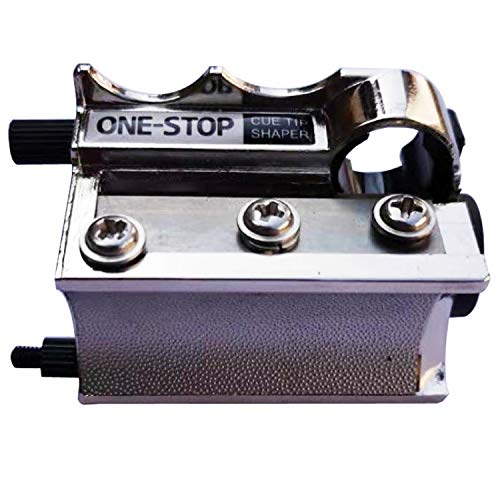
Either tip above still needs periodic reshaping to keep the dime radius that makes english forgiving. The Billiard Pool Cue Tip Shaper Tool (Scuffer/Burnisher) runs $15.17, though stock was down to a single unit at the time of writing, so availability may shift by the time you check. It combines a shaping edge with a burnisher, letting you round the profile back toward a dime shape and then smooth the surface in the same session, rather than needing two separate tools.
💡 Pro tip: Reshape more often than you think you need to if you’re applying regular english. A tip that’s drifted from a dime toward a flatter profile doesn’t always look obviously worn, but the loss of off-center grip shows up as more frequent miscues on spin shots specifically, well before it becomes visible to the eye.
Who should prioritize an english-focused tip
- ✓Prioritize this if you regularly use side spin for position and safety play
- ✓Check your current tip’s radius with a coin before assuming you need a new one
- ✓Reshape to a dime radius periodically if you notice more miscues on spin shots specifically
- ✓Consider medium hardness first if you’re unsure, it’s the more forgiving default for mixed play
- ✕Chase maximum softness if you also break with the same cue, soft tips wear fastest under power hits
- ✕Assume a tip problem when the real issue is stroke mechanics, most miscues on english are technique, not equipment
- ✕Buy a laminated premium tip if you rarely use english, the durability benefit mostly matters under repeated off-center stress
- ✕Ignore chalk application, even the best-shaped tip miscues without a fresh, even chalk layer
📊 Note: If you’re deciding whether to replace a tip yourself or just aren’t sure your tip needs replacing at all, our companion guides cover the full replacement process and the diagnostic signs to check first.
How chalk and tip shape work together on spin shots
Chalk fills the microscopic texture on a tip’s leather surface, and that texture is what actually grips the cue ball’s surface during contact, not the tip material alone. A well-shaped dime-radius tip with old, glazed-over chalk will still miscue on off-center hits, because the chalk layer, not just the tip shape, determines how much friction is available at the moment of contact. Reapply chalk with a light, even twist rather than grinding it in, and reapply between games rather than only when a miscue already happened, since chalk wears off with a normal stroke rate well before it becomes visibly bare.
This is also why players who add a lot of side spin tend to go through chalk faster than players who mostly hit center-ball, since more of each stroke’s friction happens off the tip’s dead center where chalk wears thinnest first. Checking the edges of the tip, not just the middle, is worth doing before a session that will lean heavily on english.
Testing whether your current tip is actually the problem
Before buying a new tip, rule out the two most common false alarms. First, check chalk coverage across the whole face of the tip, not just the center, since a thin or glazed patch near the edge will cause off-center miscues that look like a shape or hardness problem but aren’t. Second, roll the cue on a flat surface to confirm the shaft itself is straight; a slightly warped shaft changes contact geometry on off-center hits in a way that mimics a bad tip. Only after both check out clean is it worth attributing miscues on side spin shots to the tip itself.
A simple field test: chalk normally, then hit a series of soft cut shots aimed at roughly a tip-width off-center, increasing the offset gradually. Note where miscues start happening consistently. A tip in good shape with a reasonable dime radius should tolerate noticeably more offset before miscuing than a flattened or glazed one. If miscues start almost immediately off dead center, that’s a stronger signal for reshaping or replacing than any visual inspection alone.
Budget alternative if you’re not ready for a premium tip
Both tips featured above sit in the $29 to $32 range, which is a real step up from a stock tip that often ships for a few dollars. If you want to test whether shape and hardness actually change your english consistency before committing to a laminated premium tip, reshaping your current tip to a proper dime radius with the shaping tool above and paying closer attention to chalk coverage costs nothing beyond the tool itself, and often accounts for more of the improvement than the tip brand does. Treat the laminated tips as the upgrade once you’ve confirmed shape and chalk aren’t the actual limiting factor.
Bottom line
For consistent english, prioritize a laminated, medium-hardness tip shaped to a dime radius over a softer or flatter alternative. Kamui’s Black laminated tip and Predator’s Victory Medium both fit that description and are verified in stock at the prices above, and either pairs well with a shaping tool to maintain the profile that makes off-center contact forgiving instead of a miscue risk.
Does a harder or softer tip put more spin on the cue ball?
Softer tips grip marginally better, translating to slightly more spin per stroke, but the difference is small and softer tips lose their shape faster under the off-center contact english creates. Medium hardness is the common compromise for regular english use.
What’s the difference between a dime, nickel, and quarter radius?
These describe how rounded the tip’s curvature is, compared against the actual coins. A dime radius is the most curved and tolerates the most off-center contact before miscuing; a quarter radius is flatter, carries more power on straight shots, but miscues sooner off-center.
How often should I reshape a tip used for regular english?
There’s no fixed interval since it depends on how much side spin you use and how hard you stroke, but checking the tip’s profile against a coin every few sessions is a reasonable habit if english is a regular part of your game, since the drift from dime to flatter happens gradually and isn’t always visually obvious.
Is a laminated tip worth the extra cost over a single-piece tip for english?
For regular, deliberate use of side spin, yes. The layered construction resists the lopsided wear pattern that off-center contact causes better than a single piece of leather, which means more consistent spin shot to shot and less frequent reshaping.

As an Amazon Associate, we earn from qualifying purchases through links on this page.