Best Rugby Headgear and Scrum Caps: World Rugby Law 4 Compliance, Closed-Cell Polyethylene Foam, Ear Protection, and Breathability

Rugby union and rugby league represent two of the most physically demanding collision sports on earth. Over eighty continuous minutes, players engage in high-impact collisions: contested scrum engagements exerting thousands of Newtons of compressive neck force, breakdown rucks where studded boots clash over loose balls, and head-on open field tackles. Forward pack players—especially front-row props, second-row locks, and back-row flankers—subject their heads and ears to relentless friction against opposing jerseys, hips, and shoulders during contested set pieces.
A rugby headguard (commonly termed a scrum cap) is an essential piece of protective kit engineered to safeguard athletes against superficial cranial trauma, lacerations, and disfiguring hematoma auris (cauliflower ear). However, choosing and utilizing rugby headgear requires an objective understanding of World Rugby Law 4 and Regulation 12 compliance, closed-cell polyethylene foam architecture, acoustic transmission, and clear realistic expectations regarding concussion mitigation. This comprehensive equipment review evaluates top-rated rugby scrum caps built for elite and grassroots competition.
Table of Contents
World Rugby Law 4 and Regulation 12 Standards
Unlike American football or ice hockey helmets which feature rigid polycarbonate shells, rugby headgear is governed by strict global regulations designed to keep the game safe for all participants:
Maximum Thickness Thresholds (10mm Limit): Under World Rugby Regulation 12, the maximum compressed thickness of protective foam cannot exceed ten millimeters (with an allowable two-millimeter tolerance for manufacturing variances). This rule prevents players from wearing excessively bulky helmets that could transform the head into an offensive battering ram during contact.
Foam Density and Softness Constraints: The regulation mandates that the foam density must not exceed forty-five kilograms per cubic meter. The material must remain flexible, compressible, and free of hard plastic inserts, metal buckles, or exposed sharp seams. Every certified scrum cap must carry an official World Rugby Approved label stamped directly on the exterior fabric to be legal for competitive match play.
Breakaway Chin Strap Safety: To prevent strangulation hazards when a player is tackled by the collar or trapped under a collapsing scrum, chin straps must be constructed from soft fabric or elastic neoprene that yields or unbuckles under excessive tensile strain.
Top Rugby Scrum Caps and Headguards: Technical Comparison Matrix
| Headguard Model | World Rugby Approval | Foam Matrix & Density | Ear Aperture & Acoustics | Player Position Suitability |
|---|---|---|---|---|
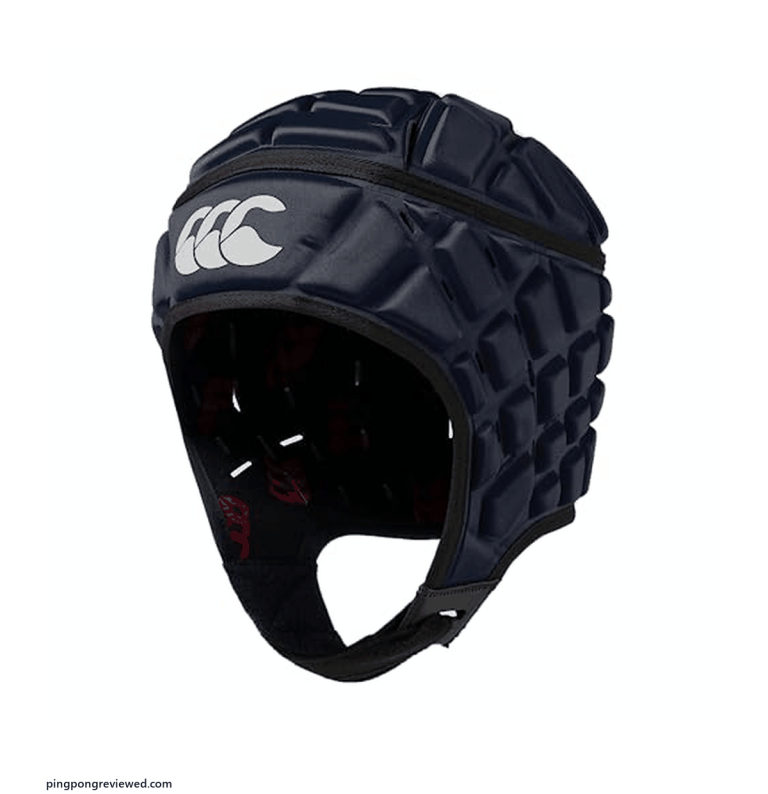
| Canterbury Reinforcer Headguard | Law 4 & Reg 12 Certified | High-density thermoformed EVA matrix | Laser-cut acoustic ear ports | Forwards (Props, Locks, Flankers) |
| Gilbert Falcon 200 Scrum Cap | World Rugby Approved | Molded closed-cell foam hexagonal pads | Hollowed ear cavities with mesh liner | Junior, Club, and School Rugby |
| Gilbert Atomic Zenith Headguard | World Rugby Approved | Full-coverage multi-matrix 3D foam | Perforated sound channels | Second Rows, Number 8, Loosehead Props |
| Optimum Matrix Rugby Headguard | World Rugby Approved | Closed-cell ultralight cross-linked PE | Direct ear vent slits with soft binding | Backline players, Wingers, Fullbacks |
| Steeden Classic Rugby Headgear | NRL & World Rugby Compliant | Segmented cellular absorption padding | Deep-dish ear cups, elastic lace back | Rugby League and Contact Utility Players |
Top Rugby Scrum Caps and Headguards: Expert Analysis
1. Canterbury Reinforcer Headguard: The choice among professional forwards in Premiership and Super Rugby. Canterbury combines full-coverage ergonomic foam segmentation with thermoformed high-density EVA foam. Its laser-cut ear apertures maintain clean auditory clarity, while the contoured chin strap and expandable rear lace system ensure a locked-down custom fit that resists shifting in tight scrums.
2. Gilbert Falcon 200 Scrum Cap: Engineered to provide exceptional value and lightweight protection for club, school, and junior rugby players. Gilbert utilizes a flexible hexagonal foam pad construction that molds naturally around cranial contours. Generous ear holes allow unhindered lineout communication, while breathable polyester-elastane fabric keeps head temperatures regulated.
3. Gilbert Atomic Zenith Headguard: Tailored specifically for tight-five forwards who require dense, contiguous temple and crown coverage. The 3D molded closed-cell padding configuration distributes scrum compression evenly, minimizing ear abrasion and scalp contusions during prolonged ruck engagements.
4. Optimum Matrix Rugby Headguard: A lightweight, highly ventilated headguard favored by backline runners, wingers, and outside centers who prioritize maximum airflow and zero peripheral visual hindrance. Cross-linked polyethylene pads provide effective cut and laceration defense during open-field diving tackles.
5. Steeden Classic Rugby Headgear: Designed with the rugged demands of rugby league in mind. The Steeden Classic features deep ear cups with acoustic perforations and high-rebound padding across the frontal lobes and crown. Its secure rear lace-up closure maintains tight tension throughout demanding eighty-minute clashes.
Position-Specific Headgear Selection: Forwards vs Backs
Different rugby positions experience vastly different collision profiles across eighty minutes:
Tight Five Forwards (Props, Hookers, Locks): Front-row and second-row forwards require high-density, full-coverage scrum caps (such as the Canterbury Reinforcer or Gilbert Atomic). Their priority is heavy ear encapsulation and temple padding to endure constant compression and shearing friction inside the scrum tunnel.
Loose Forwards (Flankers and Number 8): Back-row players need high lateral vision to track the ball departing the scrum base. They favor low-profile, ergonomic caps that provide ear protection without obstructing peripheral sightlines during blindside tackles.
Backline Players (Halfbacks, Centers, Outside Backs): Backs encounter collision at top running speeds rather than static scrum grinds. They select ultralight, ventilated headguards like the Optimum Matrix to guard against boot studs and head collisions during contested high-ball catches.
Scrum Caps vs Electrical Tape: The Second Row Debate
Second row locks frequently face the decision between wearing a full scrum cap or taping their ears:
The Traditional Tape Method: Many locks wrap heavy electrical vinyl tape or cohesive elastic bandages around their heads to pin their ears flat against the skull. While tape feels minimal and lightweight, it frequently slips off during wet, sweaty matches, leaving ears exposed mid-scrum. In addition, peeling sticky adhesive tape from hair after matches causes hair loss and skin irritation.
The Scrum Cap Advantage: A modern scrum cap stays anchored from kickoff to the final whistle via its chin strap and rear lacing. It provides uniform ear protection while simultaneously shielding the forehead and crown from stray cleats and knee strikes during breakdown rucks.
Medical Reality: What Scrum Caps Do (and Do NOT) Protect
There is a dangerous misconception among amateur rugby players that wearing a scrum cap shields the brain from concussions. Scientific transparency is critical for player health:
Concussion Mechanics Explained: A concussion is a traumatic brain injury caused by rapid linear deceleration or violent rotational shear. When an athlete’s head strikes the ground or another player’s hip, the brain sloshes through cerebrospinal fluid and impacts the internal bony walls of the skull. Ten millimeters of soft compressible polyethylene foam cannot absorb or decelerate the immense kinetic momentum of an eighty-kilogram player colliding at high speed. Multiple randomized clinical studies have concluded that scrum caps do not reduce concussion incidence or severity.
The Real Protective Function: Scrum caps excel at preventing superficial soft tissue trauma. They eliminate scalp lacerations caused by stray boot studs in rucks, prevent forehead contusions during tackle clashes, and provide an impenetrable barrier against shearing friction that causes ear cartilage hematomas.
The Moral Hazard Phenomenon: Coaches and referees frequently warn against the moral hazard effect, where wearing headgear gives young players a false sense of invulnerability, encouraging reckless tackle technique with their heads down. Proper shoulder-led tackling technique remains the primary defense against catastrophic head trauma.
Preventing Cauliflower Ear: Cartilage Shear Biomechanics
For forward pack players, cauliflower ear (auricular hematoma) is a persistent career risk:
Pathology of Hematoma Auris: During a contested scrum, the ears of props and locks are wedged tightly between the hips of teammates and opposing front rows. As the scrum packs drive forward with massive force, severe rubbing friction shears the delicate skin and perichondrial lining away from the underlying ear cartilage framework. Blood vessels rupture, filling the gap with localized blood. If untreated, this hematoma organizes into fibrous scar tissue, permanently deforming the ear into a calcified cauliflower shape.
How Scrum Caps Protect: Padded scrum caps completely encapsulate the outer ear within molded protective pockets lined with low-friction fabrics. The external force slides smoothly across the outer Lycra shell rather than rubbing directly against bare skin and cartilage, completely neutralizing shear stress.
Foam Architecture: Closed-Cell PE vs Thermoformed EVA Matrices
The chemical composition and geometric molding of the foam determine both protection and thermal comfort:
Closed-Cell Polyethylene (PE) Foam: Formed with sealed microscopic gas pockets that do not absorb water, sweat, or mud. Even when playing in torrential rain or mud, PE foam maintains its lightweight profile without becoming waterlogged and heavy.
Thermoformed Ethylene-Vinyl Acetate (EVA): EVA offers superior elastic recovery and rubber-like flexibility compared to standard PE foam. Thermoforming allows manufacturers to contour the padding into anatomical segments that articulate naturally around the skull, eliminating rigid bulk.
Segmented Cellular Channels: Rather than using a single solid sheet of foam which would trap dangerous body heat, elite headguards use segmented hexagonal or triangular cells separated by flexible fabric hinge channels. These channels flex with head movement while providing natural air corridors that allow heat to escape during intense scrums.
Auditory Perception and Field Communication Engineering
In modern rugby, communication is foundational to team defensive structure and set-piece execution:
The Acoustic Dampening Risk: Solid, unventilated ear covers severely muffle sound waves, reducing a player’s ability to hear referee calls (such as crouch, bind, set in scrums or tackle, release at rucks). Additionally, forward locks and flankers must clearly hear lineout code calls called out by hookers and scrum-halves.
Laser-Cut Apertures: Modern headguards feature precision laser-cut perforations and acoustic mesh windows directly centered over the external auditory canal. These sound channels preserve normal hearing acuity and directional sound localization while maintaining padded impact protection around the outer ear cartilage.
Retention Geometry: Rear Lacing and Ergonomic Chin Straps
A scrum cap that twists over the eyes during play represents a dangerous hazard that leaves players vulnerable:
Expandable Rear Lace Systems: The back of the headguard features an elasticated or woven lace-up closure spanning the occipital seam. This lacing allows players to loosen or tighten the circumference to match individual skull contours and accommodate different hairstyles without pinching.
Ergonomic Chin Straps: The chin strap must hold the cap anchored without digging into the throat or trachea. Look for soft, padded chin straps secured with hook-and-loop velcro rather than rigid plastic buckles, ensuring quick adjustment and breakaway release under dangerous tackle snags.
Headguard Sizing Methodology and Cranial Circumference
An incorrectly sized rugby scrum cap creates severe distraction and safety liabilities on the pitch:
Cranial Circumference Measurement: Use a flexible tailor’s tape measure positioned roughly one inch above the eyebrows, wrapping around the widest circumference of the skull across the occipital ridge. Compare this measurement directly to manufacturer sizing charts (Small: 53-55cm, Medium: 56-57cm, Large: 58-59cm, XL: 60cm+).
Fit Verification Checklist: When tied and buckled, the front border must sit directly over the forehead without creeping downward into the eyes when running. The ear apertures must align squarely over the ear canals without folding the cartilage. If the cap rotates when making contact with a tackle bag, the laces must be tightened or a smaller size selected.
Graduated Return to Play and Concussion Management Protocols
World Rugby enforces strict Graduated Return to Play (GRTP) protocols for any athlete sustaining a suspected concussion:
Non-Negotiable Medical Stand-Down: If a player demonstrates any symptoms of concussion (dizziness, nausea, photophobia, confusion, or balance impairment), they must be removed immediately from the match under the recognized If In Doubt, Sit Them Out directive. Wearing a scrum cap does not permit an athlete to bypass medical evaluation or shorten mandatory stand-down recovery timelines.
Return Progression Steps: Athletes must complete symptom-free stages progressing from complete rest to light aerobic exercise, rugby-specific non-contact drills, full contact practice, and finally medical clearance before returning to competitive match play.
Washing, Hygiene, and Anti-Microbial Care Protocols
Rugby headguards absorb copious sweat, mud, and occasionally blood during eighty minutes of collision:
Bacterial and Fungal Prevention: Trapped sweat and dead skin cells create ideal breeding grounds for bacteria, leading to scalp folliculitis and fungal infections. Wash your scrum cap after every single match or training session.
Washing Instructions: Hand wash or machine wash on a delicate cycle in cold water using a sports detergent. Never expose the headguard to hot water or a heated tumble dryer. High thermal cycles will cause the closed-cell foam to shrink, harden, and delaminate from its Lycra cover.