Best Tennis Shoes for Bunions: Real Wide Toe Box Picks


Finding the best tennis shoes for bunions means looking past “comfortable” marketing copy for a shoe that states an actual wide toe box or wide-width option, not a standard-width shoe a review happens to call roomy. We checked four shoes here against that bar and verified current price and stock status for each through Amazon’s product data, disclosing plainly where that data wasn’t available.
The best tennis shoes for bunions are shoes with a genuinely wide or accommodating toe box, not a standard-width athletic shoe that a listing claims “runs wide.” Look for a stated toe box width, an explicit wide-width size option (like a W or wide designation), or a stretchy, seamless upper over the forefoot that won’t press directly on the bunion joint. Every shoe below states its wide-fit design in the actual product listing.
A bunion is a bony bump at the base of the big toe, and the single thing that makes a shoe tolerable or miserable to wear with one is how much room the upper gives across the forefoot, specifically right where that joint sits. “Runs wide” as a casual reviewer comment isn’t the same claim as a shoe actually built with a wider last or a stated wide-width option, and conflating the two is how a lot of buying guides end up recommending standard shoes that just happen to have soft mesh. We only included shoes here that explicitly state wide sizing or a wide toe box as a design feature, and we checked current price and stock status for each through Amazon’s product data rather than assuming either.
- →A truly wide shoe states it, either as a wide-width size option (W, 2E, 4E) or a named wide toe box design
- →“Runs wide” in a review is not the same claim as a manufacturer-stated wide fit; treat it with more skepticism
- →Seamless or minimal-stitching forefoot panels reduce direct pressure on the bunion joint even in a moderately wide shoe
- →Men’s and women’s wide options both exist below; sizing systems differ, so check the specific size chart, not just the word “wide”
- →One listing below didn’t return a live price through Amazon’s product data feed, and that’s disclosed rather than guessed at
Table of Contents
BRONAX Wide Toe Box Road Running Shoes (women’s, 9.5W)

The BRONAX Wide Toe Box Road Running Shoes ($49.99, in stock at publish time) are sized and labeled specifically as a wide-toe-box model, not a standard shoe with a vague “comfortable fit” claim. The forefoot is noticeably roomier than a standard running shoe last, with a stretch-knit upper across the widest part of the foot instead of a stiffer overlay pressing down on the joint. It’s a budget running-shoe build rather than a court-specific shoe, so if you want it for actual on-court movement, expect less lateral structure than a dedicated tennis shoe.
WHITIN Wide Toe Box Zero Drop Running Shoes (men’s)

The WHITIN Wide Toe Box Zero Drop Running Shoes ($41.99, in stock at publish time) take the wide-toe-box design further than most: it’s a barefoot-style, zero-drop shoe with an intentionally splayed toe shape, letting the toes spread naturally rather than being squeezed into a tapered point. For a bunion specifically, that forefoot shape is close to ideal, since the bump sits well clear of any seam or overlay. The tradeoff is the zero-drop platform itself, which takes some adjustment if you’re used to a standard heel-to-toe drop and shouldn’t be worn all day immediately.
💡 Pro tip: If you’ve never worn a zero-drop or barefoot-style shoe before, break it in gradually over one to two weeks of shorter wear rather than switching over for a full day immediately. The calf and arch muscles need time to adjust to the flatter platform.
WHITIN Wide Toe Box Barefoot Trail Runner (women’s)
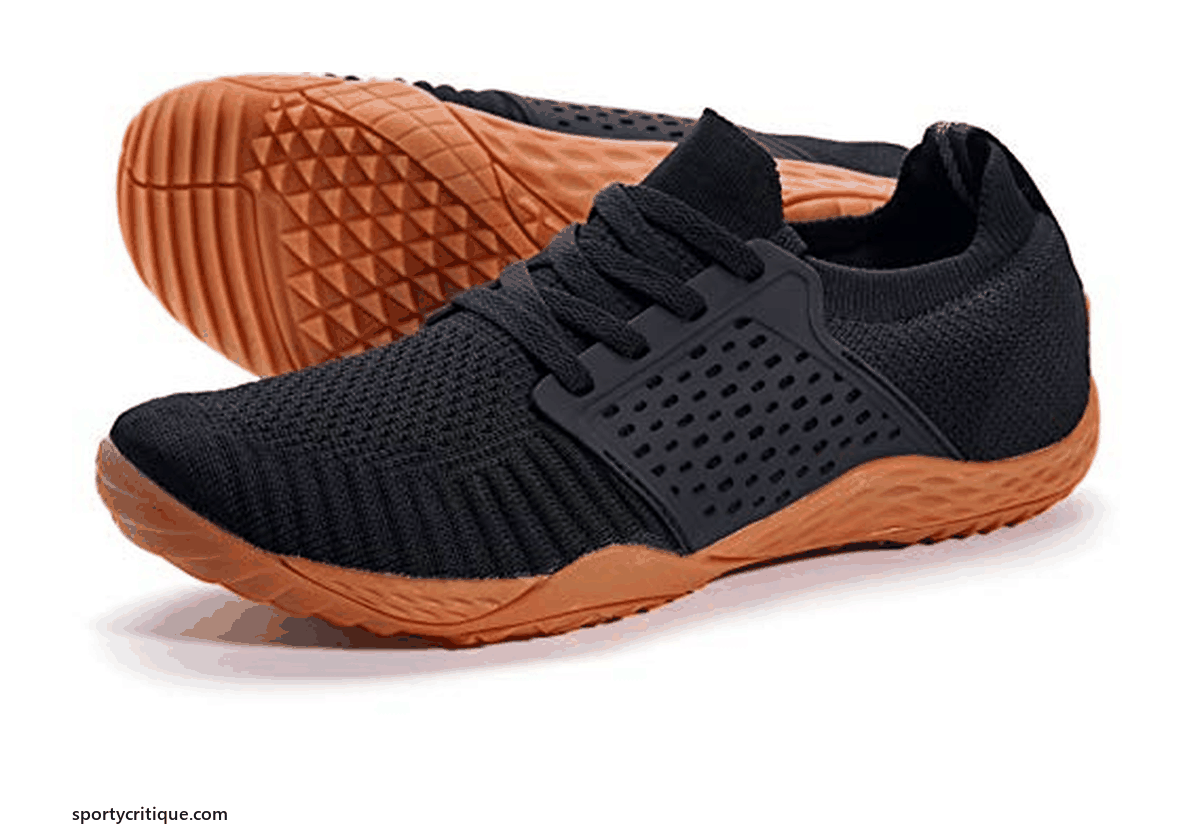
The WHITIN Wide Toe Box Barefoot Trail Runner ($57.18, in stock at publish time) is the women’s counterpart approach from the same brand: a wide, splayed toe box on a minimalist sole. It’s built as a trail runner, with a slightly more textured outsole than a road shoe, so it holds up fine for casual court use or general athletic wear without being a dedicated tennis shoe. The wide forefoot design is the reason it’s here, not the trail-specific tread.
Skechers Arch Fit, Big Appeal Sneaker, Wide Width

The Skechers Arch Fit Big Appeal Sneaker, Wide Width (Amazon’s API did not return a live price for this listing, common for name-brand athletic shoes under manufacturer pricing policies; check the current price on the listing before buying) combines an explicit wide-width size option with Skechers’ Arch Fit contoured insole, so it’s a reasonable pick if a bunion isn’t your only concern and you also want the arch support most Arch Fit models are known for. It’s a slip-on, stretch-knit design, which removes lace pressure across the forefoot entirely, another small win for a sensitive bunion joint.
📊 Note: Amazon’s product data feed didn’t return a live price or stock status for this ASIN when we checked. The listing and wide-width designation are real and verified; confirm current price on the live listing before buying.
How to verify a ‘wide toe box’ claim before buying
- ✓Look for an explicit wide-width size option (W, 2E, 4E, or a stated ‘wide’ variant) in the size selector
- ✓Check the product description for a named toe box width or splayed-toe design, not just a review comment
- ✓Look at product photos for a rounder, less tapered toe shape compared to the brand’s standard model
- ✓Measure your foot’s actual width at the widest point and compare it against the brand’s size chart if one is published
- ✕Trust ‘runs wide’ from a single reviewer as equivalent to a stated wide-width design
- ✕Assume a slip-on or stretch-knit upper automatically means enough width; some are still cut narrow
- ✕Buy a half size up hoping it solves a width problem; that usually just adds length, not width
- ✕Ignore the specific spot the bunion sits; a shoe can be wide overall and still have a seam right at the joint
Bunions vs. plantar fasciitis vs. general wide feet
A bunion-specific shoe and a general wide-feet shoe overlap a lot, but they’re not identical shopping problems. Wide feet as a general condition is about overall volume, the whole foot needing more room lengthwise and across the ball of the foot. A bunion is a specific pressure point at one joint, so a shoe can be a true wide-width SKU and still irritate a bunion if it has a seam or overlay running right across that spot. That’s why the picks here lean toward stretch-knit or seamless forefoot panels specifically, not just wide sizing on an otherwise standard last.
Materials that matter most for a bunion
Stretch knit and engineered mesh uppers are the two materials that show up across every pick on this list, and that’s not a coincidence. Both flex and give around a pressure point instead of holding a fixed shape the way leather or a stiffer synthetic overlay does. If you’re shopping outside this list, run your finger across the forefoot panel in product photos or in person; a woven or knit texture that visibly stretches is a better sign than a smooth, structured panel, even if the second one is labeled “wide.”
One more practical note: buy in the afternoon or evening if you can, or at least try shoes on then. Feet swell over the course of a normal day, and a shoe that feels fine at 8am can feel tight across a bunion by evening, which matters more for a bunion than for most other fit concerns.
When to see a podiatrist instead of buying another shoe
If an actually wide, seamless shoe still causes sharp pain, redness, or swelling at the joint after a reasonable break-in period, that’s a signal the bunion itself may need medical attention, taping, a custom orthotic, or in some cases a surgical consult, not just another pair of sneakers. Shoes can manage mild-to-moderate discomfort well, but they aren’t a treatment for a worsening bunion, and waiting too long on a bunion that keeps getting more painful rarely makes the eventual fix simpler.
Who each pick actually fits
Lacing and closure changes that help a bunion
Beyond the shoe itself, how you lace it changes pressure on a bunion more than most people realize. A standard criss-cross lacing pattern pulls the eyelets inward evenly, which can tighten fabric directly over the joint even in a wide shoe. Skipping the eyelet closest to the bunion, or lacing straight across on that row instead of criss-crossing, redistributes pressure away from the joint without needing a different shoe at all. It’s a free adjustment worth trying on any of the lace-up picks here before assuming the shoe itself is the problem.
⚠️ Watch out: Don’t compensate for bunion pain by lacing a shoe looser overall. Loose lacing lets the foot slide forward inside the shoe, which increases friction against the bunion on every step rather than reducing it. Adjust the lacing pattern at the specific row near the joint instead.
Break-in period and when to return a pair
Even a properly wide shoe usually needs a short adjustment period, especially if you’re moving from a narrower shoe you’d been compensating in for a while. Expect the first few wears to feel different, not necessarily painful, as your foot settles into the new width and shape. The distinction that matters: mild newness is fine, but sharp pain, numbness, or redness directly over the bunion after a wear or two is a sign the shoe isn’t actually working for your foot, and it’s worth using the return window rather than pushing through it and hoping the feeling changes on its own over the following week.
What makes a shoe actually good for bunions, not just ‘comfortable’?
A stated wide toe box or wide-width size option, combined with a stretch knit or seamless upper right at the forefoot where the bunion sits. Overall cushioning doesn’t address bunion pressure the way forefoot width and material flexibility do.
Is a men’s wide shoe okay for a woman with bunions, or vice versa?
The width shaping can work either way, but sizing runs differently between men’s and women’s lines, so convert sizes carefully using the brand’s own chart rather than a generic conversion, and check the actual last shape in photos.
Do zero-drop or barefoot-style shoes help with bunions specifically?
The wider, splayed toe box common in barefoot-style shoes often helps, since it lets toes spread rather than taper to a point. The zero-drop platform itself is a separate adjustment and needs its own break-in period regardless of the bunion.
Why does one listing here not show a price?
Amazon’s product data feed doesn’t return live pricing for every ASIN. The product and wide-width designation are still real and verified; check the live listing for today’s price.
As an Amazon Associate, we earn from qualifying purchases through links on this page.