Best Budget Break Cue: Affordable Options for a Harder Break

Breaking with your regular playing cue works, but it wears out a good tip fast. Here’s what a dedicated break cue actually changes, and which budget option covers the basics without overspending on a specialty tool you might only use for one shot per game.
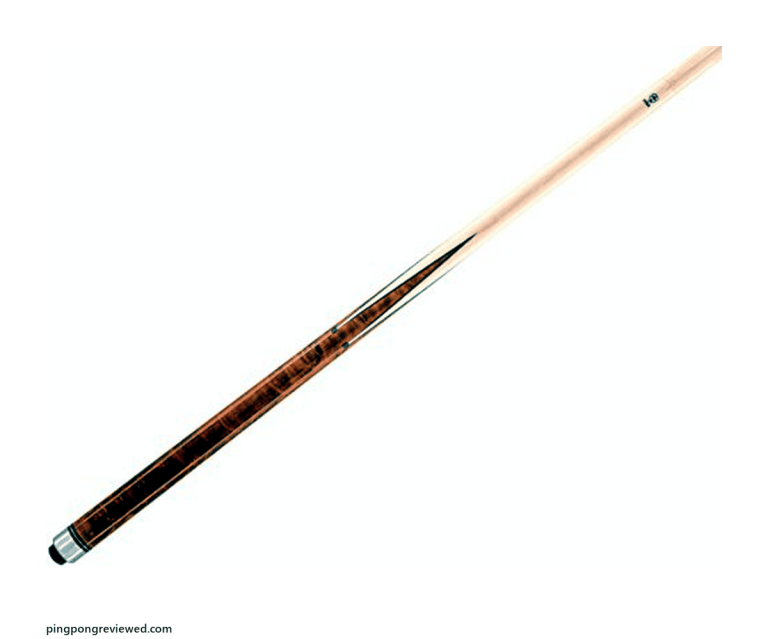
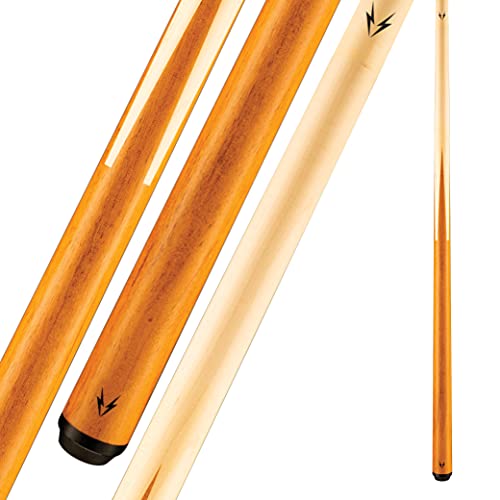
A dedicated break cue is built differently from a playing cue on purpose: a harder tip (often phenolic or bakelite instead of leather), a stiffer shaft, and usually more forward weight, all aimed at transferring maximum energy into the rack rather than at touch and spin control. A budget option like the AKLOT Heavy Hitter covers those basics for well under $50, and it’s a truly different tool from your everyday playing cue, not just a heavier version of one.
This is the one guide in our budget cue cluster that isn’t about an everyday playing cue at all. A break cue is a specialty tool with one job: hit the rack as hard and as accurately as possible on the opening shot. Using your regular playing cue for every break, especially a nicer one, is actually a common way to damage a good tip and introduce shaft stress over time, which is exactly why dedicated break cues exist even at the budget end of the market.
If you already own a decent playing cue and don’t want to risk its tip and ferrule on every break, or if you’ve noticed your regular cue’s tip mushrooming or cracking faster than it should, a separate break cue solves that problem directly, and it doesn’t need to cost much to do the job.
- →A break cue prioritizes energy transfer over touch: harder tip, stiffer shaft, often more forward weight
- →Using a playing cue for every break shortens its tip life and can stress the ferrule over time
- →Budget break cues commonly run 21-25oz, heavier than the 18-19oz standard for a playing cue
- →A phenolic or bakelite tip is standard on dedicated break cues; leather tips wear out fast under break force
- →You do not need a fancy break cue to see the benefit; a $35-50 dedicated cue outperforms breaking with a leather-tipped playing cue
Table of Contents
What makes a break cue different from a playing cue
Three things separate a break cue from a standard playing cue: tip hardness, shaft stiffness, and weight distribution. The tip on a dedicated break cue is typically phenolic or bakelite, both hard plastic-like materials, rather than leather. A hard tip transfers more of the stroke’s energy directly into the cue ball on contact instead of absorbing some of it, which is exactly what you want on a break and exactly what you don’t want on a normal shot, where leather’s slight give helps with spin and touch.
Shaft stiffness matters for the same reason. A stiffer shaft flexes less on a hard, fast stroke, which keeps more of the swing’s energy going into the ball rather than being absorbed by shaft flex. And weight distribution on many break cues, though not all, shifts slightly forward compared to a playing cue, adding mass closer to the tip end to increase momentum at contact.
⚠️ Watch out: Breaking regularly with a leather-tipped playing cue is one of the fastest ways to damage that tip. The repeated hard impact compresses and eventually mushrooms a leather tip’s edges faster than normal play would, and it can also stress the ferrule, the small collar connecting the tip to the shaft, over hundreds of breaks. A dedicated break cue exists specifically to take that wear instead.
Weight: why break cues run heavier
Most break cues fall between 21 and 25 ounces, noticeably heavier than the 18.5-19.5 ounce range considered standard for a playing cue. More mass moving at the same swing speed carries more momentum into the cue ball, which is the entire point on a break. That said, the trend among some serious break-cue users has shifted toward lighter, faster-swinging cues in the 18-19 ounce range specifically because a faster stroke can generate comparable energy with better control. For a budget buyer breaking casually rather than competitively, the heavier 21-25oz range remains the simpler, more forgiving choice, since it rewards a solid, uncomplicated swing rather than requiring precise fast-stroke technique.
Our pick for a budget break cue
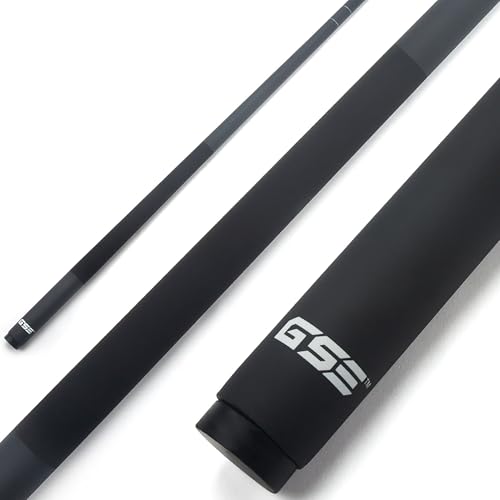
The AKLOT Heavy Hitter Jump Break Cue, 21-25oz, 14mm Bakelite Tip covers the fundamentals of a dedicated break cue at a real budget price. It’s built in the 21-25oz range depending on the specific weight ordered, uses a 14mm bakelite tip built to withstand repeated hard contact without mushrooming the way a leather tip would, and its three-piece jump-break design lets it double as a jump cue when needed, which is a useful two-in-one for a casual player who doesn’t want to buy two separate specialty cues.
The bakelite tip is the detail that matters most for this specific use case. Because it’s a hard, dense material rather than compressible leather, it holds its shape through hundreds of hard breaks instead of flattening and mushrooming the way a soft tip does under repeated high-force impact. That durability under stress is the entire reason break-cue tips are made from this kind of material rather than the leather used on playing cues.
Do you actually need a separate break cue?
- ✓You play regularly enough that tip wear from breaking is a real, recurring cost
- ✓You own a playing cue you care about and don’t want to subject to constant hard impact
- ✓You want a harder, more consistent break without relearning your entire stroke
- ✓You play in a format (8-ball, 9-ball) where the break genuinely matters to the outcome
- ✕You play only occasionally and don’t break hard enough to stress a leather tip meaningfully
- ✕You’re on a very tight budget and would rather put the money toward one good all-around cue
- ✕You mainly play casual games where break power isn’t a priority
- ✕You don’t yet have a playing cue you’d want to protect from break wear in the first place
💡 Pro tip: If you’re not ready to buy a dedicated break cue yet, at minimum avoid breaking with your best playing cue if you have more than one option available. Even an older backup cue takes the wear better than a cue you’ve invested more money into.
Jump-break combo cues: worth it at the budget end?
Several budget break cues, including the pick above, are sold as three-piece jump-break combos, meaning the shaft splits into an additional section that converts the cue into a lighter jump cue when needed. This is a reasonable value at the budget end specifically because it covers two specialty uses for close to the price of one. The tradeoff is that a combo cue is a compromise on both jobs individually compared to two separate dedicated cues, which matters more to competitive players than to someone who breaks and occasionally jumps in casual games.
Caring for a bakelite or phenolic tip
Hard tips need less maintenance than leather but aren’t maintenance-free. Chalk still helps reduce miscues on break shots, even though the harder material doesn’t hold chalk quite the way leather does. Wipe the tip clean occasionally to remove chalk buildup, and inspect it periodically for chipping at the edges, which is the main failure mode for hard tips after heavy use over months or years rather than gradual wear.
Break cue length and how it differs
Most break cues stay at the standard 58-inch overall length to keep the stroke feel familiar, but some budget models run slightly shorter, especially the three-piece jump-break combos, since the extra joint for the jump section can shift the balance and overall feel. If you’re used to a standard-length playing cue, check the listed length before buying, since a noticeably shorter break cue can feel awkward on the bridge hand until you adjust to it.
How often to replace a budget break tip
A bakelite or phenolic tip on a budget break cue typically lasts hundreds of breaks before showing real chipping at the edges, which for most casual players covers well over a year of regular play. Unlike a leather tip, there’s no gradual softening to watch for; the failure mode is usually a visible chip or crack rather than slow wear, so a quick visual check every few months is enough to catch it before it affects your break.
Replacing a hard tip yourself is more involved than swapping a leather tip, since it typically requires proper bonding and shaping tools. Most players either send the cue to a local billiards shop for a tip replacement or simply replace the whole budget break cue, since at this price point a full replacement often costs about the same as a professional re-tip service anyway.
Where a break cue fits in a starter kit
If you’re building out a full set of budget cues, a common approach is one everyday playing cue for the majority of shots and a separate break cue reserved strictly for the opening shot of each rack. Some players extend this further with a dedicated jump cue as well, though for casual play the combo break-jump design covers that need without a third purchase. Buying the break cue after you already have a playing cue you like tends to work better than buying both at once, since it gives you a baseline feel to compare the harder tip and stiffer shaft against.
Bottom line
If you break regularly and care about protecting your main playing cue, a dedicated break cue is a cheap insurance policy, not a luxury purchase. Look for a hard phenolic or bakelite tip and a weight in the 21-25oz range as the safe default, and treat a jump-break combo design as a bonus rather than the deciding factor.
See also: Best Pool Cue Weight for 8-Ball League Play for choosing the right weight on your everyday playing cue, separate from a dedicated break cue.
Do I really need a separate cue just for breaking?
Not strictly, but it protects your playing cue’s tip and ferrule from the repeated hard impact of breaking, and a hard-tipped break cue produces a more consistent break than a leather-tipped playing cue. For regular players, it’s a low-cost way to extend the life of a better cue.
What tip material should a break cue have?
Phenolic or bakelite, both hard, dense materials that resist mushrooming under repeated hard impact. Leather, the standard for playing cues, compresses and wears out much faster when used for breaking.
Is a heavier cue always better for breaking?
Not necessarily. Extra weight helps generate power without needing a fast, trained stroke, which is why 21-25oz is the common budget-friendly default. Players with a fast, controlled stroke can generate similar power with a lighter 18-19oz cue.
Can a break cue also work as a jump cue?
Some budget models are sold as three-piece jump-break combos specifically for this. It’s a reasonable value if you need both functions occasionally, though a dedicated single-purpose cue usually performs better at either job individually.
As an Amazon Associate, we earn from qualifying purchases through links on this page.