How to Store and Protect a Shuffleboard Table When Not in Use


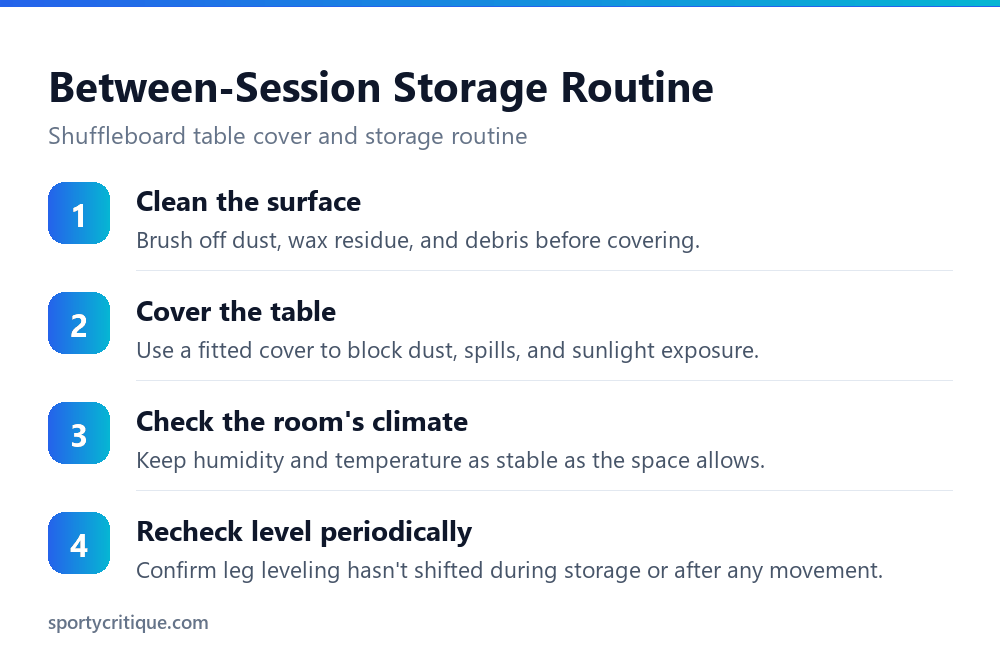
Good shuffleboard table cover storage habits come down to four things when protecting a table not in active use: cleaning the surface before covering it, using a fitted cover to block dust, spills, and sunlight, keeping the room’s humidity and temperature as stable as realistically possible, and rechecking leg leveling periodically, especially after any move. Long-term storage, beyond just between sessions, adds the need for a genuinely climate-stable space and periodic check-ins even when the table isn’t actively used for weeks or months.
A shuffleboard table’s biggest threats when it’s sitting idle aren’t usually dramatic accidents; they’re the slow, cumulative effects of dust, humidity swings, and sun exposure that build up silently over weeks and months of storage between play sessions. A consistent storage routine prevents most of this gradual damage at essentially no cost beyond a few minutes of regular attention.
- →Cleaning the surface before covering prevents debris from grinding into the wax and wood over time
- →A fitted cover blocks dust, incidental spills, and sun fading far better than leaving a table exposed
- →Humidity and temperature stability matter more to long-term table health than how often it’s played
- →Leg leveling can shift during storage or a move and deserves a periodic recheck
- →Long-term storage beyond a few weeks needs more attention than routine between-session care
Table of Contents
Cleaning the Surface Before Covering
Brushing off loose wax residue, dust, and any debris from a session before putting a cover on traps less material against the playing surface than covering a dirty table directly. Debris trapped under a cover for an extended period can grind subtly into the wood or leave residue that’s harder to remove once it’s had time to sit.
A soft cloth or a dedicated shuffleboard brush works well for this quick pre-cover cleaning step, which takes only a minute or two but meaningfully reduces the accumulated grime a table collects over repeated storage cycles without this basic habit in place.
Using a Cover Effectively
A fitted cover, sized specifically to the table’s length rather than a loose, generic drape, blocks dust accumulation, protects against incidental spills in multi-use rooms, and reduces sun-related fading and finish degradation for a table positioned anywhere near a window or direct light source.
⚠️ Watch out: Covering a table that’s still damp from a recent spill, or right after applying a liquid cleaning product before it’s fully dried, can trap moisture against the surface and cause more damage than leaving it briefly uncovered while it finishes drying naturally.
💡 Pro tip: Keeping a cover on by default between sessions, rather than only covering the table during extended breaks from play, builds a consistent habit that protects the table year-round rather than only during obviously long idle stretches.
Humidity and Temperature Stability During Storage
A table sitting idle in a room with significant humidity swings, a garage or unfinished basement without climate control being common examples, experiences the same wood expansion and contraction stress whether or not it’s actively being played. Idle time doesn’t pause this environmental stress; only a stable climate does.
Running a dehumidifier in a storage space during humid months, or simply choosing a more climate-stable room for the table in the first place, protects the surface and structure during long idle periods just as much as it does during active use, since the wood doesn’t distinguish between being played on and simply sitting in a humid room.
Rechecking Leg Leveling
A table’s leg leveling can shift slightly during extended storage, particularly if a home’s flooring settles even minimally over time, or more significantly after any move to a different room or location. An unlevel table throws off puck behavior in a way that’s easy to misattribute to wax or surface condition rather than the actual, simpler leveling cause.
Checking level with a simple bubble level before resuming regular play after any extended storage period, rather than assuming the original setup remains perfectly accurate indefinitely, catches this easy, low-cost fix before it gets mistaken for a more serious surface or wax problem.
Storage Habits That Prevent Damage
- ✓Clean the surface briefly before covering the table between sessions
- ✓Use a fitted cover rather than a loose, generic drape
- ✓Keep the storage space’s humidity and temperature as stable as possible
- ✓Recheck leg leveling after any extended storage period or move
- ✕Covering a table that’s still damp from a spill or recent cleaning
- ✕Leaving a table uncovered by default between sessions
- ✕Assuming idle time pauses humidity and temperature-related wood stress
- ✕Skipping a level check after moving the table or a long storage break
Preparing a Table for a Move
Before moving a shuffleboard table to a different room or a new home, checking whether it’s built to disassemble into sections versus staying as a single, solid unit determines how much help and equipment the move actually requires. A solid, non-sectional table often needs professional movers rather than a casual afternoon with friends, given the weight and awkward dimensions involved.
Protecting the playing surface specifically during a move, with padding or a dedicated moving cover distinct from the everyday storage cover, prevents scratches and dents from incidental contact during transport that a standard dust cover isn’t designed to guard against.
Long-Term Storage Beyond a Few Weeks
For storage stretching beyond a few weeks, during a home renovation, a seasonal move, or an extended period without regular play, periodic check-ins, even just a brief visual inspection and cover check every few weeks, catch developing issues before they compound over an extended unattended period.
A light reapplication of Sun-Glo Speed #3 Shuffleboard Powder Wax (Pack of 3, 16 oz Shaker Cans) isn’t necessary purely for storage, but doing a fresh application when returning to regular play after a long idle period restores the surface to its intended playing condition rather than resuming play on a surface that’s sat unused and slightly degraded for an extended stretch.
Choosing the Right Room for Storage
A finished, climate-controlled living space, a family room, finished basement, or dedicated game room, protects a shuffleboard table far better during both active use and idle storage periods than a garage, unfinished basement, or covered but unconditioned porch, since these secondary spaces typically see far greater temperature and humidity swings across a year.
When a finished, climate-controlled space genuinely isn’t available and a table has to live in a garage or similar secondary space, investing in a portable dehumidifier and monitoring the space’s humidity levels more actively becomes a practical necessity rather than an optional extra, since the table’s ongoing health depends heavily on managing that environment as closely as a finished room manages it automatically.
Adjusting Storage Habits by Season
Summer humidity in many climates poses a greater ongoing risk to a stored table than winter cold alone, since high humidity directly affects wood moisture content, while cold temperatures without accompanying humidity swings are comparatively less damaging on their own. Paying closer attention to a cover’s condition and the room’s humidity specifically during the most humid months of the year targets protective effort where it actually matters most.
In regions with dry winters and central heating, indoor humidity can actually drop low enough to cause a different kind of wood stress, excessive drying and potential cracking, which is why some owners in these climates use a humidifier during winter months as a complementary measure to the dehumidifier some owners need during humid summer months. The specific need depends entirely on a given region’s actual seasonal climate pattern.
Documenting a Table’s Condition Over Time
Taking a few photos of a table’s surface and overall condition periodically, particularly before an extended storage period or a move, creates a useful record for comparing condition before and after, which can help identify when and how any new damage actually occurred rather than guessing after the fact.
For a genuinely valuable or premium table, checking whether homeowners or renters insurance covers this kind of furniture against damage during a move or an extended storage period is worth a quick conversation with an insurance provider, particularly before a significant relocation where transport damage risk is meaningfully higher than everyday, in-place storage.
A Simple Storage Checklist
📊 Note: None of these tasks take more than a few minutes individually, and spacing them out across different frequencies, some every session, others monthly or situational, keeps the overall routine from feeling like a burdensome chore layered on top of actually enjoying the table.
Frequently Asked Questions
Do I need to cover my shuffleboard table every time I’m done playing?
It’s the ideal habit, since a cover blocks dust, spills, and sun exposure consistently rather than only during obviously long breaks from play. Building it into the routine by default gives the most protection.
Does a table need special care during long-term storage?
Yes. Beyond routine between-session covering, periodic check-ins on climate conditions and a quick inspection every few weeks catch developing issues before an extended unattended period lets them compound.
Can I cover a table right after cleaning it with a liquid product?
Let it dry fully first. Covering a still-damp surface can trap moisture against the table and cause more damage than a brief period left uncovered while it finishes drying.
Why would leg leveling change if the table hasn’t been played?
Flooring can settle slightly over time even without active play, and any move to a different location can shift leveling more significantly. It’s worth rechecking after either situation.
Do I need a different cover for moving a table versus everyday storage?
It’s a good idea. A dedicated moving cover or padding protects against scratches and dents from transport contact that a standard everyday dust cover isn’t designed to guard against.
Should I rewax a table that’s been stored for a long time?
It’s not strictly necessary for storage itself, but a fresh wax application when returning to regular play restores the surface to proper playing condition after an extended idle period.
Owners who skip these small habits for years often only notice the cumulative cost when a refinishing quote arrives sooner than expected, at which point the earlier savings in time and attention have already been erased several times over by the actual repair bill sitting right there in their inbox waiting for a response.
A shuffleboard table that’s properly covered, kept in a reasonably stable climate, and checked periodically for level holds up far better over years of intermittent use than one left exposed and unattended between sessions. These habits cost only a few minutes of regular attention relative to the real protection they provide.
None of these habits require special skill or expensive equipment beyond a cover and, in some climates, a dehumidifier. What they require is consistency, treating storage and protection as a routine part of owning the table rather than an afterthought only remembered once visible damage has already appeared.
A table that receives this level of attention over years of ownership typically outlasts one that’s simply used and left exposed between sessions, often by a meaningful margin once refinishing and repair costs are factored into the comparison over a decade or more of ownership, which is ultimately the timeframe that matters most for judging whether a storage routine was actually worth the small, recurring effort it asked for.
As an Amazon Associate, we earn from qualifying purchases through links on this page.