How to Clean Foosball Rods (And Why Yours Feel Slow)


Wipe the rods along their full length with a dry microfibre cloth, then — the part that actually matters — clean inside each bearing with a cloth or cotton bud, since that’s where drag comes from. Finish with silicone lubricant applied to a cloth and wiped along the rod, never sprayed at the table. Do not use WD-40: it’s a solvent, it degrades plastic bearings, it attracts dust, and it evaporates within days.
Sluggish rods are the most common complaint about foosball tables, and the usual response — a quick spray of whatever’s in the cupboard — makes the problem worse in the medium term.
The fix is straightforward once you know that the rod isn’t really the issue. The bearing is: the collar the rod passes through at each side of the cabinet. Clean that properly and lubricate correctly, and a table that felt tired will feel like new equipment.
This is the detailed version of one step in our full foosball table cleaning guide.
- →The bearings cause the drag, not the rods. Clean inside them.
- →Silicone lubricant only — WD-40 damages plastic bearings and evaporates.
- →Apply lubricant to a cloth, not by spraying at the table — overspray ruins the playfield.
- →Removing the rods takes longer but is the only way to clean properly.
- →Bearings are cheap consumables. Replace worn ones rather than fighting them.
- →Lubricate every one to two months with regular play.
Table of Contents
Why the bearings matter more than the rods
A foosball rod is a smooth steel or chrome tube. On its own it doesn’t develop much friction — there’s very little to go wrong with a metal cylinder. What it passes through at each end of the cabinet is a bearing: a collar, usually nylon or another hard plastic, sized to let the rod slide and spin with minimal resistance.
That bearing is a trap for everything in the room. Dust, hand oils, skin, drink residue, and airborne grit all collect at the point where the rod enters, and every time you slide the rod you drag that material into the collar. Mixed with old lubricant, it forms a gritty paste that grips the rod.
So when someone says their rods are sticking, they almost never have a rod problem. Wiping the visible length of the rod — the intuitive thing to do — addresses the part that was mostly fine and leaves the actual cause untouched. That’s why so many people clean their table and find it barely improved.
Wiping the rod cleans the part that was never dirty. The paste inside the bearing is what’s slowing you down.
Doing it properly
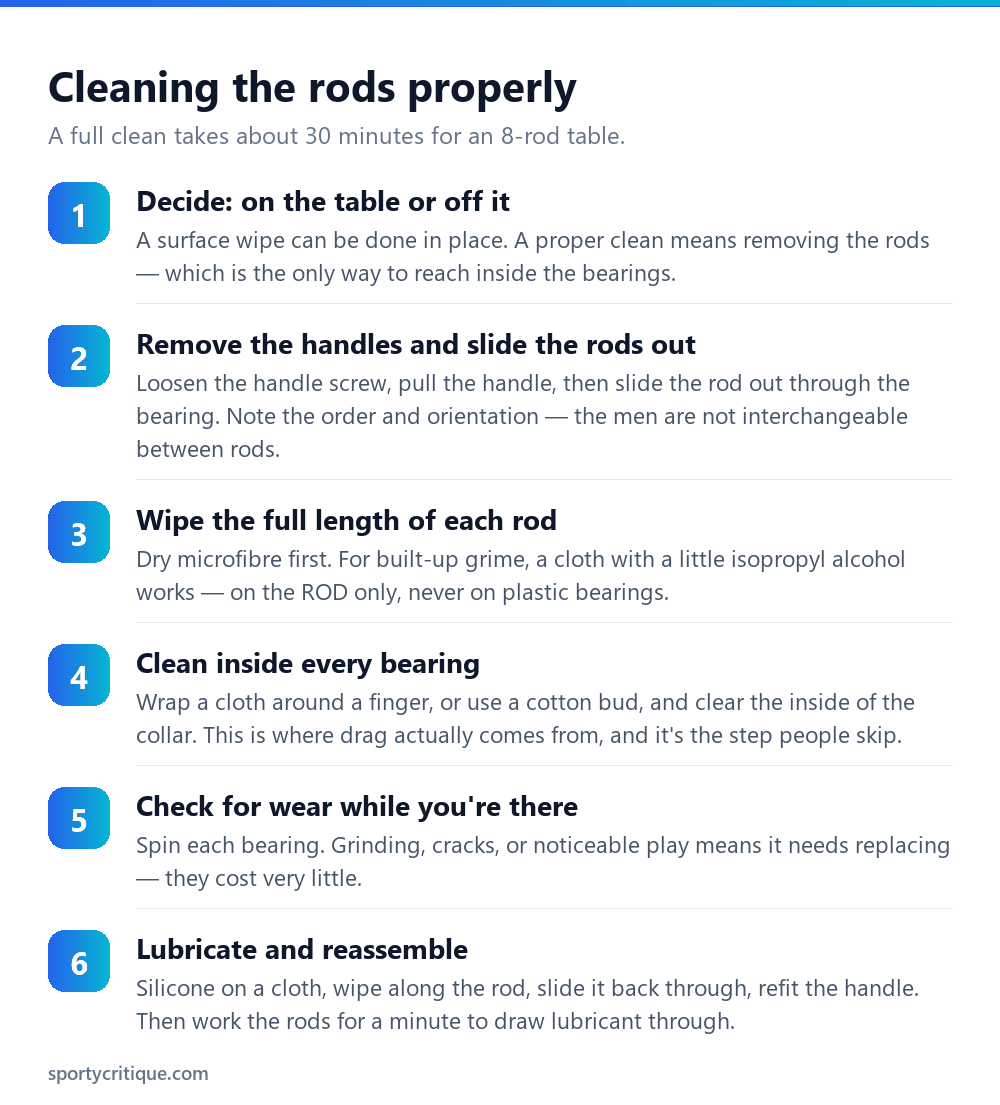
Should you take the rods out? For a quick maintenance pass, no — wipe the rods in place, work a cotton bud into each bearing as far as it reaches, lubricate, and you’ll get most of the benefit in ten minutes.
For a table that’s never been properly cleaned, yes. Removing the rods lets you clean the full length including the section that normally sits inside the cabinet, reach right through the bearings, and inspect for wear. Budget half an hour for eight rods.
Removal is simple but do it methodically: loosen the screw on each handle, pull the handle off, then slide the rod out through the bearing. Keep the rods in order and note their orientation — the goalie, defence, midfield and attack rods carry different numbers of men at different spacings and are not interchangeable. Laying them out in order on the floor as you remove them saves a frustrating twenty minutes later.
⚠️ Watch out: Take care sliding rods out and back through the bearings — the screws holding the men on can catch and score the inside of the bearing. Turn the rod so the screws clear, and never force it. A scored bearing will never run smoothly again.
Lubricant: silicone, and nothing else
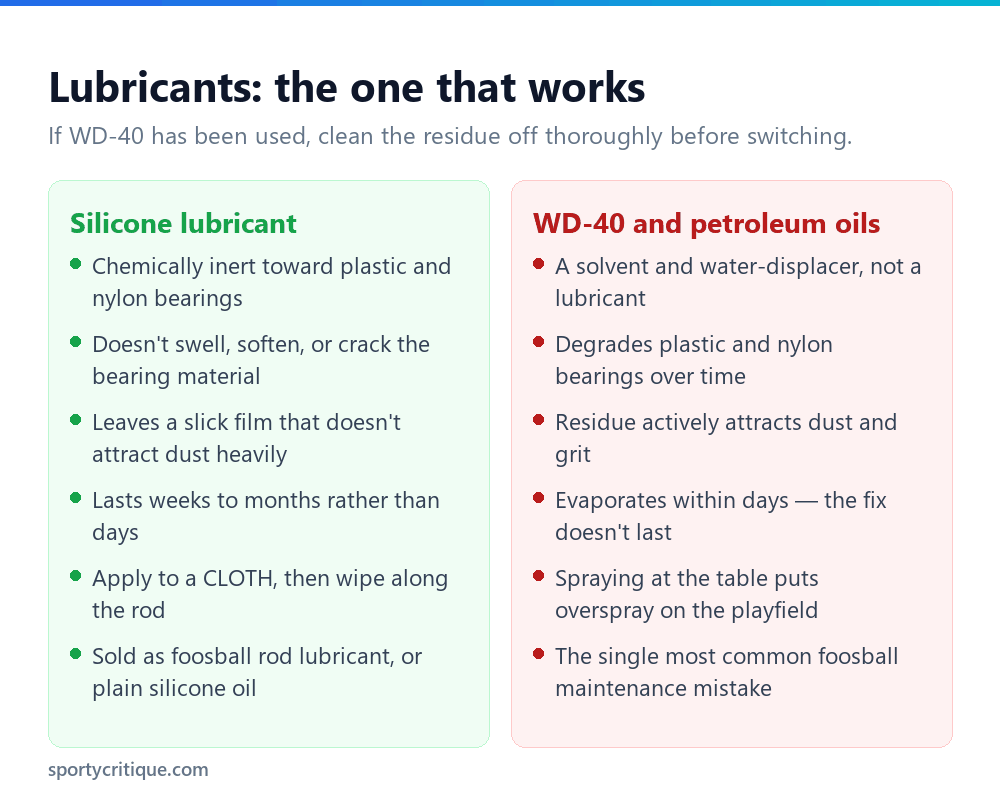
This is worth being emphatic about because the wrong choice is so widespread and the reasoning is genuinely counterintuitive — WD-40 does make the rods feel better for a day or two, which is exactly why people keep reaching for it.
What’s happening is that WD-40 is a solvent. It dissolves the existing grime, which produces an immediate improvement in feel, and then it evaporates — leaving the bearing with less lubrication than before, plus a residue that grabs dust. Over months it also attacks the plastic itself, softening or crazing the bearing surface. The table gets progressively worse and the owner applies more, faster.
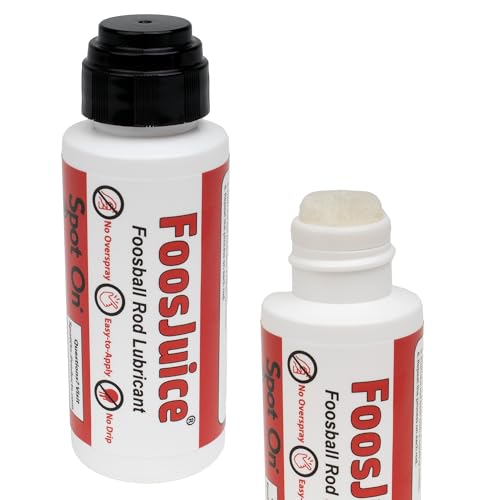
Silicone lubricant behaves the opposite way. It’s inert toward plastics, it doesn’t evaporate quickly, and it leaves a slick film that resists dust rather than collecting it. Dedicated foosball rod lubricants are silicone-based; plain silicone oil works identically and is often cheaper.
Apply it to a cloth, then wipe the rod. Spraying directly at the table is how lubricant ends up on the playfield, and a slick playfield ruins ball control in a way that takes a full clean to undo. A few drops per rod is plenty — over-lubricating attracts dirt and drips into the cabinet.
💡 Pro tip: After lubricating, spend a minute working every rod fully in and out and spinning them. This draws the silicone through the bearing rather than leaving it sitting on the outside, and it’s the difference between a fix that lasts a week and one that lasts two months.
Diagnosing by feel
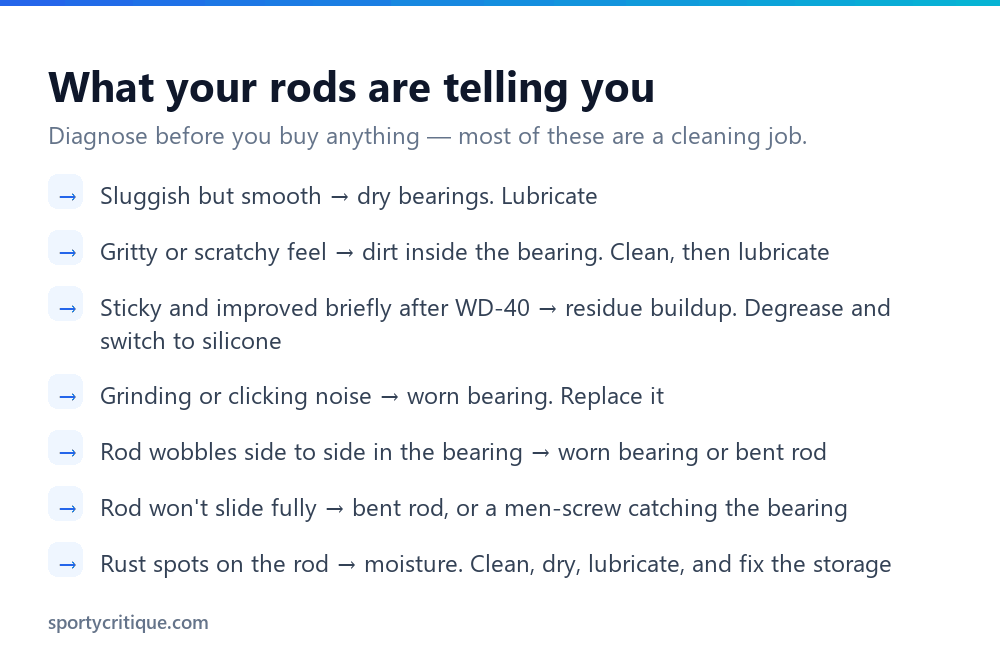
Most rod complaints fall into three buckets, and telling them apart saves you buying parts you don’t need.
Smooth but slow means the bearing is clean and dry. Lubricate and you’re done — this is the easiest and most satisfying fix.
Gritty or scratchy means contamination inside the bearing. Lubricating without cleaning first will just suspend the grit and make the grinding smoother for a while. Clean thoroughly, then lubricate.
Grinding, clicking, or noticeable side-to-side play means the bearing is worn out. No amount of cleaning fixes a bearing whose internal surface has been worn oversized. Replace it — bearings are among the cheapest parts on the table, they’re usually a push-fit or held by a couple of screws, and replacing a full set is a genuine transformation on an old table. Our repair guide covers the swap.
📊 Note: Rust on the rods themselves points to a storage problem rather than a maintenance one — a damp garage or conservatory. Clean it off with a fine abrasive pad, dry thoroughly, lubricate, and then deal with where the table lives, or it will simply come back.
Bearings: types, and replacing them
Since bearings are the component that decides everything here, it’s worth knowing what’s in your table.
Replacing them is usually a straightforward job. Most bearings are a push- or press-fit into the cabinet wall, sometimes retained by a screw or a flange. With the rod removed, the old bearing pushes or taps out and the new one seats in its place. Order by table brand and model rather than by measurement where you can, because sizes vary and a bearing that’s fractionally wrong is worse than the worn one you removed.
Replace them as a full set rather than individually. Mixed old and new bearings give the table an inconsistent feel — some rods gliding, others dragging — which is more distracting in play than uniformly worn ones. A complete set for an eight-rod table is inexpensive and it’s the single highest-value upgrade for an older table.
How often
With regular household play, lubricate every one to two months and do a proper bearing clean two or three times a year. A table in an office or bar, played daily, wants lubricating monthly and cleaning quarterly — heavy use is the main driver, not time.
The signal to act is feel rather than the calendar. Rods should slide with almost no resistance and spin freely when you flick them. The moment you notice yourself pushing harder to move a rod sideways, you’re overdue — and because the change is gradual, the check worth making occasionally is to compare your table against a well-maintained one. Most people discover their table has been draggy for a year.
One last argument for keeping on top of it: rod speed is a real component of play. Lateral movement is the whole of foosball defence, as our improvement guide explains, and a draggy rod slows your defence measurably. Players adapt by moving earlier and committing sooner, which is a habit that survives even after the table is fixed.
While the rods are out: the men and handles
If you’ve gone to the trouble of removing the rods, two quick jobs are worth doing in the same session, because both need the rod off the table anyway.
Check the men are tight. Each player figure is held on by a screw through the rod, and these work loose with play. A loose man rotates slightly on impact, which sends shots off-line for no reason you can see — players usually blame their own technique. Tighten each one, but don’t overtighten: the screw threads into plastic on many tables and will strip.
Inspect the handles and grips. Worn, polished, or split grips are the cheapest upgrade in foosball and make a genuine difference, since your entire connection to the table runs through them. A slick handle means gripping harder, and gripping harder is exactly what slows your wrist and ruins the loose grip good play depends on. Replacement handles are a few pounds each and fit most standard rods.
While you’re there, wipe the inside of the cabinet where the rods sit and check the rod bumpers — the small rubber or foam rings that stop the rod slamming into the bearing at the end of its travel. Perished bumpers let metal hit plastic directly, which accelerates bearing wear and produces the loud clack that makes a table sound cheap.
Frequently asked questions
What’s the best lubricant for foosball rods?
Silicone — either a dedicated foosball rod lubricant or plain silicone oil, which is chemically the same and often cheaper. It’s inert toward plastic bearings, doesn’t evaporate quickly, and doesn’t attract dust the way petroleum products do. Apply it to a cloth and wipe along the rod rather than spraying.
Can I use WD-40 on foosball rods?
No. It feels like it works because it’s a solvent that dissolves grime, but it then evaporates within days, leaves a dust-attracting residue, and degrades plastic bearings over time. Tables get progressively worse under a WD-40 regime. If it’s already been used, degrease thoroughly before switching to silicone.
How do I get foosball rods to move faster?
Clean inside the bearings and lubricate with silicone — in that order, since lubricating over grit just suspends it. If they’re still slow afterwards, the bearings are worn and should be replaced. Rod speed genuinely affects defensive play, so it’s worth doing properly.
Do I need to take the rods out to clean them?
Not for routine maintenance — wiping in place and working a cotton bud into each bearing gets most of the benefit. Do remove them for a first deep clean on a neglected table, or when replacing bearings, since that’s the only way to reach the full rod and the bearing interior.
How often should I lubricate the rods?
Every one to two months for normal household use, monthly for heavy use. Go by feel rather than the calendar — the rods should slide with almost no resistance. Because the decline is gradual, most people are running much draggier tables than they realise.
My rod is bent. Can it be fixed?
Not reliably. Straightening a bent steel rod at home almost always leaves it slightly out of true, which means it binds in the bearing forever. Replacement rods are available for most common table brands and are the sensible fix. Bends usually come from leaning or sitting on the table, which is worth mentioning to whoever shares the room.
- →Cleaning the whole table — playfield, balls, and maintenance schedule
- →How to fix a foosball table — bearings, handles, and wobbles
- →How to play foosball — the real rules
- →How to get better at foosball — drills and practice