Best Billiard Gloves for a Smooth Bridge Hand


The best billiard glove is a snug, stretchy three-finger glove worn on your bridge hand, which is the left hand for a right-handed shooter. Look for a breathable stretch fabric such as Lycra or spandex, a size that fits like a second skin, and a seamless or low-friction surface. Of the four we checked, the CUESOUL 10-piece set is the cheapest, the Turning Point is a seamless left-hand option, and the YEUEK offers the widest size range. Players with dry hands may not need one at all.
A cue shaft is supposed to slide through your bridge hand like a piston. When your hand is damp or oily, it grabs instead, and the stroke picks up tiny hitches that you cannot see but the cue ball can. A billiard glove is a cheap, simple fix for that one problem.
It is also one of the most misunderstood accessories in pool. Some players swear by it, and others never touch one. This guide explains what a glove does, who benefits, and which of the options we could verify are worth a look.
- →A billiard glove goes on your bridge hand, the left hand for a right-handed shooter
- →Its job is to reduce friction and keep sweat and oils off the shaft
- →Choose a breathable stretch fabric and a snug, second-skin fit
- →Players with naturally dry hands may not benefit
- →Wash gloves in cold water, air dry them, and replace them when the fabric thins
Table of Contents
What a Billiard Glove Does
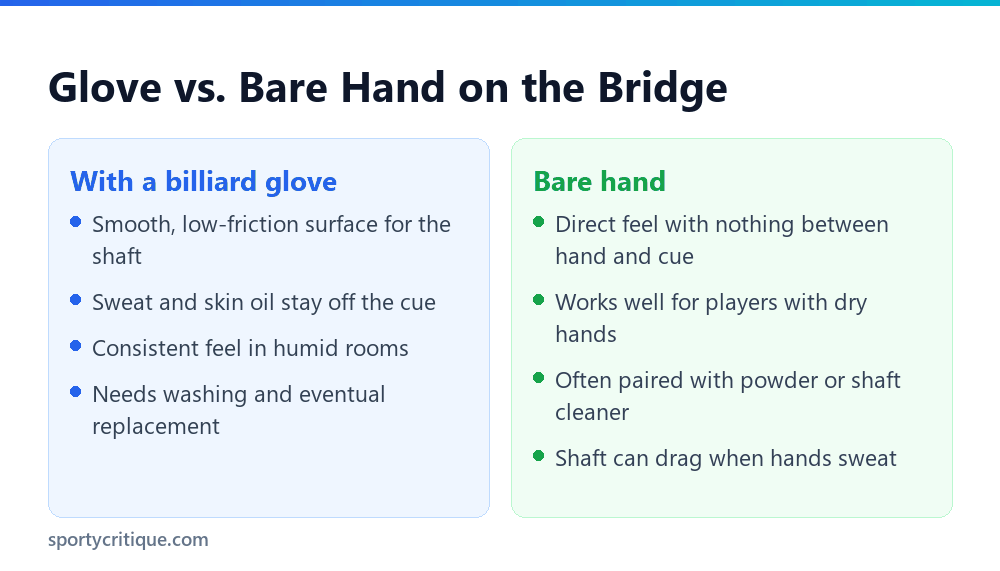
Retailer guides from Quarter King Billiards and Beer City Billiards describe the same purpose: reducing friction between the bridge hand and the cue shaft. A glove helps with sweaty hands, skin oils, and changing room conditions, and it keeps dirt and oil from building up on the shaft.
It does not change your stroke or your aim. It just gives the shaft a more consistent surface to slide on. If your stroke feels sticky in humid rooms or late in a long session, a glove is worth trying. If it feels fine already, you may not need one.
📊 Note: Both guides come from billiard retailers, which have a reason to sell gloves. Treat the benefits as common experience rather than test results, and judge by how your own stroke feels.
Which Hand and How Many Fingers
The glove goes on your bridge hand, which is the left hand for a right-handed player and the right hand for a left-handed player. The shooting hand stays bare.
Three-finger gloves are the most popular style, according to Beer City Billiards. They leave the rest of the hand free for feel. The two guides we read describe the covered fingers slightly differently, so look at the product photos or listing to see exactly which fingers a glove covers before you buy.
Full-coverage gloves exist too, and Beer City Billiards says they suit looser bridges or humid conditions. Most of the gloves sold for pool, including the four here, use the three-finger cut.
What to Look For
Material
Quarter King recommends breathable, stretchy fabric such as spandex, Lycra, or microfiber blends that wick moisture, and it advises avoiding cotton, which absorbs moisture instead of moving it away. Beer City Billiards also suggests avoiding thick or stiff materials.
Fit
A glove should fit snugly, like a second skin, without being so tight that it restricts blood flow. Beer City Billiards suggests measuring around the widest part of your palm, excluding the thumb, and comparing it with the maker’s size chart.
If you fall between two sizes, Beer City Billiards suggests choosing the larger for comfort or the smaller for the snugness some competitive players prefer. Try the glove for a full session before deciding, since a fit that feels fine for ten minutes can start to bunch or pinch after an hour of play, and keep the packaging in case you need to exchange it.
Palm Pad and Wrist
Some gloves add a small non-slip pad under the palm to keep the bridge hand steady on the cloth, and an elastic or Velcro wrist to hold the glove in place. These are comfort features, and players differ on whether a pad helps or gets in the way.
4 Real Options, Compared
📊 Note: All four were in stock when checked on October 7, 2026. Most gloves in this category are sold for one specific hand, so check that the listing matches your bridge hand. A right-handed shooter wears a left-hand glove. We did not wear or test these gloves, so the notes reflect what each listing says.
How We Picked These Four
We checked each of these four listings for current price, stock, and what it states about material, sizing, and hand. Many other gloves are sold, so this is not a full survey of the market.
Do You Actually Need a Glove?
Quarter King says you can skip a glove if you naturally have dry hands, play casually or only briefly, use carbon fiber shafts in a climate-controlled room, or regularly use shaft cleaner and powder. That is a fair summary of the bare-hand case.
The only real way to know is to try. Play a few games with a glove and a few without, and notice whether the shaft feels smoother in your bridge and whether your stroke feels more repeatable.
Glove Habits
- ✓Wear the glove on your bridge hand only
- ✓Choose a snug, breathable stretch fabric
- ✓Wash in cold water and air dry flat
- ✓Keep a spare for long sessions or tournaments
- ✕Buy a glove for the wrong hand without checking the listing
- ✕Pick a cotton glove that soaks up sweat
- ✕Dry it on high heat, which can wreck the elastic
- ✕Keep wearing a glove with thin spots or holes
Caring for Your Glove
Quarter King suggests washing gloves in cold water every week or two, drying them flat, and rotating gloves if you play often, and replacing a glove when the contact area thins or develops holes. Beer City Billiards adds that you should shake off chalk dust after a session and that a quality glove can last from six months to over a year with proper care.
A multi-pack makes rotation easy. Keep one clean glove in your cue case for matches, and use the others for practice.
Common Glove Mistakes
The first mistake is buying the wrong hand. Most listings are for one hand only, and a left-hand glove will not fit your right hand. Check the listing title and description before you order, and remember that a right-handed shooter needs a left-hand glove.
The second is choosing a size that is too loose. A baggy glove bunches under the shaft and defeats the purpose, since the point is a smooth surface. The Turning Point listing suggests choosing one size larger than your usual billiard glove size, so read each maker’s own advice.
The third is treating the glove as permanent. The fabric thins with use, particularly at the contact points, and a glove with thin spots or holes gives a rougher surface than a fresh one.
Left-Handed Shooters
Left-handed players bridge with the right hand, so they need a right-hand glove. Some listings, such as the ANIMSWORD, offer a left or right option, while the Turning Point and YEUEK listings here are for the left hand.
Check the hand stated in the listing before you order. If it is not clear, ask the seller before buying.
Gloves, Powder, and Shaft Cleaner Compared
Quarter King notes that players who regularly use shaft cleaner and powder may not need a glove. That fits what most players find: the goal is a smooth, consistent shaft, and you can reach it in more than one way.
Other Ways to Keep Your Bridge Smooth
A glove is not the only option. Some players use a little talc or pool powder, wipe the shaft with a shaft cleaner, or use a slick shaft finish. Each has trade-offs, and none is clearly best, so choose the one that feels best for your hands and your table.
Keep the shaft clean regardless of what you choose. Our guide on how to break down and clean a two-piece pool cue covers cleaning, and our guide on storing a cue covers keeping it straight.
Budget and Value Considerations
The four gloves here run from about $11 to about $26, and the cheapest gives you ten pieces. A higher price usually buys a closer fit, a wider size range, or extra stitching, not a different kind of benefit.
If you are new to gloves, buy the cheapest one that fits and see if you like it. If you decide you do, then spend a little more on a closer, sized fit.
Frequently Asked Questions
Which hand does a billiard glove go on?
Your bridge hand: the left hand for a right-handed shooter and the right hand for a left-handed one.
Do pro players use billiard gloves?
Some players use them and others do not. It is a personal choice based on how your hands and your stroke feel.
What size billiard glove should I get?
One that fits snugly without restricting blood flow. Measure around the widest part of your palm, excluding the thumb, and compare it with the maker’s chart.
How do I wash a billiard glove?
Retailer guides suggest cold water, air drying flat, and avoiding a dryer, which can damage the elastic.
Is a three-finger glove better than a full glove?
Three-finger gloves are the most popular style and leave more of the hand free for feel. Full gloves suit some players with looser bridges or humid conditions.
Can I use one glove for both hands?
Most gloves are made for a specific hand, so check the listing. Some, like the CUESOUL set, are listed as fitting either hand.
A billiard glove is a small tool for a small job: a smoother, drier bridge. Pick a snug, stretchy three-finger glove for your bridge hand, try it for a few sessions, and keep it clean, and you will know quickly whether it belongs in your case.
As an Amazon Associate, we earn from qualifying purchases through links on this page.