
Best Gymnastics Mat for Home: Thickness, Fold Style, and Real Picks


Picking the best gymnastics mat for home comes down to three real variables: thickness, fold style, and size relative to your actual floor space, not brand names or marketing claims. Here’s what each one changes, plus four verified, currently listed mats across different sizes and materials.
🤸 Gymnastics Hub: Explore all 26 skill tutorials, home equipment reviews, and scoring guides in our Complete Gymnastics Resource Hub.

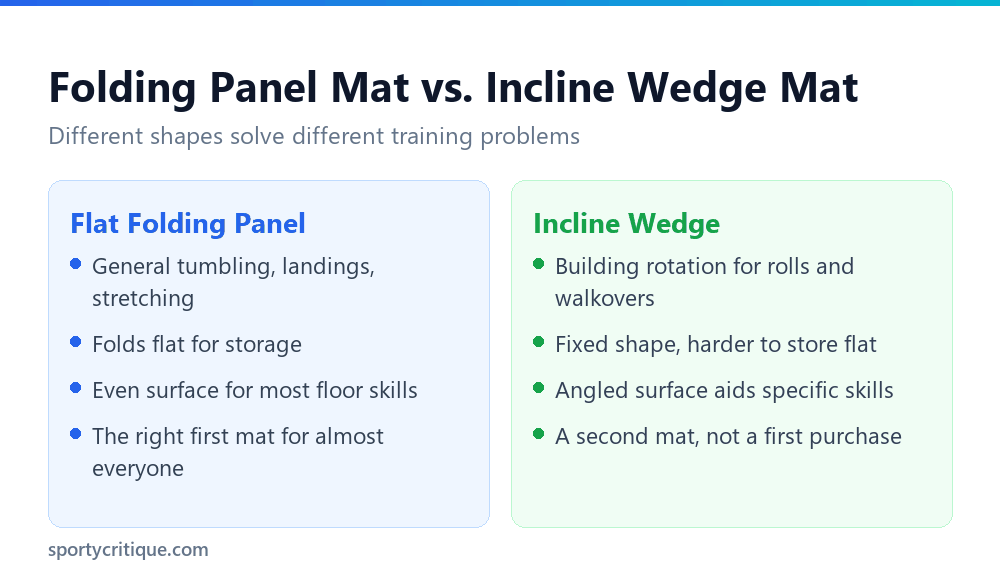
The best gymnastics mat for home use for most people is a flat, folding panel mat, 2 inches thick, in roughly a 4×8 to 10×4-foot footprint depending on available space. Thickness in the 1.5 to 2-inch range handles general tumbling and landing impact reasonably; specialty mats like incline wedges solve a narrower, skill-specific problem and make sense as a second mat, not a first purchase. Verified real options span roughly $30 to $100 depending on size and material.
A mat is also the right starting point if you’re weighing this against other home gymnastics equipment; it’s the cheapest category, needs the least space, and carries the lowest injury risk of anything covered in our home gymnastics equipment overview. If you haven’t decided which category to buy first, that’s usually the answer, and this guide covers exactly what to look for once you’ve made that call.
- →A 2-inch-thick folding panel mat is the right first purchase for nearly every home use case
- →Folding mats store flat against a wall; roll-up mats save floor space differently but wrinkle over time
- →Incline wedge mats solve a specific rotation problem and work best as a second, skill-specific mat
- →Vinyl surfaces are the most common and durable covering; PU leather feels softer but shows wear faster
- →Match thickness to what’s actually being practiced: general tumbling needs less cushioning than repeated hard landings
Table of Contents
Thickness: what actually changes at each level
Most home gymnastics mats fall between 1.5 and 4 inches thick, and the difference isn’t just softness, it’s what kind of impact the mat is built to absorb. A 1.5-inch mat is enough for stretching, conditioning, and basic floor skills where landing force is low. A 2-inch mat, the most common thickness in this category, adds a meaningful cushioning margin for cartwheels, rolls, and moderate tumbling landings without feeling unstable underfoot during handstands or balance work. Mats thicker than that, in the 4-inch range and up, are usually built specifically as crash mats for bigger landings, and they trade some stability for cushioning, which is the right trade for a big landing and the wrong one for a mat also used for handstand practice.
⚠️ Watch out: A thicker mat isn’t automatically safer for every skill. Extra-thick crash mats can actually destabilize a landing that needs a firm surface, like a handstand or a controlled cartwheel finish, because the foam compresses unevenly underfoot. Match thickness to the skill, not just to a general instinct that more padding is always better.
Fold style: panel, roll-up, or fixed
Folding panel mats
These fold into thirds or quarters along built-in seams and are the most common style in this price range. They store flat against a wall or under a bed, which matters in a household without a dedicated practice room, and the segmented folding means the mat doesn’t need to be rolled tightly, which is gentler on the foam core over time than constant rolling and unrolling.
Roll-up mats
These roll into a cylinder for storage rather than folding flat, which can save floor space in a very tight room but tends to leave the mat with a slight curl at each end until it’s been laid flat for a while. Over months of regular rolling, some roll-up mats develop a permanent set that keeps the ends from lying fully flat, which is worth knowing before choosing this style purely for its smaller rolled footprint.
Incline wedge mats
A wedge mat is shaped, not flat, built to help a gymnast learn the body rotation needed for skills like forward rolls, walkovers, or the early stages of a handspring, where the incline does part of the rotational work while the skill is still developing. It’s a real help for a specific stage of skill-building, but it doesn’t replace a flat mat for general practice, which is why it makes more sense as an addition once a flat mat is already covering everyday tumbling and landings.
Surface material: vinyl versus PU leather
Most folding mats in this category use either a vinyl or a PU (polyurethane) leather surface over the foam core. Vinyl is the more common choice and tends to hold up better to repeated sliding contact and cleaning, since it’s less prone to surface cracking than PU leather over years of use. PU leather often feels slightly softer and grippier to the touch initially, which some buyers prefer, but it’s more likely to show wear, peeling, or small cracks at fold lines after heavy or long-term use. Neither is wrong; vinyl is the safer bet for durability, PU leather is a reasonable choice for lighter or shorter-term use.
Verified real options
The BalanceFrom 10×4 Feet 4-Panel Folding Gymnastics Mat, 2-Inch Thick is a 10×4-foot, 4-panel folding mat with a vinyl surface and carrying handles, sized well for a gymnast who wants real tumbling runway rather than a small stretching square. It’s a reasonable choice if floor space allows a mat this size to stay set up, or to be unfolded for practice sessions and folded away afterward.
The BalanceFrom 6×2 Feet 3-Panel Folding Gymnastics Mat, 2-Inch Thick is the same BalanceFrom construction in a smaller 6×2-foot, 3-panel footprint, a better fit for a smaller room or for a household prioritizing easy storage over maximum practice area.
The Z Athletic Folding Mat for Gymnastics, 4 Ft x 8 Ft x 2 In covers a middle ground at 4×8 feet, a common size for general tumbling and cheerleading-style practice that splits the difference between the two BalanceFrom sizes above.
The Matladin 6′ Folding Tri-fold Gymnastics PU Leather Mat, 2in is the PU leather alternative on this list, a 6-foot tri-fold mat at the same 2-inch thickness as the vinyl options, worth considering specifically if the softer surface feel matters more to you than long-term durability against wear.
📊 Note: Amazon didn’t return current listed prices for these models at the time of writing, though all four showed as in-stock, currently listed products. Check the live listing for today’s price before buying; this category typically runs from around $30 for smaller mats up to roughly $100 for the largest folding panel sizes.
Matching size to your actual space
Measure the room before buying rather than guessing. A 10×4-foot mat needs an actually clear 10-foot run, not a room that’s 10 feet wide including furniture along the walls. If the available clear floor space is closer to 6 or 8 feet, buying a smaller mat that fits and stores easily beats buying a larger one that never gets fully unfolded because there’s nowhere to put it flat.
💡 Pro tip: If you’re unsure between two sizes, size down rather than up for a first mat. A smaller mat that gets used every session teaches more than a larger one that stays folded in a closet because unfolding it requires rearranging furniture first.
Cleaning and care
Vinyl-surfaced mats wipe down easily with a damp cloth and mild soap, which matters more than people expect once a mat sees regular use with bare feet, chalk dust, or outdoor shoes tracked in from a driveway practice session. Avoid harsh solvents on either vinyl or PU leather surfaces, since they can dry out and crack the coating faster than normal wear alone. Store folding mats flat or folded along their built-in seams rather than rolled, since rolling a mat designed to fold can create a permanent curve at the fold lines over time.
- ✓Measure your actual clear floor space before choosing a size
- ✓Pick a 2-inch vinyl folding panel mat as a safe default first purchase
- ✓Add an incline wedge mat later, once a specific skill calls for it
- ✓Check the live Amazon listing for current price and stock before buying
- ✕Buy the largest mat available without confirming it will actually get unfolded regularly
- ✕Assume a thicker mat is always safer; over-thick padding can destabilize handstand and balance work
- ✕Roll a mat that’s designed to fold flat; it can create a lasting curve at the fold seams
- ✕Use harsh cleaning solvents on a vinyl or PU leather surface
Buying for a specific age or skill level
A younger or beginning gymnast generally doesn’t need the largest mat on this list; a 6-foot mat covers forward rolls, basic stretching, and early balance work without the storage burden of a 10-foot panel mat that spends most of its life half-unused. An older or more advanced gymnast working full tumbling passes, several skills strung together in a row, benefits more from the extra runway a larger mat provides, since a short mat forces the sequence to stop and restart in a way a real tumbling pass never would. If you’re buying for a gymnast who’s actively progressing, it’s reasonable to size up sooner rather than replace a mat again in a year.
When one mat isn’t enough
Some households eventually add a second mat rather than replacing the first, most often pairing a flat folding mat with an incline wedge once a coach introduces a skill the wedge specifically helps with. Placing two mats end to end can also extend a short tumbling runway without buying an entirely new, larger single mat, though the seam where they meet is worth checking for a flat, non-tripping transition before using it for anything beyond walking skills. This is a reasonable way to grow a home setup gradually instead of over-buying up front.
Bottom line
For most home use, a 2-inch-thick folding panel mat in a size that actually fits your available floor space is the right choice, and any of the four verified options above cover that need at a reasonable price. Save the incline wedge or a thicker crash mat for later, once a specific skill or landing need actually calls for it, rather than buying every mat style on the first purchase.
What thickness gymnastics mat is best for home?
2 inches is the most common and versatile thickness, handling general tumbling and moderate landings without destabilizing handstand or balance work. Thinner mats (1.5 inches) suit stretching and basic skills; thicker crash mats (4 inches and up) are built for bigger landings specifically, not everyday use.
Should I buy a folding or roll-up gymnastics mat?
Folding panel mats are the more common and generally more durable choice, storing flat without developing the permanent curl that roll-up mats can get at their ends over months of regular use. Roll-up mats can save space in a very tight room but trade off some long-term flatness.
Is a PU leather or vinyl gymnastics mat better?
Vinyl generally holds up better to long-term wear and repeated cleaning, while PU leather feels slightly softer initially but tends to show cracking or peeling sooner under heavy use. Vinyl is the safer default; PU leather suits lighter or shorter-term use.
Do I need an incline wedge mat for home practice?
Only once a specific skill, like a forward roll or early walkover progression, actually calls for the rotational assistance a wedge shape provides. It’s a useful second mat, not a necessary first purchase for general tumbling and landing practice.
As an Amazon Associate, we earn from qualifying purchases through links on this page.


