Best Soccer Cleats for Midfielders: Verified All-Around Picks

The right soccer cleats for midfielders trade a small amount of top-end speed for better touch, control, and comfort across a full 90 minutes, since the position covers more varied ground than almost any other role on the pitch. Here are three verified options with current price and stock, and the reasoning behind why each one fits this specific job.
⚽ Soccer Hub: Explore all 30 cleat reviews, striking tutorials, and recruiting guides in our Complete Soccer Resource Hub.
The best soccer cleats for midfielders prioritize touch and all-around control over pure top speed, since a midfielder covers more total ground across 90 minutes than almost any other position but rarely wins a game on a single sprint. Verified picks: adidas Unisex-Adult Goletto IX Firm Ground/Multi Ground Soccer ($50.00) and New Balance Men’s 442 V2 Academy FG Soccer Shoe ($68.58).
- →A midfielder’s boot priority list runs touch, control, and stamina comfort, in that order, ahead of pure speed
- →A multi-ground (MG) stud pattern is a genuinely practical choice for midfielders specifically, since they cover the most varied ground on the pitch across a match
- →All three verified picks below were checked against Amazon’s live catalog on 2026-09-13 for real price and stock
- →New Balance markets its 442 line specifically as a control-first boot family, which lines up with what a midfielder actually needs from a cleat
- →A slightly heavier, more structured boot is often the right tradeoff for a midfielder, unlike a winger or striker chasing minimum weight
Table of Contents
What a midfielder actually needs from a cleat
A central or box-to-box midfielder spends a match doing three things a winger or center-back doesn’t need to balance at the same time: receiving the ball under pressure in tight space, redistributing it accurately over both short and long distances, and covering ground for the full 90 minutes rather than in bursts. That combination points toward a boot built for touch and control first, with comfort over a long running load close behind, rather than a boot built purely to shave tenths of a second off a sprint.
That’s a real, distinct profile from a striker’s or winger’s priorities, where explosive acceleration matters more than sustained touch quality. It’s also distinct from a center-back’s priorities, where aerial and physical duels matter more than distributing the ball under pressure in midfield traffic.
Why a multi-ground stud pattern fits this position
Midfielders realistically train and play across more surface variety than most other positions, moving between a match-day grass pitch and a midweek training session on an artificial or hybrid surface more often simply because midfield training drills tend to run on whatever pitch is available that day. A multi-ground (MG) stud pattern, shorter and more numerous than a pure firm-ground (FG) stud but still bladed rather than the rubber nubs of a turf shoe, handles that surface variety better than a boot built for one surface alone.
⚠️ Watch out: Don’t confuse a multi-ground (MG) boot with a true turf (TF) shoe. MG still uses bladed studs meant for natural or hybrid grass and hard training surfaces; it is not a substitute for a dedicated TF outsole on artificial turf, even though the two get grouped together casually.
Verified all-around picks
Each product below was looked up directly through Amazon’s product API on 2026-09-13 for its real title, price, and stock status.

adidas Unisex-Adult Goletto IX Firm Ground/Multi Ground Soccer
Listed at $50.00 at last check (in stock at last check). The FG/MG dual rating on this Goletto IX build is the specific reason it fits a midfielder’s mixed-surface week, and adidas’s Goletto line has a long track record as a control-oriented budget boot rather than a speed-first silo model.
New Balance Men’s 442 V2 Academy FG Soccer Shoe
Listed at $68.58 at last check (in stock at last check). New Balance builds and markets its entire 442 line around touch and control rather than top-end speed, which is a rare thing for a boot line to commit to this fully. It’s the pricier pick here, and the extra cost goes toward upper material quality that improves first touch under pressure, which matters more to a midfielder than to most other positions.
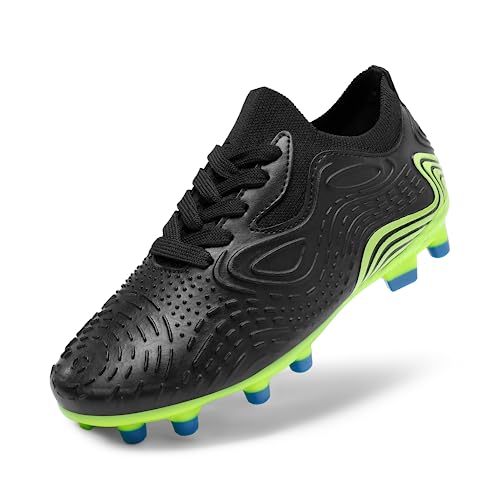
WELRUNG Women’s Men’s FG Cleats Soccer Shoes
Listed at $34.88 at last check (in stock at last check). This is the budget option on the list, a straightforward firm-ground boot without the control-specific upper technology of the other two. It’s a reasonable choice for a developing player who wants a dependable all-around boot without committing to a higher price point yet.

Comfort over 90 minutes matters more than it sounds
A midfielder’s average match distance covered is consistently the highest on the pitch across most tracked leagues, which means small comfort problems, a stiff heel counter, a seam that rubs, an insole that packs down early, compound over a full match in a way they simply don’t for a position covering less total ground. A slightly heavier boot with better cushioning and a more forgiving upper is often the right tradeoff here, even though it costs a small amount of top-end quickness compared to a stripped-down speed boot.
Break-in time is worth planning around for the same reason. A stiff new boot that hasn’t softened up yet is a bigger liability across 90 sustained minutes than across a striker’s shorter bursts of high-intensity running, so wearing a new pair through a few training sessions before a real match is a genuinely useful habit specifically for this position.
- ✓Prioritize touch and control quality in the upper material over top-end speed claims
- ✓Consider an FG/MG dual-rated boot if you train and play across mixed surfaces
- ✓Break in a new pair over several training sessions before match day
- ✓Weigh cushioning and comfort seriously given the distance midfielders cover
- ✕Buy the lightest, most speed-marketed boot on the shelf by default
- ✕Assume MG studs are a turf substitute; they’re still bladed studs for grass and hard training ground
- ✕Wear brand-new boots straight into a full match without any break-in
- ✕Ignore heel and seam comfort just because a boot looks performance-oriented
💡 Pro tip: If your club trains on one surface but plays matches on another, an FG/MG boot like the Goletto IX above removes the need to own and maintain two separate pairs, which is a real practical advantage specific to a midfielder’s typical weekly schedule.
Common myths about midfielder cleats
Defensive vs. attacking midfield: does the boot change?
The general priorities above hold across the position, but a defensive-minded midfielder who spends more time tracking runners and breaking up attacks benefits from a slightly firmer heel counter and more lateral support than an attacking midfielder who spends more time on the ball facing forward. Neither difference is large enough to justify a completely different boot category, but it’s worth weighing if you can try a pair on before buying, since lateral stability matters more the more time you spend defending in transition.
An attacking midfielder who takes on more first-touch responsibility in tight spaces gets more day-to-day value from the upper material quality specifically, since that’s what actually contacts the ball on a controlled first touch. A defensive midfielder gets relatively more value from outsole stability during quick changes of direction while closing down space. Both are still served well by any of the three picks above; this is a matter of degree, not a reason to look elsewhere entirely.
Socks, insoles, and small upgrades that help touch
A thinner match sock, rather than a heavily cushioned training sock, gives more direct ball feel through the boot, which matters disproportionately to a midfielder handling the ball far more often per match than most other positions. If the stock insole in a budget boot like the WELRUNG option feels thin underfoot for a full 90 minutes, a moderate aftermarket insole swap is a reasonable, inexpensive upgrade before assuming the boot itself is the problem.
Lacing technique is a free adjustment worth getting right. A lace pattern pulled tight and even across the midfoot, without a hard knot sitting directly under a pressure point, reduces the small hot spots that build into real discomfort over a long match. This costs nothing and takes one extra minute before kickoff, but it’s skipped more often than it should be.
Other cleat guides on this site
Bottom line
A midfielder’s cleat priority list is touch, control, and 90-minute comfort, roughly in that order, not top-end speed. The adidas Goletto IX FG/MG is the practical default for a mixed-surface schedule, the New Balance 442 V2 Academy is the upgrade pick for control quality, and the WELRUNG option is a fair budget entry point while you’re still deciding how much to invest in the position.
None of these three requires guessing about availability. Each listing was checked directly against Amazon’s catalog on the date noted above, so the price and stock figures reflect what was actually purchasable at that moment rather than a number carried over from an old draft. Stock on any single ASIN can still shift day to day, so treat the notes as a recent snapshot rather than a permanent guarantee.
Frequently asked questions
What matters most in a cleat for a central midfielder?
Touch and control quality in the upper, comfort over a full 90 minutes of running, and a stud pattern that matches the surfaces you actually train and play on. Top-end speed matters far less here than it does for a winger or striker.
Should midfielders use a firm-ground or multi-ground boot?
Multi-ground (MG) is often the more practical choice for midfielders specifically, since the position tends to see the most surface variety across a training week, moving between grass match days and harder training-ground sessions.
Does boot weight matter for a midfielder the way it does for a striker?
Less than marketing suggests. Cushioning quality and fit comfort drive match fatigue more than a few grams of boot weight, so a slightly heavier, better-cushioned boot is often the right tradeoff for a position that covers the most total ground.
How long should I break in new cleats before a match as a midfielder?
A few full training sessions is a reasonable minimum, since a stiff new boot is more of a liability across 90 sustained minutes than across the shorter, higher-intensity bursts a striker or winger runs.
Does a defensive midfielder need a different boot than an attacking one?
Not a different category, but a slightly firmer heel counter and more lateral support helps a defensive midfielder who spends more time closing down space, while upper material quality matters relatively more to an attacking midfielder handling the ball in tight areas.
As an Amazon Associate, we earn from qualifying purchases through links on this page.