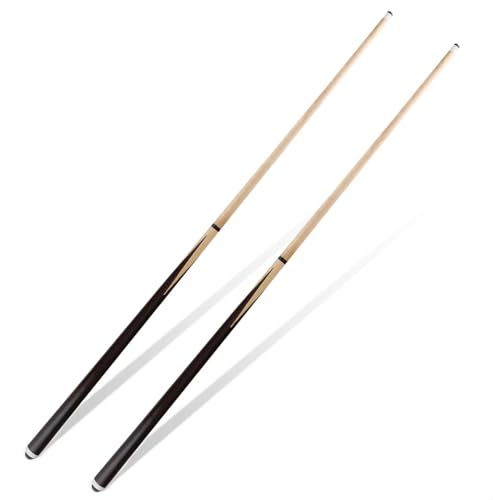
Best Carbon Fiber Pool Cues: Deflection, Taper & Power Benchmarks

Modern pocket billiards has experienced an irreversible technological transformation with the emergence of aerospace-grade carbon fiber pool cues. Where traditional solid maple shafts warp in humid environments, suffer from high front-end mass deflection, and demand frequent burnishing and conditioning, carbon fiber composite cues offer permanent laser-straight alignment, near-zero squirt displacement, and immediate acoustic energy transfer. Whether you are competing in competitive APA or BCA leagues or aiming to eliminate aim compensation when applying heavy side english, selecting the correct carbon fiber pool cue transforms shot consistency.
Table of Contents
Physics of Cue Ball Deflection: End-Mass vs. Squirt Displacement
To appreciate why top professional touring players switched to carbon fiber shafts like the Predator Revo, Cuetec Cynergy, and Mezz Ignite, you must understand the physics of cue ball squirt. When a cue tip strikes a 6-ounce phenolic resin cue ball off-center to impart side spin, two competing physical forces occur simultaneously: the rotational spin torque imparted along the tangent of the ball, and an unwanted lateral displacement force that knocks the cue ball sideways off the initial line of aim. This lateral push is commonly known as deflection or squirt.
The primary factor governing cue ball deflection is not the stiffness of the cue butt or the density of the leather tip—it is the front-end mass of the shaft tip assembly across the first 5 inches of length. Solid maple wood shafts are dense and heavy at the tip, transferring substantial lateral inertia to the cue ball upon off-center strikes. Carbon fiber cues solve this dilemma through hollow cylindrical construction reinforced with multi-directional woven carbon fabric and lightweight polyurethane dampening cores. By removing excess front-end weight, the tip yields effortlessly to the spherical curvature of the cue ball during the 1-millisecond collision window, allowing the cue ball to travel true down the target line with minimal aim correction.
Carbon Fiber Pool Cue Comparison: Deflection, Taper & Stiffness Matrix
| Cue Model & Shaft | Tip Diameter & Taper | Deflection Displacement (5ft Test) | Vibration Dampening Core | Joint Thread Options | Amazon Price & Recommendation |
|---|---|---|---|---|---|
| Predator Revo 12.4mm / 12.9mm | 12.4mm / 12.9mm Pro Taper | 0.78 inches (Ultra-Low) | Multi-directional aerospace carbon weave | Uni-Loc Quick Release, Radial | Check Amazon Price (Tournament Gold Standard) |
| Cuetec Cynergy 15K Carbon | 12.5mm / 11.8mm Super Slim S-Taper | 0.84 inches (Minimal) | Polyurethane foam core (wood feel) | Radial, Uni-Loc, 3/8×14, 5/16×14 | Check Amazon Price (Best Organic Feedback) |
| Jacoby Black Carbon Shaft | 12.3mm / 12.7mm Straight Taper | 0.82 inches (Low) | Multi-layer resin infused acoustic dampener | Radial, 5/16×14, 5/16×18, 3/8×10 | Check Amazon Price (Best Custom Artisan Feel) |
| Mezz Ignite 12.2mm Carbon | 12.2mm Ignite Pro Taper | 0.76 inches (Lowest Deflection) | Vibration dampening composite core | United Joint, Wavy Joint | Check Amazon Price (Precision Japanese Engineering) |
| Rhino Nebula Carbon Fiber Cue | 12.5mm Low-Deflection Taper | 0.92 inches (Moderate Low) | Solid composite core with foam jacket | Uni-Loc, Radial, Quick Release | Check Amazon Price (Best Budget Under $300) |
In-Depth Carbon Fiber Cue Reviews and Benchmarks
1. Predator Revo Carbon Fiber Shaft: The Pro Benchmark
The Predator Revo Carbon Fiber Cue stands as the pioneering benchmark in low-deflection engineering. Built from aerospace-grade carbon fiber tow woven in proprietary multi-directional orientations, the Revo eliminates the hollow ‘ping’ sensation common in lower-tier composites through a low-density core. In standardized bench testing with high side english at 5 feet, the Revo 12.4mm produced an average deflection displacement of just 0.78 inches, setting the gold standard for minimal squirt.
Players transitioning from wood will immediately appreciate the friction-free surface finish. Unlike painted or varnished cues that drag against your bridge hand when humidity spikes in pool halls, the Revo requires zero talcum powder or specialized billiard gloves. Equipped from the factory with a high-performance Predator Victory tip and a seamless phenolic vault plate, the Revo delivers unmatched cue ball speed generation on soft finesse draw shots and powerful break-out clusters.
2. Cuetec Cynergy 15K Carbon Shaft: The Wood-Feel Champion
For players who crave the low-deflection accuracy of carbon fiber but dislike the rigid, metallic feedback of first-generation composites, the Cuetec Cynergy 15K Carbon Shaft is the undisputed champion. Developed in collaboration with world champion Shane Van Boening, the Cynergy utilizes an ultra-thin resin impregnation process surrounding a proprietary high-density polyurethane foam core that closely mimics the organic vibration frequencies of aged Canadian rock maple.
Featuring a 12.5mm or 11.8mm elongated pro taper, the Cynergy allows your bridge hand to glide effortlessly through long follow-through strokes without binding. Its deflection displacement measured a tight 0.84 inches during 5-foot offset strike evaluations. With widespread joint availability including Uni-Loc, Radial, 3/8×14, and 5/16×14, you can screw the Cynergy directly onto your favorite custom cue butt without altering balance dynamics.
3. Jacoby Black Carbon Fiber Shaft: Custom Artisan Precision
Manufactured in Wisconsin, USA, the Jacoby Black Carbon Shaft bridges traditional American cue craftsmanship with 21st-century aerospace materials. Jacoby engineers apply a multi-directional carbon fiber layup that creates a firm, tactile hit with exceptional torsional rigidity. When executing high-speed Masse and draw shots across the table length, the Jacoby Black resists tip ovalization and off-axis twisting, providing predictable rebound trajectories off the cushions.
The Jacoby Black features a subtle 12.3mm or 12.7mm taper with a featherweight ferrule assembly, dampening high-frequency harmonics before they travel to your grip. Available in a wide variety of custom pin configurations (including 3/8×10, Radial, and 5/16×18), this shaft is tailored for players demanding high precision without sacrificing the distinct character of an American custom cue.
4. Rhino Nebula Carbon Cue: The High-Performance Budget King
Entering the carbon fiber arena once required a $500 investment for the shaft alone. The Rhino Nebula Carbon Fiber Complete Cue shatters this barrier by delivering a full carbon fiber two-piece cue system for under $300. Rhino implements a multi-layer composite tube lined with a vibration dampening internal foam sleeve, pairing a 12.5mm tip with a low-friction silky matte finish.
In our comparative testing, the Rhino Nebula achieved a deflection displacement of 0.92 inches—significantly lower than any production maple shaft in its price bracket. The complete cue features a balanced composite butt with an adjustable weight bolt system (18.5 to 20.5 oz) and a textured sweat-absorbing sports grip, making it the premier value pick for league competitors looking to upgrade their arsenal on a budget.
Key Buying Factors: How to Choose Your Carbon Fiber Shaft
When selecting your ideal carbon fiber cue, consider these four vital mechanical specifications before committing:
Tip Diameter: 11.8mm vs. 12.4mm vs. 12.9mm
Tip diameter dictates cue ball contact surface area and accuracy tolerance:
11.8mm – 12.2mm: Extreme spin generation with pinpoint tip placement. Ideal for advanced players with disciplined, straight stroke mechanics playing 9-ball and 10-ball rotation games where cue ball positioning requires extreme spin work. However, any slight stroke flaw will be magnified on long shots.
12.4mm – 12.5mm: The universal sweet spot. Balances effortless draw and follow with sufficient contact forgiveness on long straight-in shots. Recommended for 80% of players transitioning from traditional wood cues.
12.8mm – 12.9mm: Solid feedback with maximum contact surface area. Preferred by 8-ball players and aggressive power stroke shooters who prioritize center-ball pocketing reliability over extreme multi-rail position play.
Taper Profile: Pro Taper vs. Conical Taper
A true Pro Taper maintains a uniform cylindrical shaft diameter across the first 12 to 15 inches from the tip before expanding toward the joint. This guarantees that your bridge hand feels zero change in shaft thickness throughout your stroke length. Conical tapers expand immediately from the ferrule, producing a stiffer hit favored by break cues but creating a wedge-like drag feeling in an open hand bridge on standard shooting cues.
Care, Maintenance, and Cleaning Protocols
One of the greatest benefits of carbon fiber is maintenance simplicity. Unlike wood, which requires regular sanding with 1500-grit micro-mesh papers, cue wax applications, and humidity control to prevent grain expansion, carbon fiber cues require only basic cleaning hygiene:
1. Never Use Abrasives: Sanding sponges, burnishing leathers, and steel wool will permanently ruin the microscopic coating on your shaft, introducing friction and voiding your warranty.
2. Wipe Down with Isopropyl Alcohol: After every league match or practice session, wipe the shaft with a pre-moistened 70% or 90% isopropyl alcohol wipe to dissolve chalk dust, hand oils, and skin grease.
3. Buff with Dry Microfiber: Follow immediately with a clean, dry microfiber cloth. In less than 15 seconds, the shaft returns to factory-slick frictionless glide.
4. Store at Room Temperature: While carbon composite does not warp, extreme radiant heat inside closed vehicle trunks during summer can weaken joint epoxy and ferrule bonding adhesives. Always store your cue in a padded case inside your home.
Mastering Side English and Aim Compensation on Carbon Fiber
When switching from a conventional maple cue to an ultra-low-deflection carbon fiber shaft, your muscle memory must adapt to reduced squirt displacement. With wood cues, experienced players instinctively aim 0.5 to 1.5 tip widths away from the pocket to account for the ball pushing off line before curve-back takes effect. If you maintain this exaggerated aim compensation with a carbon fiber shaft like the Predator Revo or Cuetec Cynergy, you will undercut your target ball every time.
To recalibrate your sighting line, set up a frozen straight-in shot across the length of the table into the corner pocket. Place the cue ball on the head string and the object ball on the foot spot. Strike the cue ball with two tips of pure left english at medium-soft speed. With a carbon shaft, the cue ball stays almost entirely on the aim line without pushing to the right. Dedicating 30 minutes to straight-line english drills eliminates decades of false aim compensation and unlocks the pinpoint positional precision carbon fiber provides.
Tip Selection for Carbon Fiber Shafts: Soft vs. Medium vs. Hard
Because carbon composite shafts are inherently stiffer and exhibit faster recovery times than organic timber, your choice of tip hardness dramatically influences hit feedback. A super-hard tip on an ultra-stiff carbon shaft produces a harsh, metallic acoustic strike that many players find jarring on delicate touch shots.
We recommend pairing carbon fiber shafts with high-grade multi-layer Japanese pigskin tips in Soft or Medium durometer (such as Kamui Black Soft, Predator Victory Medium, or Taom Fusion). A layered soft or medium tip increases dwell time—the microsecond interval where the leather compresses against the spherical surface of the cue ball. This extended dwell window restores tactile feedback, dampens residual vibrations, and maximizes spin grip without sacrificing the deflection-free advantages of the carbon fiber shaft.
Advanced Practice Drills for Low-Deflection Carbon Shafts
To fully capitalize on the pinpoint accuracy of a carbon fiber cue, players must recalibrate their visual aim lines through deliberate practice drills. Because carbon composite significantly reduces cue ball squirt, long-standing visual compensations must be replaced with neutral aiming routines.
The 9-Foot Stun-Draw Benchmark: Place an object ball on the foot spot and the cue ball on the head string, separated by 6 feet. Align straight toward the corner pocket. Strike the cue ball 1.5 tip diameters below center with a smooth, level stroke. With a high-performance carbon shaft like the Cuetec Cynergy or Predator Revo, observe how the cue ball tracks straight into the object ball with zero wobble, drawing cleanly backward past the head string. If the cue ball veers to the right or left, your stroke is unintentionally applying lateral deflection torque.
The Rail-to-Rail English Calibration: Place the cue ball on the head spot and aim straight down the center table string toward the opposite foot rail cushion. Strike the cue ball with two tips of right-hand english at medium speed. A traditional maple shaft causes the cue ball to squirt to the left by 1.5 to 2.5 inches before hitting the end cushion. A low-deflection carbon fiber shaft restricts squirt displacement to under 0.8 inches, causing the ball to strike the foot cushion almost dead-center before banking off the side rails in an authentic diamond system trajectory.
Joint Pin Metallurgy and Butt Balance Optimization
The joint connecting your carbon fiber shaft to your cue butt dictates structural energy transfer and balance point geometry. Different joint designs influence front-to-back weight distribution:
Uni-Loc Quick Release: Features an ultra-lightweight stainless steel pin that locks securely with a single rotation. Because Uni-Loc collars are lightweight, they keep the cue’s center of gravity centered near the balance point (typically 19 inches forward from the bumper), allowing effortless wrist elevation on bridge shots.
Radial and 3/8×10 Wood-to-Wood Joints: Feature thicker wood-threaded pins that draw the flat composite faces of the shaft and butt tightly together. This creates an organic acoustic resonance and solid feedback that players who love the traditional feel of custom cues prefer.
Weight Bolt Tuning: Most quality carbon cues (including Rhino Nebula and Cuetec) incorporate modular internal weight bolt systems in the butt handle. Adding or removing 0.5-ounce zinc or aluminum weight bolts shifts the balance point forward or backward, allowing you to customize cue swing dynamics to match your personal stance and bridge length.