Shuffleboard Table Cabinets Compared: Poplar vs. Maple vs. Oak


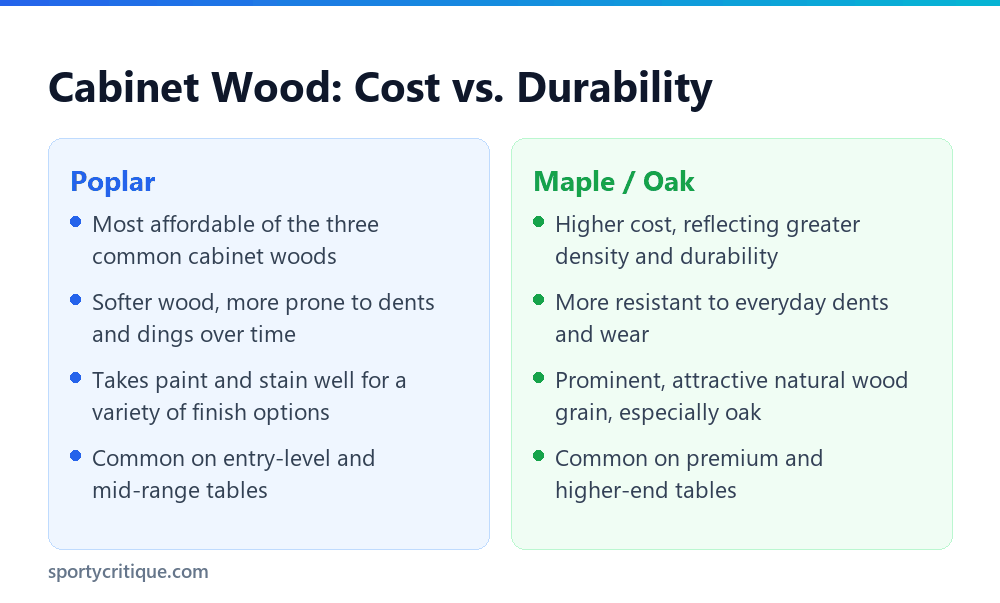
Comparing shuffleboard table wood types comes down to poplar, maple, and oak, the three most common cabinet woods used in shuffleboard tables, and they differ mainly in cost, density, and appearance rather than in the actual playing surface itself, which is a separate component from the cabinet frame. Poplar is the most affordable and softest of the three, common on entry-level and mid-range tables. Maple and oak cost more, resist everyday dents better, and offer a more prominent, attractive natural wood grain, particularly oak, making them common choices on premium tables.
The cabinet, the outer frame and legs supporting a shuffleboard table, is a distinct component from the playing surface itself, and buyers sometimes conflate cabinet wood quality with playing surface quality when these are actually separate considerations. This comparison focuses specifically on cabinet construction wood, since the playing surface’s own material and finishing is a distinct topic covered elsewhere.
- →Cabinet wood and playing surface material are two separate components, not the same thing
- →Poplar is the most affordable and softest common cabinet wood, more prone to dents over time
- →Maple and oak cost more but offer greater density, durability, and a more prominent wood grain
- →Cabinet wood choice affects appearance and long-term dent resistance more than actual gameplay
- →A table’s overall build quality depends on more than cabinet wood alone, including joinery and finish
Table of Contents
Cabinet Wood vs. Playing Surface: Two Different Things
The playing surface, the long, narrow strip a puck actually slides across, is typically constructed and finished separately from the cabinet, often using specific hardwood species chosen for their surface characteristics, hardness, grain tightness, and finish compatibility, rather than the broader structural and aesthetic considerations that drive cabinet wood choice.
⚠️ Watch out: A buyer comparing tables purely by cabinet wood species without also researching the actual playing surface construction risks focusing on the wrong component for gameplay quality. Cabinet wood affects durability and looks; playing surface construction and finish affect how the game actually plays.
Poplar: The Budget-Friendly Option
Poplar is a relatively soft, lightweight hardwood that costs less than maple or oak, making it a common choice for entry-level and mid-range shuffleboard tables where keeping the overall price accessible matters as much as premium material selection. It takes paint and stain finishes well, giving manufacturers flexibility in offering various color and finish options.
The tradeoff for poplar’s affordability is reduced resistance to everyday dents and dings compared to denser hardwoods, which matters more for a table that sees frequent, heavy use or gets bumped and knocked regularly in a busy household or commercial setting like a bar or game room open to the public.
Maple and Oak: The Premium Options
Maple offers greater density and hardness than poplar, translating into better resistance to everyday dents and wear, along with a tighter, more subtle grain pattern that many buyers find attractive for a cleaner, more refined cabinet appearance.
Oak brings similar durability benefits to maple but with a more pronounced, visible grain pattern that some buyers specifically prefer for a bolder, more traditional furniture look. Both woods cost more than poplar, reflecting their greater density and the more involved processing some finishes require to bring out their natural grain characteristics.
Choosing Cabinet Wood for Your Situation
- ✓Choose poplar for budget-conscious buyers prioritizing overall table cost
- ✓Choose maple or oak for heavier use environments needing better dent resistance
- ✓Research playing surface construction separately from cabinet wood choice
- ✓Consider oak specifically if a bold, visible wood grain matters aesthetically
- ✕Assuming cabinet wood species determines how well the table actually plays
- ✕Choosing poplar for a heavily used commercial or high-traffic household setting
- ✕Ignoring playing surface quality while focusing entirely on cabinet material
- ✕Assuming all maple or oak tables are automatically higher overall quality regardless of other construction details
Joinery and Overall Construction Quality
How cabinet pieces are joined together, whether through simple screws, dowels, or more involved traditional joinery techniques, affects a table’s long-term structural stability as much as the specific wood species used. A well-constructed poplar cabinet with quality joinery can outlast a poorly assembled oak cabinet with weak joints.
Checking manufacturer specifications or asking directly about joinery methods, rather than assuming wood species alone determines overall build quality, gives a more complete picture of a specific table’s actual long-term durability than wood type alone can provide.
Finish Quality Across Wood Types
Regardless of the underlying wood species, finish quality, how evenly and durably a stain, paint, or clear coat is applied, significantly affects how a cabinet resists moisture, scratches, and fading over years of use. A premium wood species with a poorly applied finish can perform worse long-term than a budget wood species with excellent finishing work.
Maintaining cabinet finish through periodic cleaning and avoiding harsh chemicals, similar principles to caring for other wood furniture, extends a cabinet’s appearance and structural integrity regardless of which specific wood species sits underneath the finish.
Cost Differences in Practice
The price gap between a poplar-cabinet table and a comparable maple or oak model typically runs several hundred dollars for a similarly sized and featured table, a meaningful difference for buyers on a tighter budget but a relatively modest percentage of a shuffleboard table’s total cost, which often runs well into the thousands regardless of cabinet wood choice.
For buyers weighing this specific cost difference, considering how heavily the table will actually be used and in what kind of environment, a quiet home game room versus a busy, high-traffic bar setting, helps determine whether the added durability of maple or oak justifies its added cost for that specific use case.
Other Woods Sometimes Used
Beyond poplar, maple, and oak, some manufacturers use other hardwoods like birch or ash, or engineered wood products like plywood and MDF for certain cabinet components not requiring solid hardwood’s specific properties, particularly on entry-level tables where cost control matters significantly to the final price point.
Engineered wood products aren’t inherently inferior for every application, since components like internal structural panels benefit less from solid hardwood’s specific properties than visible, load-bearing, or high-contact areas do. Understanding which specific parts of a cabinet use which materials gives a more complete picture than assuming an entire cabinet is built from a single, uniform wood type throughout.
Regional Availability and Sourcing
Poplar, maple, and oak availability and relative pricing can vary somewhat by region, since these woods grow in different concentrations across different parts of North America, affecting local lumber costs that eventually factor into a specific manufacturer’s pricing for finished tables.
A manufacturer sourcing wood locally to their production facility sometimes passes on cost savings for whichever species is more locally abundant, which is part of why price differences between wood types can vary somewhat between different manufacturers rather than following a perfectly uniform pricing pattern across the entire market.
Sustainability Considerations
Buyers specifically concerned about sustainable sourcing can look for certifications like FSC (Forest Stewardship Council) labeling on a specific table’s wood materials, though not every manufacturer pursues or advertises this certification even when their sourcing practices might otherwise be reasonably sustainable.
Poplar’s faster growth cycle compared to oak specifically is sometimes cited as a modest sustainability advantage, since faster-growing species can be harvested and replaced more quickly than slower-growing hardwoods, though this factor alone shouldn’t be the deciding consideration for most buyers weighing the fuller set of durability, cost, and appearance factors already discussed.
Resale Value Across Wood Types
A well-maintained maple or oak table generally holds resale value somewhat better than a comparable poplar table in the used furniture and game table market, reflecting both the premium wood’s actual durability advantage and buyer perception that these species represent higher overall quality, whether or not that perception fully accounts for the joinery and finish factors discussed earlier.
For a buyer specifically considering resale value as part of their purchase decision, perhaps anticipating a future move or a change in living situation, this modest resale advantage is worth factoring in alongside the upfront cost difference between wood types, though it shouldn’t be the primary deciding factor for someone planning to keep and use a table for many years regardless of eventual resale plans.
What to Look for When Inspecting a Cabinet in Person
Checking for consistent grain and color across visible cabinet panels, rather than obvious mismatches that can indicate lower-quality or mixed-source wood, gives a quick visual quality signal regardless of which specific wood species a table uses.
Gently testing joint stability by applying light pressure at corners and connection points, where possible during an in-person inspection, reveals more about actual construction quality than wood species alone ever could, since a well-built table of any wood type should feel solid and free of noticeable flex or looseness at these key structural points.
Frequently Asked Questions
Does cabinet wood affect how the shuffleboard plays?
Not directly. The playing surface, a separate component from the cabinet, determines how the game actually plays. Cabinet wood affects durability and appearance, not puck behavior.
Is poplar a bad choice for a shuffleboard table?
Not inherently. It’s a reasonable, budget-friendly choice for lighter use or a tighter budget, though it’s more prone to dents than maple or oak under heavy, frequent use.
What’s the difference between maple and oak cabinets?
Both offer similar density and durability improvements over poplar. Maple has a tighter, more subtle grain, while oak has a more pronounced, visible grain pattern, mainly an aesthetic difference.
Is a more expensive cabinet wood always better quality overall?
Not necessarily. Joinery method and finish quality affect overall durability significantly, sometimes more than wood species alone. A well-built poplar cabinet can outlast a poorly constructed premium-wood one.
How much more does a maple or oak cabinet typically cost?
Usually several hundred dollars more than a comparable poplar-cabinet table, a modest percentage of a shuffleboard table’s overall cost, which often runs into the thousands regardless of cabinet wood.
Should I prioritize cabinet wood or playing surface quality when buying?
Playing surface quality matters more for actual gameplay experience. Cabinet wood matters more for long-term durability and appearance, both worth considering but for different reasons.
None of these factors need to feel overwhelming when narrowed down to their practical essentials: budget, expected use intensity, aesthetic preference, and a willingness to ask a few direct questions before buying, rather than judging a table purely on wood species terminology printed in a product listing or brochure.
Understanding that cabinet wood and playing surface are separate considerations, each affecting different aspects of ownership, helps buyers make a more informed decision than comparing tables purely on wood species terminology without understanding what that terminology actually affects in day-to-day ownership, from the very first year of daily use through a decade or more of ownership down the road.
Asking a specific manufacturer or dealer direct questions about wood sourcing, joinery method, and finish process, rather than relying purely on marketing copy describing a table as “solid maple” or “premium oak,” gives a much clearer picture of what a specific purchase actually delivers before committing significant money to a table that’s often expected to last well over a decade.
These conversations also reveal how transparent and knowledgeable a given dealer actually is about their own product, which is itself a useful signal about the overall buying experience and likely quality of after-sale support if a warranty issue or repair need ever arises down the road.
A table bought with this fuller understanding tends to satisfy its owner for far longer than one chosen on wood-species name recognition alone, simply because the buyer went in with realistic expectations about what that specific choice would and wouldn’t deliver over years of actual use.
As an Amazon Associate, we earn from qualifying purchases through links on this page.