What Does a Setter Do in Volleyball? Role, Reads, and Decision-Making


SportyCritique is reader-supported. When you purchase through links on our site, we may earn an affiliate commission at no extra cost to you. As an Amazon Associate, we earn from qualifying purchases.
In volleyball terminology, the setter is frequently compared to an NFL quarterback or an NBA point guard. Every offensive play runs directly through their hands. On virtually every rally, after a defensive pass or dig absorbs the opponent’s ball, the setter takes the second contact and makes a high-pressure tactical decision in under 0.4 seconds: Which attacker has the single block? What tempo will exploit the opposing middle blocker? Is the pass tight enough to execute a setter dump?
Yet setting is far more than clean finger pads and soft hands. A great setter combines relentless physical footwork with pre-serve scouting, blocker deception, and emotional leadership. This comprehensive guide details the setter’s three-phase decision-making engine, how setters read opposing blockers, the mechanics and legal rules of the setter dump, rotational responsibilities across 5-1 and 6-2 systems, and diagnostic fixes for match play. For a complete technical breakdown of hand shape and set tempos, consult our dedicated guide on how to set a volleyball, or explore our central Volleyball Guide.
Table of Contents
The Setter’s 3-Phase Decision-Making Engine
Elite setters do not wait for the ball to arrive before deciding where to send it. Their decision-making operates as a continuous three-phase mental sequence:
- Phase 1: Pre-Whistle Scouting: Before the referee blows the whistle to authorize service, the setter assesses the opposing front row:
- Where is the mismatch? Is the opposing setter in the front row creating a short blocking mismatch on our outside hitter?
- Is their middle committing? Does the opposing middle blocker commit-block our middle hitter on quick sets, or do they read-and-react late?
- Hitter confidence: Which of our attackers has hot momentum, and who needs a confidence-building high ball?
- Phase 2: Live Pass Rating: The instant the serve crosses the net, the setter evaluates the quality of the pass on the 0-to-3 scale (serve-receive passing guide):
- 3-Point Pass (In-System): The setter can run any play in the playbook, including 1st-tempo middle quicks, back slides, or back-row pipes.
- 2-Point Pass (Medium): The setter must sprint 5 to 10 feet off the net. Middle quicks are eliminated; the setter distributes to the outside or right-side pin.
- 1-Point Pass (Out-of-System): The setter or backup libero must bump-set a high ball out of the back row to an outside hitter.
- Phase 3: Deception & Execution: As the ball enters their hands, the setter holds their spine vertically and squares their shoulders to the left pin (Zone 4). They reveal nothing with their body language until their thumbs and finger pads release the ball.
Footwork Sequence and Hand Mechanics
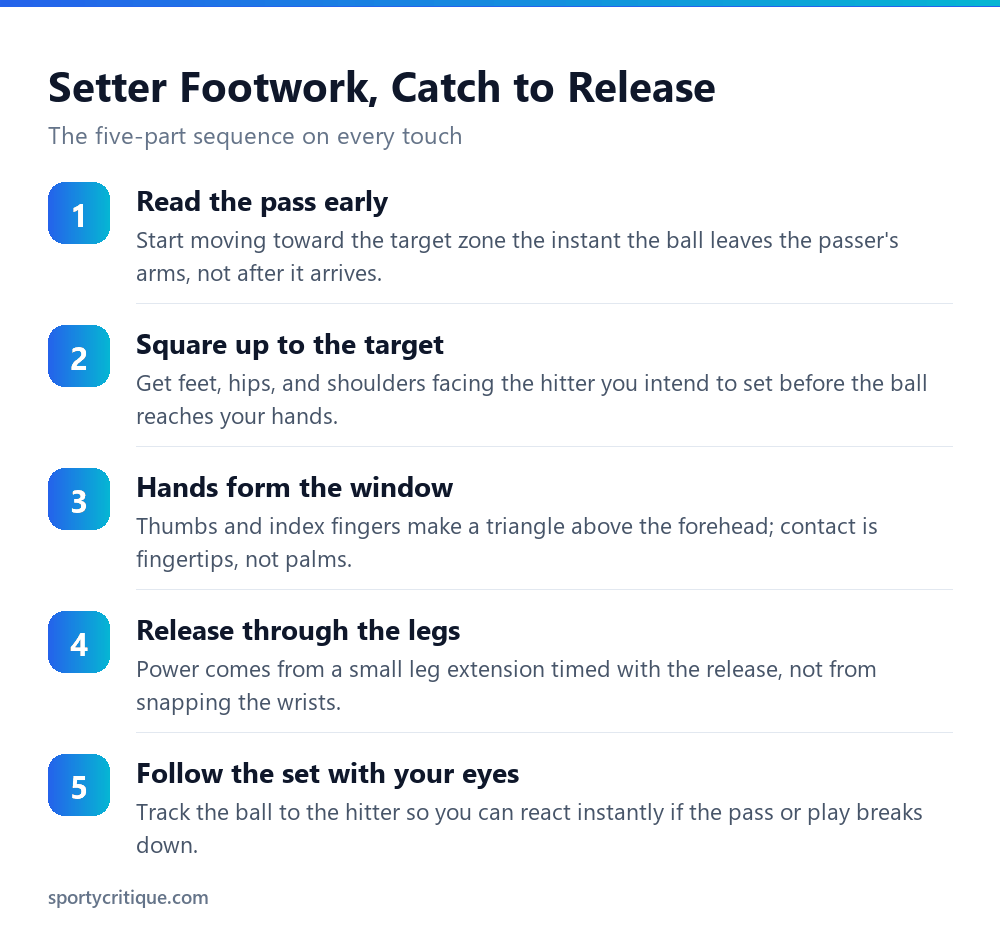
Consistent set delivery begins with your lower body. If your feet are sliding or your hips are twisting while you contact the ball, your sets will spray inconsistently along the net tape.
- Beat the Ball to the Spot: Sprint directly to the descending path of the pass. Do not glide or backpedal; get your body established under the ball before it drops.
- The Left-Right Footwork Stagger: Plant your left foot first, followed immediately by a firm right-foot forward step. Your right foot should sit roughly 3 to 5 inches ahead of your left foot, turned slightly away from the net. This prevents your body from drifting forward into the net mesh.
- Square to the Left Pin (Zone 4): Turn your hips, chest, and shoulders strictly perpendicular to the net tape, facing Zone 4. Even if you plan to execute a back set behind you to Zone 2, your body posture must remain squared to the left antenna to freeze the opposing middle blocker.
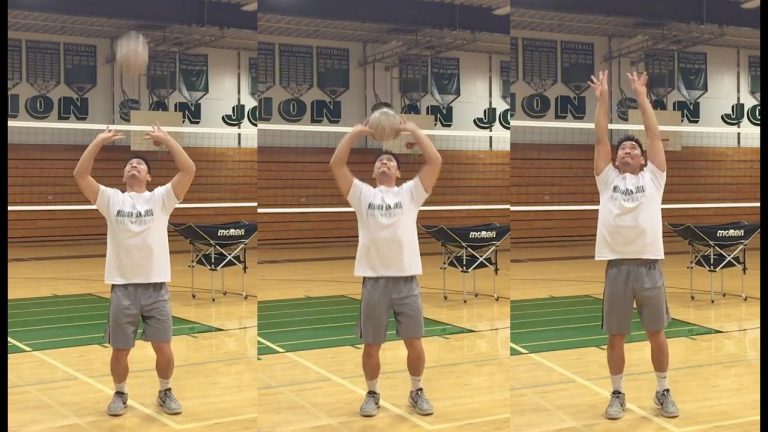
- The Setting Window: Bring your hands up 4 to 6 inches directly above your hairline. Contact purely on the soft pads of your first two finger joints (thumbs, index, and middle fingers). Thumbs provide 70% of structural push, while fingers guide trajectory.
Reading Opposing Blockers: How Setters Create Single Blocks
The primary metric of elite setting is not assist count; it is how often you isolate your hitters against single blocks. A setter who consistently forces the opposing middle blocker into wrong-way guesses gives their attackers a massive statistical advantage:
- Reading Middle Blocker Tendencies: In pre-match warm-ups, observe the opposing middle blocker. If they “bunch” tightly in the middle, fast 2nd-tempo sets to the outside pins will beat them to the antenna. If they cheat wide toward your star outside hitter, run quick 1st-tempo middle balls directly into the vacated center seam.
- Using the Middle Hitter as a Decoy: Even if you plan to set the outside pin, send your middle blocker on an explosive 1st-tempo approach. The middle attacker leaps into the air with their arm cocked right next to you. The opposing middle is forced to jump with them to prevent a clean kill. The instant the opposing middle commits, you push a 2nd-tempo “Go” ball past their outstretched shoulder to the outside pin.
- Disguising the Back Set: Never lean backward prematurely. Contact the ball directly above the crown of your head, engage your thoracic upper back, and push upward and backward through your thumbs to send the ball to the right-side hitter.
The Setter Dump: Tactical Weapons and Legal Restrictions
A “setter dump” is an offensive attack executed by the setter on the team’s second contact instead of delivering a set to a teammate. When executed with deception, the dump catches defenders completely flat-footed.
Mechanics of an Effective Dump
- The Left-Hand Tip: Because the setter’s right shoulder is turned toward the net, using the left hand is standard. Reach high with both hands as if preparing a standard set. At the final millisecond, use your left open hand or knuckles to tip the ball softly over the net into the vacant deep 10-foot area or short Zone 4 corner.
- The Power Swing (Front-Row Setters): If a pass flies tight and high above the net tape, an athletic front-row setter can turn their shoulders, approach like an attacker, and hammer the second ball into the floor before the opponent’s block forms.
The Critical Back-Row Setter Dump Rule
Under official FIVB, USAV, and NCAA rules, a back-row setter (in Zones 1, 6, or 5) CANNOT legally execute a setter dump if the ball is entirely higher than the top of the net tape at the instant of contact. If a back-row setter jumps, contacts a ball above the tape, and directs it over the net, the referee will whistle an illegal back-row attack. A back-row setter may only tip the ball over the net if they stay completely grounded and contact the ball when it drops below the top net tape.
Setter Responsibilities Across Offensive Systems
A setter’s court responsibilities change dramatically depending on whether the team operates a 5-1, 6-2, or 4-2 offensive system:
| Offensive System | Setter Workload | Front-Row Responsibilities | Back-Row Responsibilities | Setter Dump Threat |
|---|---|---|---|---|
| 5-1 System (1 Setter) | Plays all 6 rotations; runs entire offense full match | Sets from net; blocks opponent outside hitter in Zone 2; legal dump threat | Plays defense in Zone 1; penetrates to net on serve-receive to set 3 hitters | Active threat in front row (3 rotations); strictly illegal above net in back row (3 rotations) |
| 6-2 System (2 Setters) | Plays only 3 back-row rotations; substitutes out when rotating front | None (substituted out for a dedicated Opposite hitter) | Plays defense in Zone 1; penetrates to net on every serve-receive; always has 3 front-row hitters | Zero dump threat above net tape (setter is permanently in the back row) |
| 4-2 System (2 Setters) | Plays 3 front-row rotations; sets only when in the front row | Sets offense from Zone 2; blocks opponent outside hitter; legal dump threat | Plays back-row defense or is substituted out; does not set from back row | Active dump threat on every rotation they set |
Diagnostic Troubleshooting: 6 Common Setter Errors & Fixes
If your offense is stalling, your hitters are getting shut down, or referees are whistling ball-handling faults, use this diagnostic table to correct your setting execution:
| Observable Breakdown | Root Biomechanical Cause | Immediate Correction Cue |
|---|---|---|
| Whistled for illegal back-row attack | Back-row setter jumped near the net and dumped a ball contacted above the net tape | Stay grounded; deliver the set to a hitter, or tip only when the ball drops below tape level |
| Sets repeatedly drift tight into the net mesh | Setter’s hips or right shoulder are angled forward toward the net during release | Square right shoulder strictly perpendicular to the net; push sets parallel to the tape line |
| Opposing block repeatedly stuffs your middle hitters | Setting middle quicks off 2-point passes where the setter is 8 feet off the net | Run middle quicks only on perfect 3-point passes; push medium passes to outside pins |
| Referee calls Double Contact on high sets | Unequal hand contact or pushing with dominant hand harder than non-dominant hand | Ensure both thumbs contact the ball at the exact same microsecond; use weighted ball conditioning |
| Back sets consistently fall short of Zone 2 antenna | Failing to engage legs or relying on wrist flick without arching upper thoracic back | Push aggressively through your thumbs; drive upward through quadriceps on Left-Right plant |
| Hitters complain sets are inconsistent in height | Changing contact point from ball to ball (contacting some at forehead, others at chin) | Catch every ball 4–6 inches above the hairline; maintain a consistent triangular setting window |
Essential Training Equipment for Setters
Setters require rapid wrist recoil, finger pad strength, and thousands of repetitions to build an instinctual offense. These four training tools help setters develop soft hands and pinpoint accuracy:
| Product | Category / Purpose | Key Specifications | Target Benefit | Check Price |
|---|---|---|---|---|
| Tachikara Weighted Setter Volleyball | Heavy Hand & Wrist Conditioning Ball | 15–17 oz weighted composite cover (nearly double regulation weight); standard size | Builds finger strength, wrist recoil speed, and forearm power for pushing sets across 30 feet | View on Amazon |
| Tandem Sport Setting Target Trainer | Precision Setting Target Hoop | Adjustable height steel ring with collection net and wheeled base | Provides visual feedback on set height, trajectory, and pin location consistency | View on Amazon |
| Molten FLISTATEC V5M5000 Volleyball | Official Match Game Ball | Microfiber composite textured cover; 4.3–4.6 regulation PSI rating | Provides optimal tactile feedback on finger pads and predictable flight paths | View on Amazon |
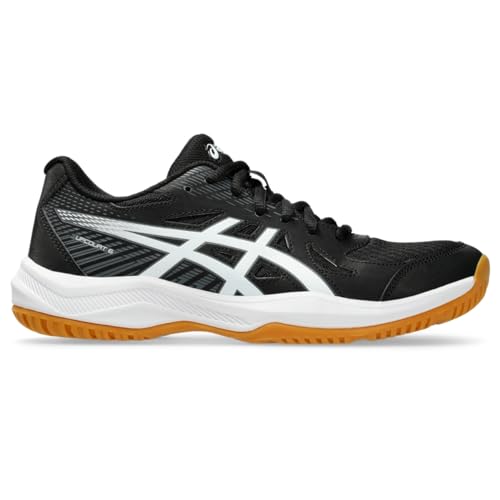
| Asics Gel-Rocket 11 Court Shoes | Court Agility & Pivot Footwear | Non-marking gum rubber outsole, forefoot Gel cushioning, Trusstic midfoot support | Facilitates rapid Left-Right pivot footwork and prevents slipping during emergency sprints | View on Amazon |
Frequently Asked Questions
Can a setter attack or dump the ball in volleyball?
Yes, provided the setter is in the front row (Zones 4, 3, or 2). A front-row setter may attack or tip the ball over the net on the team’s second contact at any height. However, if the setter is in the back row (Zones 1, 6, or 5), they cannot legally attack or dump a ball that is completely higher than the top of the net tape.
Why does the setter always square their body to Zone 4 (the outside pin)?
Squaring hips and shoulders to the left antenna serves two purposes: it provides a stable anatomical plane to push high balls 30 feet across the net to the outside hitter, and it disguises back sets. If a setter turns their body to face the right pin before setting, opposing blockers immediately anticipate the back set and form a solid double block.
Who sets the ball if the setter digs the first contact?
If the setter is forced to dig the opponent’s attack on the first contact, the team enters an “out-of-system” play. In modern competitive volleyball, the Libero is designated as the primary backup setter. If the libero is out of position, the Opposite Hitter or non-attacking Outside Hitter steps in to bump-set a high ball to the remaining pin attacker.
What is the hardest set to execute in volleyball?
The 1st-tempo middle slide and the fast “Go” ball to the outside pin are technically demanding, but the hardest set is an out-of-system high ball delivered from 15 feet off the net while running backward. Pushing a ball across the full width of the court while moving away from the target requires exceptional core strength and finger recoil.
How many substitutions does a setter consume in a 6-2 offense?
In a 6-2 offense, each setter swap consumes two substitutions (subbing the back-row setter for the front-row opposite, and subbing the front-row setter for the back-row opposite). Because this swap occurs every three rotations (twice per full rotation cycle), a 6-2 system consumes approximately 6 to 8 substitutions per set, making it viable only under NCAA (12 subs) or NFHS (18 subs) rules.
Deepen Your Volleyball Skills:
- Volleyball Cornerstone Guide — Master rules, court dimensions, positions, and gear guides.
- How to Set a Volleyball — Hand shape, footwork stagger, back set, and offensive set tempos.
- What Does a Libero Do? — Responsibilities, jersey regulations, and setting restrictions.
- Volleyball Rotation Rules Explained — 5-1 vs 6-2 systems, overlap rules, and attack lines.
- Serve Receive Platform Technique — Master 4-step platform anatomy and the 0-to-3 passing scale.
- How to Play Volleyball — Complete beginner rules, rotations, and positions.
- How to Hit a Volleyball — Passing, setting, attacking, and defensive digging mechanics.
- How to Spike a Volleyball — In-depth vertical approach, penultimate brake, and attack timing.
- How to Block in Volleyball — Swing blocking, net penetration, and stopping the tool.
- How Volleyball Scoring Works — Rally scoring rules, side-outs, and tiebreak sets.
- Volleyball PSI & Inflation Guide — Regulation air pressure standards for indoor and beach play.